Clear Sky Science · en
Incorporation of microbially salvaged urea-nitrogen into anabolic amino acids during hibernation in arctic ground squirrels
How sleeping squirrels hold on to their muscles
Arctic ground squirrels spend most of the year asleep underground, without eating or drinking, yet they emerge in spring with their muscles and organs largely intact. This study explores a hidden partnership between these hibernating animals and the microbes in their guts, showing how they recycle what would normally be a waste product—urea—back into useful building blocks for the body. Understanding this natural recycling system could offer clues for protecting muscles during long hospital stays, space travel, or extreme fasting in humans.
A long winter without food
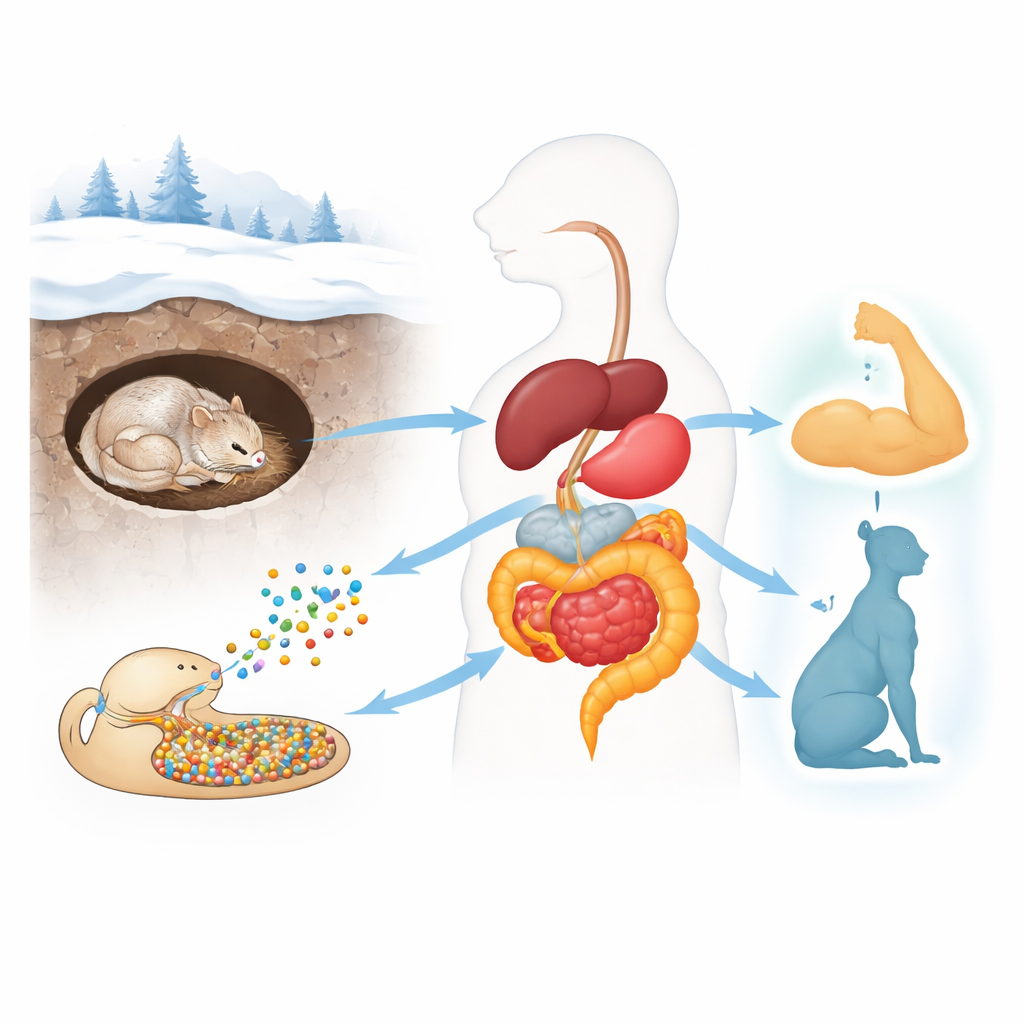
Arctic ground squirrels are among nature’s most extreme hibernators, spending up to eight months in cold underground burrows where temperatures can drop well below freezing. During this time they neither eat nor drink and cycle between deep, low-temperature torpor and brief warm-up periods. Because they cannot take in fresh protein from food, they must rely entirely on internal stores to maintain vital organs and muscle mass. Ordinarily, breaking down protein produces nitrogen waste that is excreted as urea in urine. For hibernators, however, simply discarding this nitrogen would be costly, so scientists have long suspected that these animals might be unusually good at recycling it.
The gut microbes’ recycling trick
Urea travels in the bloodstream to the intestines, where certain microbes make an enzyme that splits urea into ammonia and carbon dioxide. This process, called urea nitrogen salvage, gives microbes raw material to build new molecules and also creates free nitrogen that can potentially return to the animal’s own metabolism. To see how far this recycling goes, the researchers injected arctic ground squirrels with a special form of urea that carries a distinct nitrogen “tag.” They did this in both summer-active animals and in hibernating animals kept at very cold, environmentally realistic temperatures. By tracking where the tagged nitrogen ended up in the body, they could see which tissues were tapping into this microbial recycling stream.
Following tagged nitrogen through the body
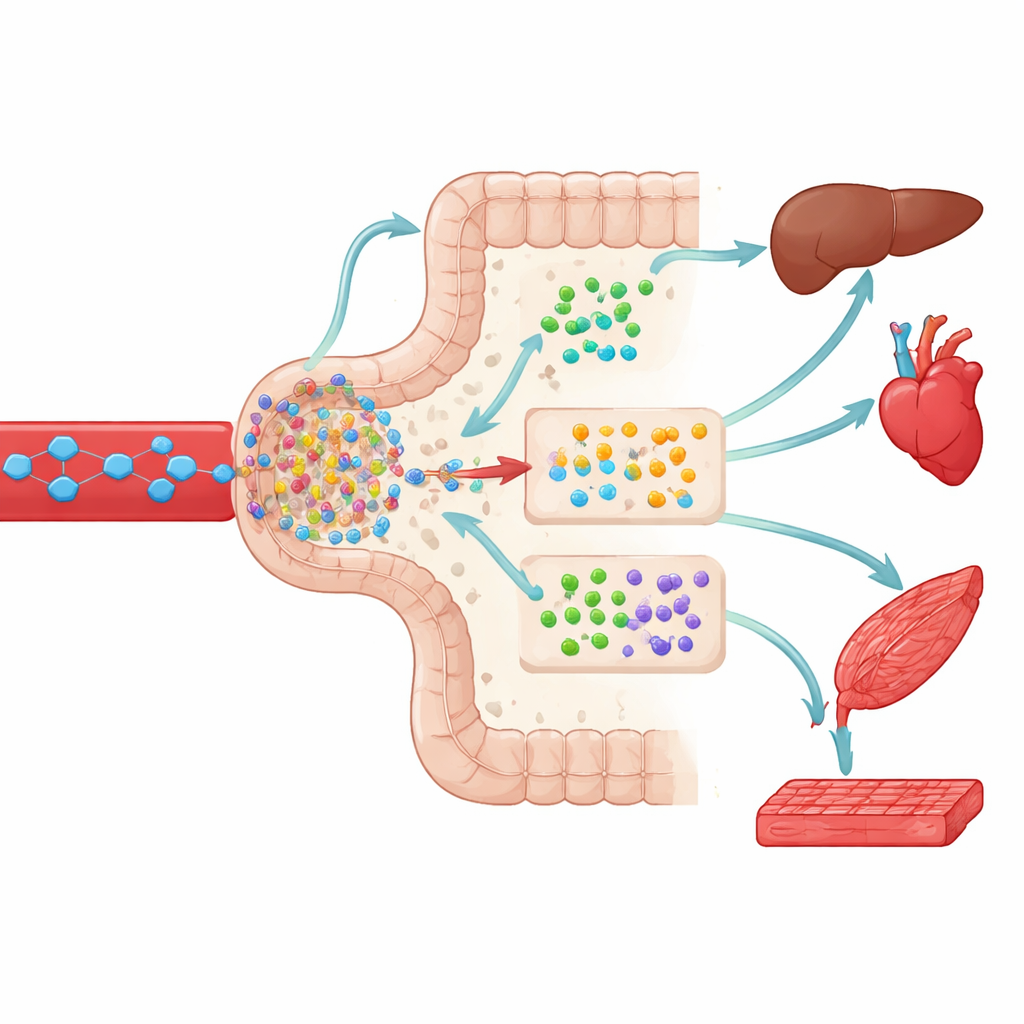
Using sensitive chemical analyses, the team found tagged nitrogen in many parts of the gut and in major organs, showing that microbe-liberated nitrogen was indeed being woven back into the squirrels’ chemistry. The cecum—a side chamber of the large intestine rich in microbes—was a major hub, with clear incorporation of recycled nitrogen into several amino acids and other nitrogen-containing molecules. From there, tagged nitrogen appeared in the small intestine, liver, heart, and even distant skeletal muscle. Hibernating squirrels showed much higher levels of recycled nitrogen in key amino acids than their summer counterparts, indicating that this pathway is especially active during the long winter fast.
Special amino acids that protect the body
Three amino acids stood out: glutamine, citrulline, and the pair leucine–isoleucine. All are known to influence protein balance and the movement of nitrogen between organs. In hibernating squirrels, these amino acids carried particularly high amounts of recycled nitrogen across multiple tissues. The liver, heart, and small intestine showed especially strong recycling into leucine–isoleucine, which are involved in turning on protein-building pathways. Glutamine, a major nitrogen carrier in the bloodstream, and citrulline, which can shuttle nitrogen to peripheral tissues without being broken down by the liver, were also heavily labeled in hibernating animals. These patterns suggest that the body is deliberately channeling microbially recovered nitrogen into molecules that help preserve muscle and maintain overall nitrogen balance when food is unavailable.
Why this hidden cycle matters
The findings indicate that during hibernation, arctic ground squirrels lean on a gut–organ partnership to conserve precious nitrogen. Microbes break down urea, and the animal’s own tissues recapture that nitrogen to build specific amino acids that support muscle maintenance and healthy metabolism, even at subzero temperatures and in the absence of food. For a layperson, the takeaway is that these squirrels are not simply sleeping through winter; they are quietly running an efficient internal recycling plant that turns waste into fuel for survival. Studying this natural system may one day inform strategies to reduce muscle loss in people who are bedridden, malnourished, or exposed to extreme conditions.
Citation: Rice, S.A., Grond, K., Gering, S.M. et al. Incorporation of microbially salvaged urea-nitrogen into anabolic amino acids during hibernation in arctic ground squirrels. Commun Biol 9, 336 (2026). https://doi.org/10.1038/s42003-026-09614-x
Keywords: hibernation, gut microbiome, nitrogen recycling, amino acids, arctic ground squirrel