Clear Sky Science · en
Anhydroicaritin-loaded mesenchymal stem cell exosomes ameliorate psoriasis via ACSL4-mediated ferroptosis in mice
Why a skin condition matters for the whole body
Psoriasis is often dismissed as “just a skin problem,” but for the roughly 60 million people worldwide who live with it, the condition can be painful, itchy, and emotionally draining. Current treatments may help, yet they can come with serious side effects or lose effectiveness over time. This study explores a promising new strategy built from a plant compound long used in traditional Chinese medicine and tiny biological “delivery capsules” made by stem cells, with the goal of calming inflamed skin while avoiding heavy-duty drugs.
A plant ingredient with hidden potential
Researchers focused on anhydroicaritin (ANH), a natural molecule found in Epimedium, a herb used for centuries to boost vitality and protect health. ANH has antioxidant and anti-inflammatory properties and is already added to some health products. However, its possible role in treating psoriasis had not been clearly tested. Using computer-based “network pharmacology” tools, the team mapped how ANH might interact with proteins known to drive psoriasis. Their analysis linked ANH to several major inflammation and immune pathways that are already recognized targets of modern psoriasis drugs, suggesting that this plant-derived compound might meaningfully dial down disease activity.
From petri dish to mouse skin
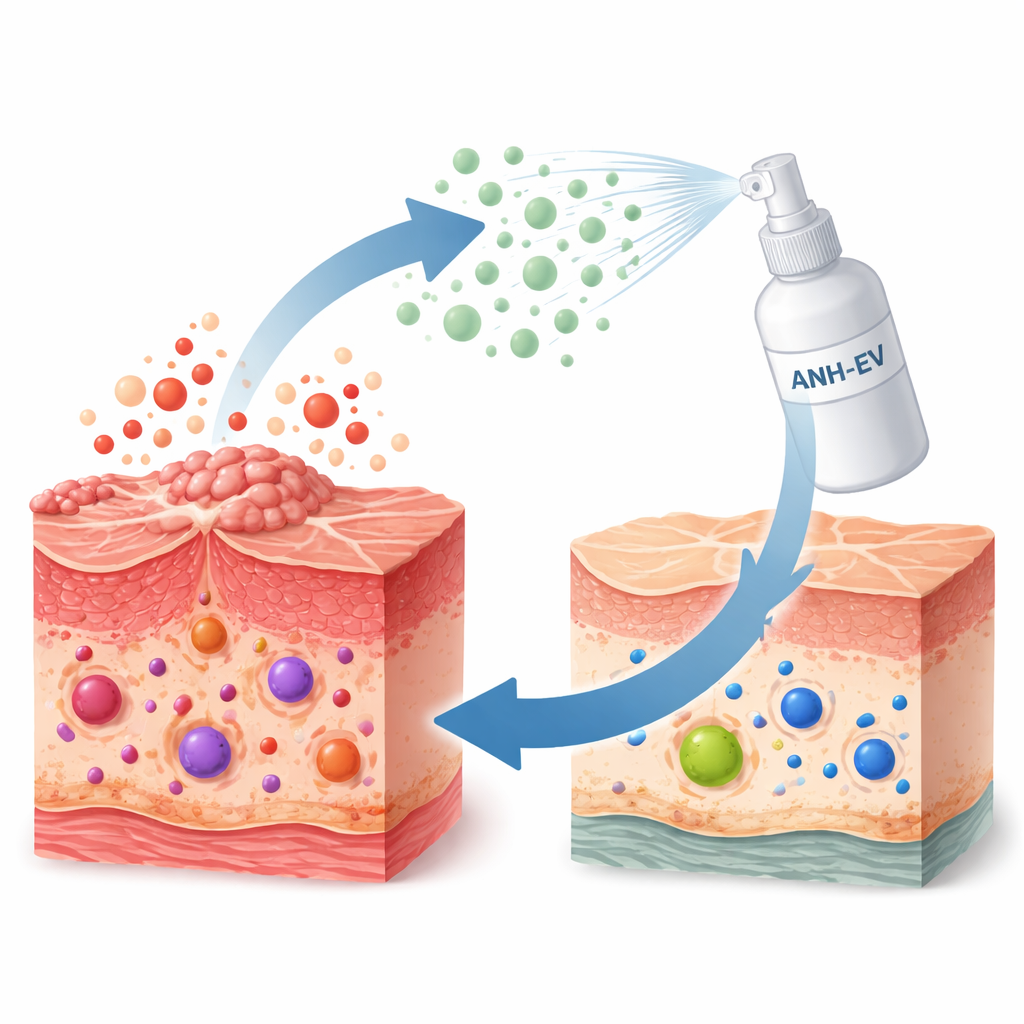
The scientists first tested ANH on human skin cells grown in the lab that had been pushed into an overactive, inflamed state. ANH curbed their abnormal growth and reduced key inflammatory messengers such as interleukin-6 and tumor necrosis factor. Next, they moved to a well-established mouse model of psoriasis, in which a cream containing the immune stimulant imiquimod triggers red, thick, scaly skin similar to human plaques. When the researchers sprayed ANH onto the affected skin, the mice developed milder lesions, with thinner epidermis, less scaling and redness, and fewer overactive immune cells invading the skin and spleen. Markers that signal runaway cell growth in the outer skin layer also dropped, pointing to a genuine easing of the disease process rather than cosmetic masking.
Nanovesicles that carry medicine where it’s needed
Like many plant compounds, ANH has drawbacks: it dissolves poorly in water and, being a flavonoid, might in theory make skin more sensitive to sunlight. To address this, the team packaged ANH inside extracellular vesicles—natural, nanosized bubbles released by mesenchymal stem cells. These vesicles can fuse with other cells and deliver their cargo efficiently while being well tolerated by the body. The researchers confirmed the vesicles’ size, shape, and purity, then loaded them with ANH. In lab-grown skin cells, these ANH-loaded vesicles (EV-ANH) better restrained inflammatory overgrowth than either ANH or empty vesicles alone. In mice, EV-ANH treatment produced smoother skin, less redness and thickening, and smaller spleens than untreated animals, indicating improved control of both local and whole-body inflammation.
Shutting down a rust-like form of cell damage
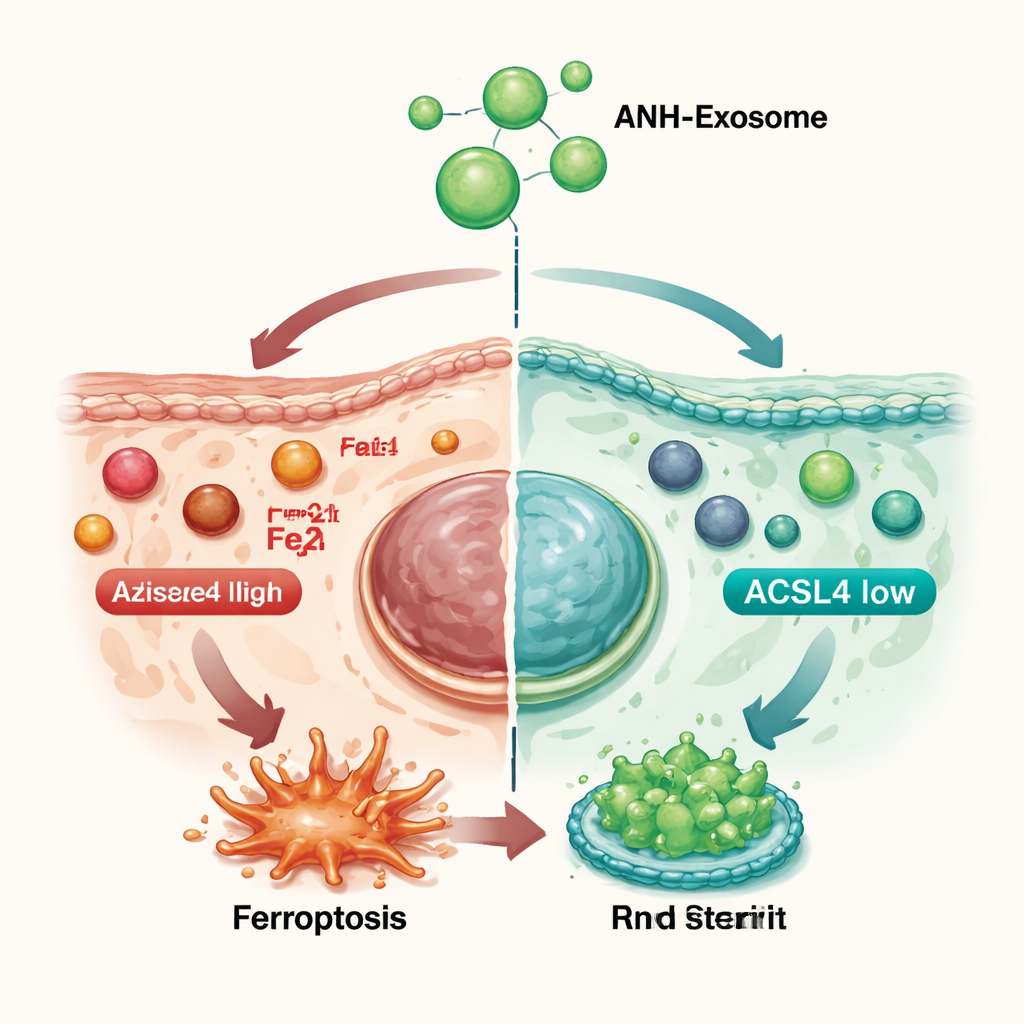
A key discovery of the study involves ferroptosis, a recently recognized form of cell death driven by iron and fat oxidation—something like biological “rusting.” Psoriatic skin shows signs of heightened ferroptosis, which can further inflame tissue. By analyzing gene activity in mouse skin, the team found that ANH strongly dampened genes linked to this process, especially one called ACSL4, which helps build the unstable fatty molecules that fuel ferroptosis. In both mouse skin and human skin cells, ANH reduced ACSL4 levels and markers of oxidative damage. When the scientists used a known ferroptosis blocker, it improved psoriasis in mice about as well as ANH. And when they artificially lowered ACSL4 directly, ANH’s additional benefit shrank—evidence that ANH works largely by turning down this ferroptosis switch.
What this could mean for people with psoriasis
This work does not yet provide a ready-made treatment for patients, but it lays important groundwork. It shows that a traditional plant ingredient can be refined and delivered via stem-cell-derived vesicles to calm psoriasis-like disease in mice, acting on both immune overactivation and a specific form of cell damage driven by iron and lipids. If similar effects are confirmed in humans, ANH-loaded vesicles could one day offer a topical therapy that eases plaques by restoring balance in the skin’s immune and oxidative environment, potentially with fewer side effects than many existing drugs.
Citation: Gao, Y., Ma, B., Jin, R. et al. Anhydroicaritin-loaded mesenchymal stem cell exosomes ameliorate psoriasis via ACSL4-mediated ferroptosis in mice. Commun Biol 9, 306 (2026). https://doi.org/10.1038/s42003-026-09575-1
Keywords: psoriasis, ferroptosis, anhydroicaritin, extracellular vesicles, mesenchymal stem cells