Clear Sky Science · en
Liraglutide attenuates aluminum chloride-induced Alzheimer’s disease in rats by modulating the oxLDL/LPA/LPAR1 pathway
Why a diabetes drug could matter for memory loss
As people live longer, more families face the slow, devastating loss of memory and personality that comes with Alzheimer’s disease. At the same time, type 2 diabetes and obesity are on the rise, and scientists have noticed surprising links between blood sugar problems and dementia. This study asks a hopeful question: can a drug already used for diabetes, called liraglutide, also protect the brain from Alzheimer-like damage—at least in an animal model that mimics key features of the disease?
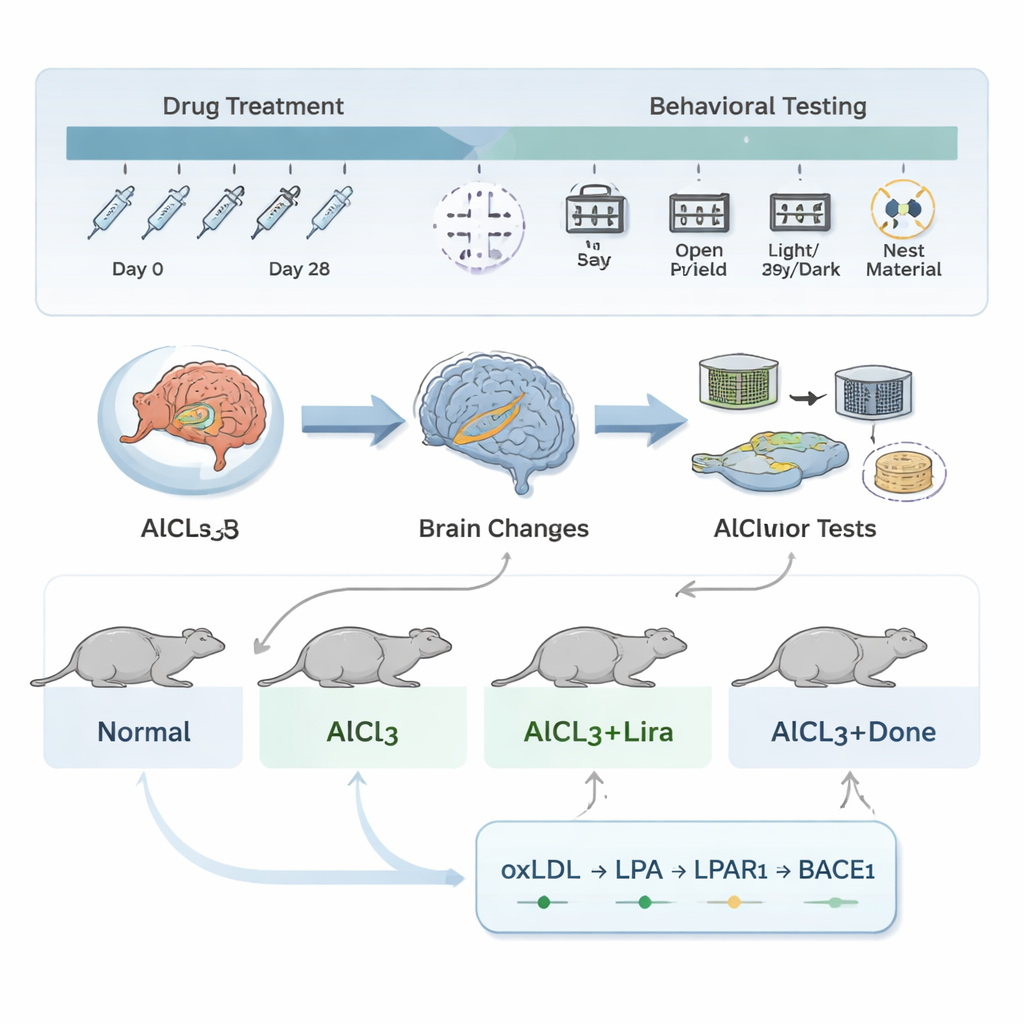
Building an Alzheimer-like condition in the lab
To explore this, researchers worked with male rats and divided them into four groups: a healthy control group, a group exposed to aluminum chloride (AlCl3) to trigger Alzheimer-like changes, and two treatment groups that received AlCl3 plus either liraglutide or the standard Alzheimer’s drug donepezil. Aluminum exposure is known to provoke brain changes in rodents that resemble human Alzheimer’s, including memory loss, anxiety, and the buildup of harmful proteins. Over 45 days, the rats received daily aluminum injections, while the treatment groups also received their assigned drug. After this period, the animals went through a series of behavior tests that measured anxiety, depression-like signs, and different kinds of memory, such as learning to find a hidden platform in water or recognizing a new object.
Behavior, mood, and memory under the microscope
Rats exposed only to aluminum became more anxious, less willing to explore light or open spaces, and showed signs of despair-like behavior when forced to swim. Their ability to recognize new objects and to learn and remember the location of a hidden platform in a water maze was also clearly impaired. Liraglutide treatment changed this picture. Rats receiving liraglutide alongside aluminum were braver in open spaces, spent more time in the light, and showed less immobility in the swim test. They also performed much better on memory tasks, often matching or surpassing the improvements seen with donepezil. In short, the diabetes drug did not just ease one symptom—it broadly improved both mood-related behavior and several forms of learning and memory in this model.
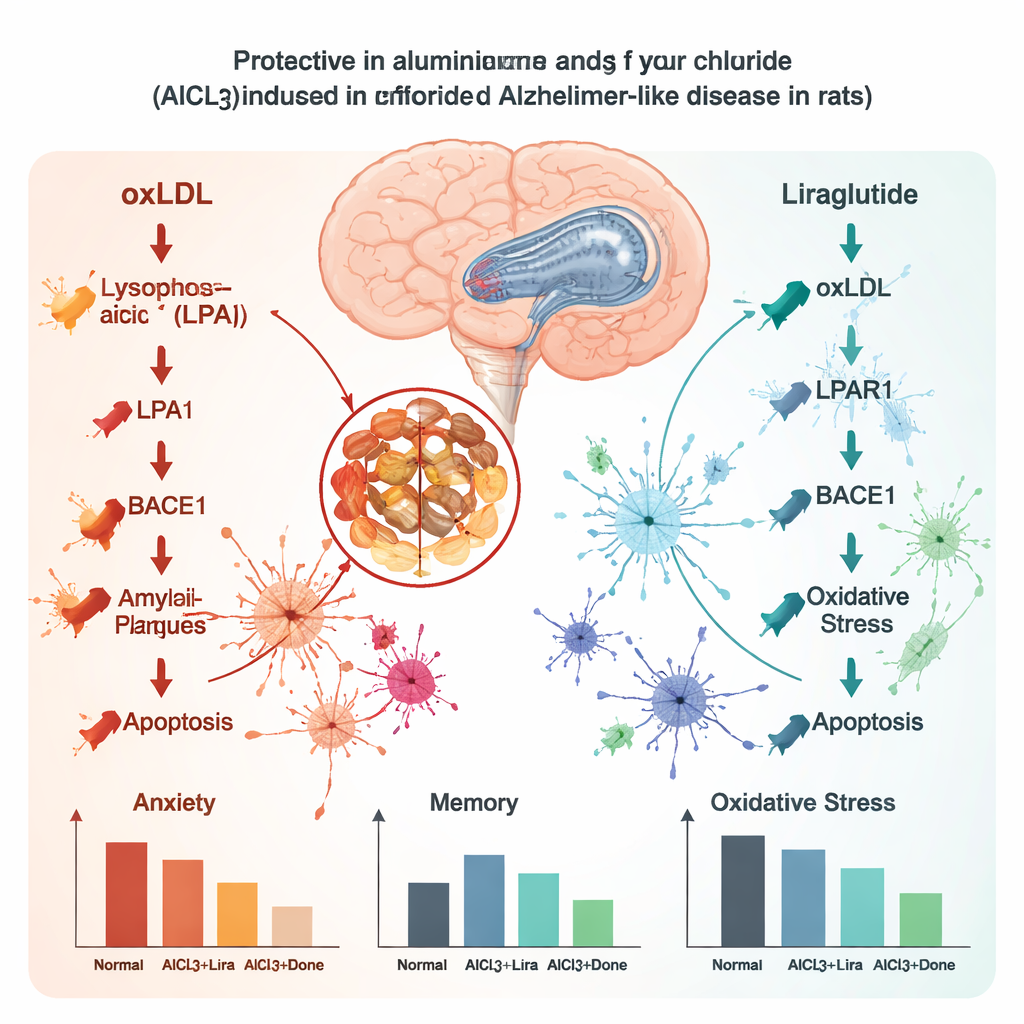
What was happening inside the brain
When the scientists examined the rats’ brains, they saw that aluminum had damaged key regions involved in thinking and emotion, such as the hippocampus and prefrontal cortex. There were fewer healthy nerve cells, more shrunken and dying cells, and more structures resembling the amyloid plaques and tangled fibers that mark Alzheimer’s disease in people. Aluminum also disturbed the brain’s chemical balance: natural antioxidants were depleted, molecules linked to fat damage were increased, and the enzyme that breaks down the memory-related messenger acetylcholine was overactive. Liraglutide largely reversed these trends. Treated rats had better-preserved brain structure, fewer plaque- and tangle-like deposits, higher levels of protective antioxidants, lower markers of oxidative damage, and reduced activity of the acetylcholine-breaking enzyme, again comparable to or better than donepezil.
A newly highlighted chain reaction in brain cells
Beyond these visible changes, the team focused on a specific chain of events inside brain cells that may help drive Alzheimer’s pathology. This pathway involves oxidized “bad” cholesterol (oxLDL), a fat messenger called lysophosphatidic acid (LPA), its receptor LPAR1, and an enzyme known as BACE1 that helps produce the amyloid protein. Aluminum exposure pushed all of these players upward in the hippocampus, along with signals of cell suicide (more BAX, less protective BCL-2) and higher levels of amyloid precursor protein and Tau, the ingredients of plaques and tangles. Liraglutide dampened this entire cascade: oxLDL, LPA, LPAR1, and BACE1 levels fell, pro-death signals were reduced, and the burden of amyloid- and Tau-positive cells declined. These results suggest that liraglutide’s brain benefits are not just cosmetic but tied to deeper shifts in the molecular machinery that fuels Alzheimer-like damage.
What this could mean for future treatments
For non-specialists, the takeaway is that a drug originally designed to help control blood sugar and weight might also shield the brain from changes resembling those seen in Alzheimer’s disease—at least in rats exposed to a strong chemical trigger. Liraglutide improved behavior, protected brain tissue, and quieted a harmful fat- and cholesterol-linked pathway connected to amyloid buildup. While animal studies do not guarantee success in humans, they add weight to the idea that some diabetes drugs could be repurposed to slow or prevent dementia. If future work in more realistic models and clinical trials confirms these effects, patients might one day benefit from a brain-protective treatment that is already familiar to doctors and regulators.
Citation: Abo El-Magd, N.F., Ramadan, N.M. & Eraky, S.M. Liraglutide attenuates aluminum chloride-induced Alzheimer’s disease in rats by modulating the oxLDL/LPA/LPAR1 pathway. Commun Biol 9, 262 (2026). https://doi.org/10.1038/s42003-026-09531-z
Keywords: Alzheimer’s disease, liraglutide, type 2 diabetes, cholesterol and brain health, neuroprotection