Clear Sky Science · en
Multi-omics reveals the involvement of endophytes in the growth of Moso bamboo (Phyllostachys edulis) shoots
Bamboo That Grows Almost Before Your Eyes
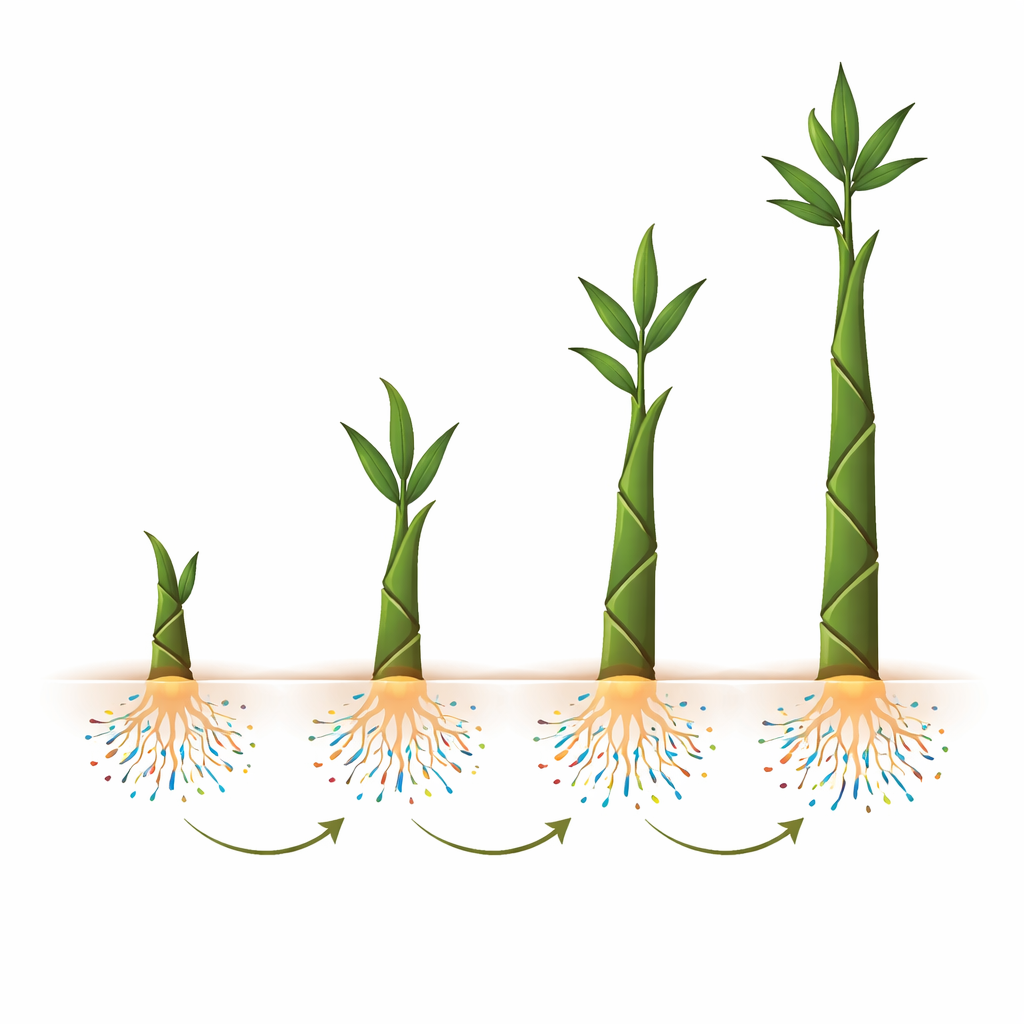
Moso bamboo is famous for shooting skyward in just a few weeks, sometimes growing nearly a meter a day. Gardeners and city planners love its speed, but such explosive growth raises a puzzle: how can a plant build so much living tissue so quickly? This study looks beyond the bamboo’s own cells and genes to the hidden partners living inside it—microbes nestled in roots and stems—and asks how these tiny residents help drive the giant’s growth spurt.
Hidden Helpers Inside the Bamboo
Like many plants, Moso bamboo is filled with endophytes, bacteria and fungi that live quietly inside roots, stems, and young shoot tips without causing disease. The researchers followed these internal communities through four key stages, from winter dormancy to rapid spring growth, and in three parts of the plant: the shoot tip, the shoot base, and the roots. Using DNA sequencing, they found that the mix of microbes changed dramatically with both tissue type and growth stage. Dormant shoots, especially the growing tips, were highly selective, allowing only a few hardy microbes to stay. As the bamboo shifted into active growth, diversity increased, particularly in the roots, hinting that the plant was opening its doors to more microbial partners.
Microbial Cities and Their Changing Neighborhoods
The team next examined how these microbes related to one another, mapping “social networks” of species that tended to appear together. During dormancy, the shoot tips formed the most complex networks, even though they contained relatively few kinds of microbes. This pattern is typical of nutrient-poor, tightly defended environments, where surviving species must cooperate or compete intensely to hang on. In the roots, networks were most complex when dormancy was breaking and then gradually simplified as growth accelerated, suggesting that early spring is a crucial window when microbial communities organize themselves for the growing season ahead.
Hormone Waves and Microbial Shifts
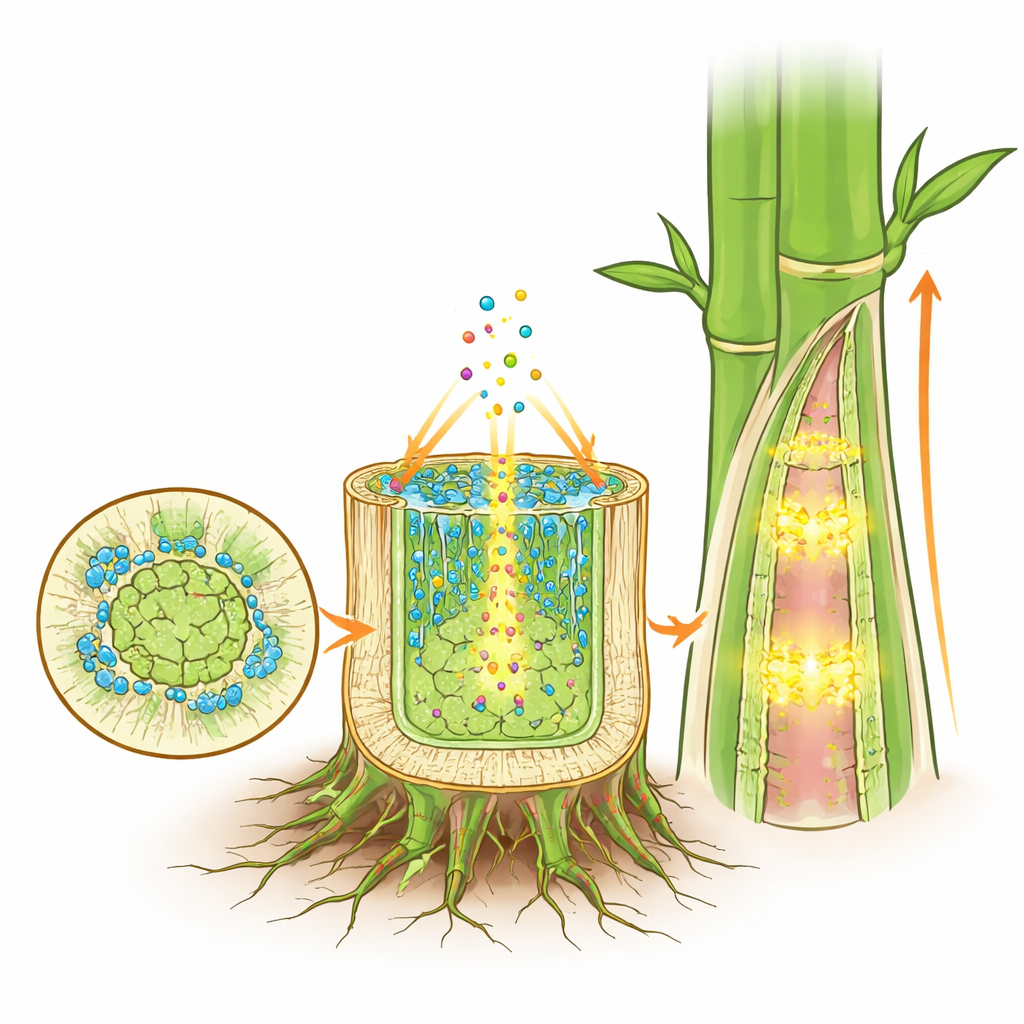
Because plant hormones act as master growth switches, the researchers measured a suite of these chemical signals in the same tissues. They found distinct waves of hormone activity over time and along the length of the shoot. Compounds that spur cell division and stretching peaked in roots and shoot tips just as growth picked up, while stress-related hormones were higher during dormancy. Statistical tests showed that hormone patterns in the roots were closely linked to changes in both bacterial and fungal communities. Certain bacterial groups—including Paenibacillus, known from other crops to boost root growth—were consistently associated with genes involved in hormone sensing and response, particularly those tied to the growth regulator auxin.
Genes Respond to Microbial Signals
To see how bamboo itself reacts to these inner partners, the team analyzed which root genes turned on or off across the four stages. Over twelve thousand genes changed their activity, with many involved in sugar use, defensive chemicals, and hormone signaling. A set of auxin-related genes stood out as central hubs in the plant’s internal wiring diagram. One family of genes, AUX/IAA, became especially active just as dormancy broke, a time when roots were filling with both auxin precursors and specific bacteria. Later in development, another auxin-responsive family, SAUR genes, surged in activity, matching the phase when cells elongate rapidly and shoots race upward. Microbial groups like Paenibacillus showed strong positive links to these gene families, suggesting that the microbes may be nudging the plant’s hormone system toward fast growth.
How Tiny Tenants Help a Giant Shoot Upward
Taken together, the results support a simple picture: during winter, Moso bamboo keeps microbes on a tight leash, but as spring arrives it relaxes its defenses, allowing selected endophytes to colonize roots and shoots. These microbes appear to influence or respond to the plant’s hormone signals, helping switch from a defensive, dormant mode to one focused on cell division and elongation. Although the study is largely correlative, it points to a partnership in which endophytes help tune hormone pathways so that bamboo can grow at extraordinary speeds. Understanding this relationship may one day allow farmers and foresters to harness beneficial microbes to boost growth and resilience in bamboo and other fast-growing crops.
Citation: Zhao, A., Huang, M., Cheng, Y. et al. Multi-omics reveals the involvement of endophytes in the growth of Moso bamboo (Phyllostachys edulis) shoots. Commun Biol 9, 438 (2026). https://doi.org/10.1038/s42003-025-09436-3
Keywords: bamboo growth, plant microbiome, endophytes, plant hormones, root microbes