Clear Sky Science · en
Evaluating the analytical performance of direct-to-consumer gut microbiome testing services
Why home gut tests matter to you
At-home gut microbiome kits promise to tell you which microbes live in your intestines and how they affect your health, from digestion to mood. Many people buy these tests hoping for clear answers and personalized advice on food or supplements. This study asks a basic but crucial question: when different companies test the same stool sample, do they actually agree on what is in it—and can their reports be trusted to guide health decisions?
How the tests were put to the test
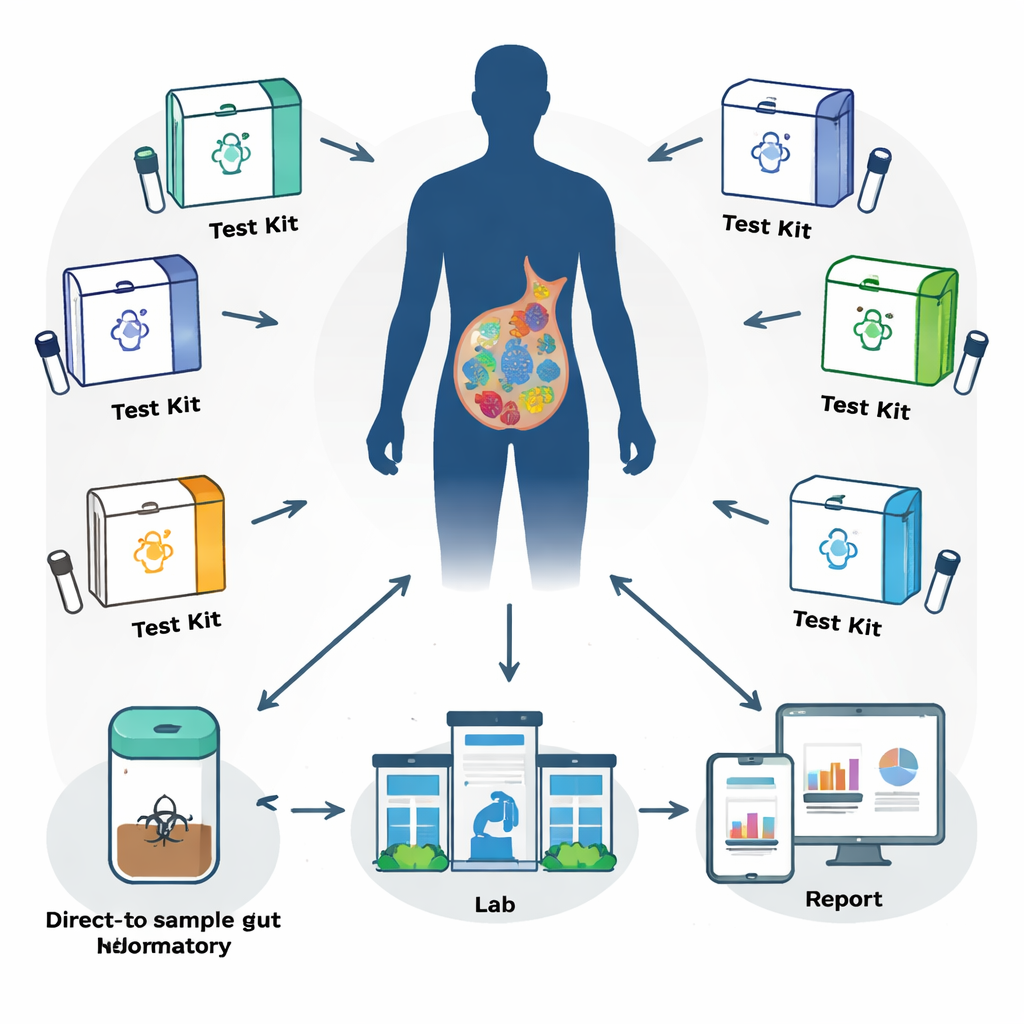
To probe this question, researchers at the U.S. National Institute of Standards and Technology (NIST) used a specially prepared, well-mixed stool sample from one donor. This standardized material behaves like a real human stool sample but is the same every time it is used. The team ordered three test kits from each of seven direct-to-consumer gut microbiome companies. They followed each company’s collection instructions as closely as possible, using the same pooled stool material for every kit and shipping the samples back under normal conditions, just as a customer would.
Different roads from stool to report
Turning a bit of stool into a colorful microbiome report involves many steps: how the sample is collected and stored, how DNA is extracted, which sequencing method is used, and how the data are processed and interpreted. The companies in this study used a mix of approaches. Some focused on a single bacterial marker gene, while others sequenced nearly all DNA in the sample. They differed in swabs, transport liquids, how deeply they sequenced, and how small a signal they would still report. Each of these choices can nudge the final picture of the microbial community in different directions, even when the starting material is identical.
Same sample, different stories
When the researchers compared the results, they found that the same standardized stool sample often looked quite different from one company to another. Even basic measures of diversity—the number and balance of microbe types—varied, with no simple pattern tied to the amount of sequencing or method used. In one striking case, one of the three tests from a single company produced a microbial profile so unlike the other two that it shared only a handful of named microbial groups with them. More than half of its reads could not even be assigned to a known group at the level of detail reported, yet the company still issued a standard-looking report to the “customer.”
Lab differences can rival real biological differences
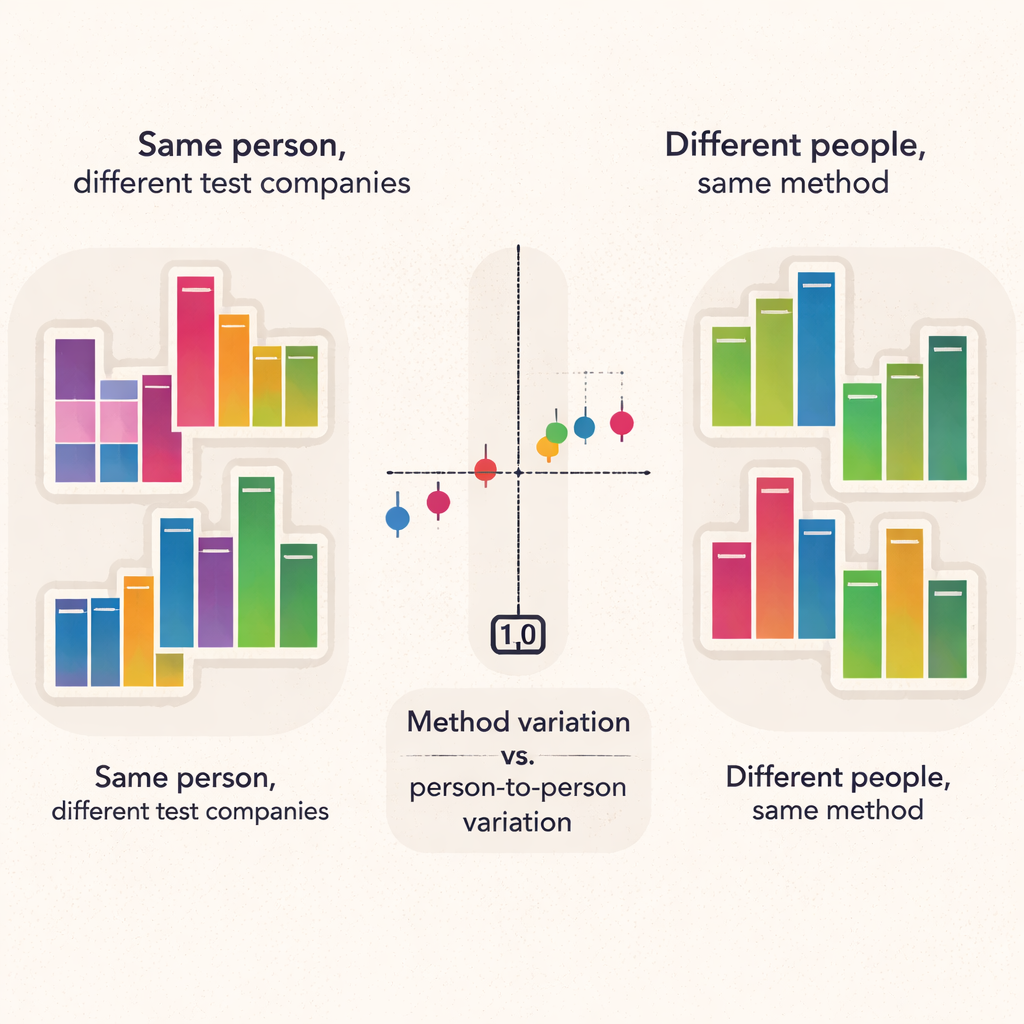
The team then asked how much of this spread was due to differences between companies versus genuine differences between people. To find out, they compared the cross-company results on the single donor’s stool to data from eight different donors analyzed in a single, consistent NIST lab workflow. Using statistical models, they found that, for most common groups of gut bacteria, the variation caused by changing methods and companies was as large as—or even larger than—the variation seen between different individuals. In other words, two companies testing the same person could disagree as much as one trustworthy method testing two entirely different people.
Mixed messages for health advice
Many companies go beyond listing microbes and provide health scores, “good” and “bad” bacteria labels, and lifestyle or supplement recommendations. This study showed that such advice can shift dramatically with small changes in the underlying measurements. For a single company’s three tests on the same reference stool, one report labeled the microbiome as generally healthy with above-average performance for most functions, while another from the same batch of material flagged the gut as unhealthy in most categories. Across companies, some reported a potential pathogen as present, while others said it was absent. Reference “healthy” comparison groups also differed, with some firms using their own customer data and others relying on external research databases, further complicating interpretation.
What this means for your home gut test
For non-specialists, the main takeaway is caution, not panic. This study does not claim that any one company is completely right or wrong, nor does it say that gut microbiome science is hopeless. Instead, it shows that today’s commercial tests can be highly sensitive to the methods used, and that their results—and the advice built on them—may not be as solid as they appear. Before we rely on these reports to diagnose disease or choose treatments, better standards, transparent quality controls, and clear evidence linking specific microbial patterns to health outcomes are needed. Until then, at-home gut tests may be most useful as educational tools or conversation starters with healthcare professionals, rather than as stand-alone guides for medical decisions.
Citation: Servetas, S.L., Gierz, K.S., Hoffmann, D. et al. Evaluating the analytical performance of direct-to-consumer gut microbiome testing services. Commun Biol 9, 269 (2026). https://doi.org/10.1038/s42003-025-09301-3
Keywords: gut microbiome, home testing kits, direct-to-consumer tests, microbiome accuracy, stool DNA sequencing