Clear Sky Science · en
Meta-analytical evidence of a self–other discrepancy in climate change-related risk perceptions
Why We Think Others Will Suffer More
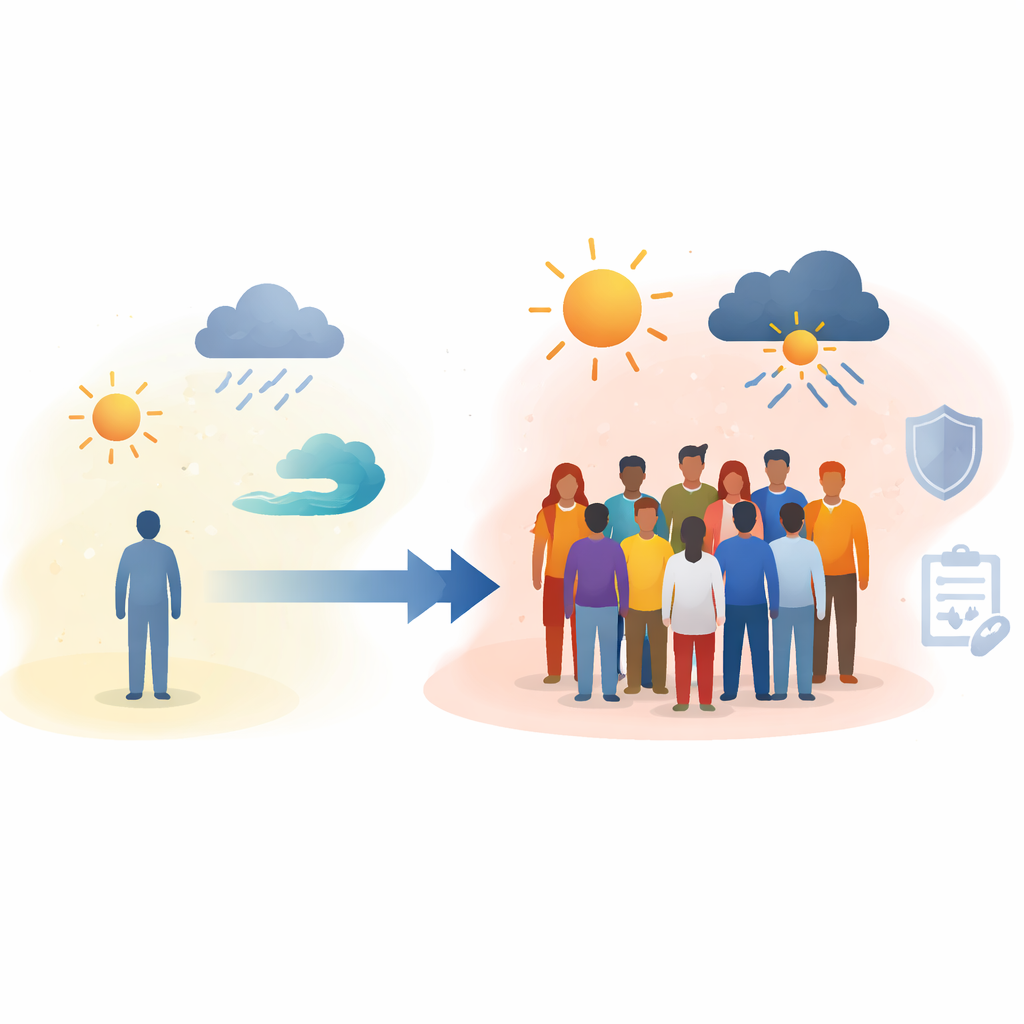
When you hear about rising seas, heatwaves or floods, you might worry about cities far away, or about future generations—but not quite as much about yourself. This article pulls together data from more than 70,000 people around the world and shows that this is not a coincidence. Most of us instinctively believe that climate change will hit other people harder than it will hit us, and that quiet bias could slow down how we prepare for a warming world.
A Global Look at Climate Worry
The researchers conducted a large meta-analysis, meaning they combined results from many separate studies to see the bigger picture. They gathered 83 measurements from 60 datasets, spanning 17 countries and more than a decade of surveys. In each study, people rated how likely or how severe climate-related threats—such as heatwaves, storms, floods or climate change in general—would be for themselves and for other people alive today. This approach allowed the authors to look beyond any one country or event and ask: is there a consistent pattern in how people compare their own risk to everyone else’s?
The Tilt in Our Personal Judgments
The combined data revealed a strong and remarkably consistent pattern. In 81 out of 83 cases, people judged their own climate risks to be lower than the risks faced by others. Statistically, the size of this gap was substantial compared with typical effects found in social science research. In practical terms, this means that in well over half of situations, people see both the likelihood and the seriousness of climate impacts as worse for others than for themselves. This pattern showed up not only for broad worries about “climate change” or “global warming,” but also for specific dangers like floods, droughts and wildfires.
Who We Compare Ourselves To Matters
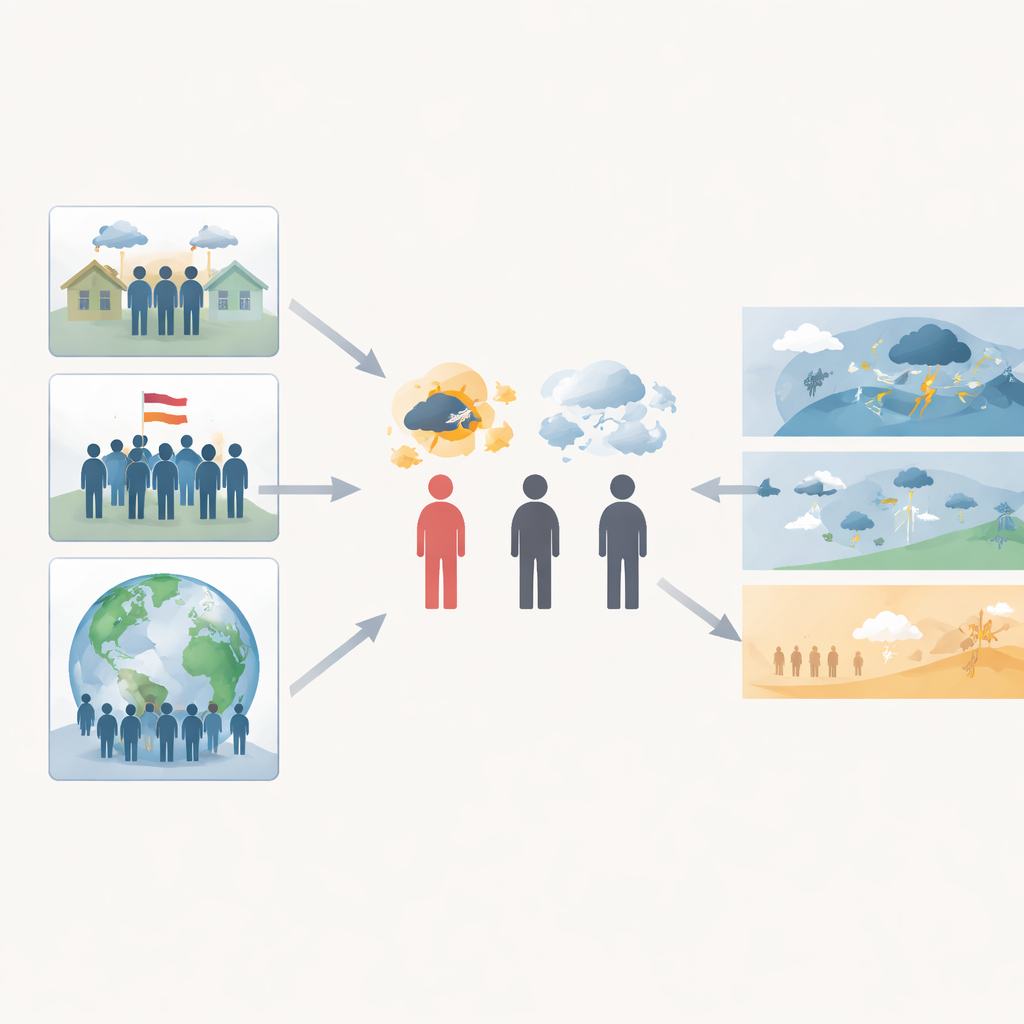
The size of the self–other gap depended on whom people had in mind when thinking about “others.” When people compared themselves to close groups—such as neighbors or people in their own town—the difference was present but relatively modest. The gap grew larger when the comparison group was everyone in the country, and it was largest when people compared themselves to “all humans” or people in other parts of the world. This suggests that our minds may lean on vague, high-risk stereotypes when we think about distant others, while we treat ourselves and those near us as more capable or less exposed. In other words, the more abstract the comparison group, the more we downplay our own danger.
Living With Real Danger Narrows the Gap
The authors also asked whether people’s optimism shrinks when they live in places that already face severe climate hazards. They grouped studies into regions that, according to international climate assessments, differ in objective risk: Asia and Oceania as high risk, the United States as medium risk and Europe as lower risk. The self–other gap appeared in all three regions, but it was smallest where climate-related disasters are most frequent and largest where objective risk is lowest. This suggests that direct exposure to serious threats can make people’s judgments more balanced, even if the tendency to see oneself as safer never disappears entirely.
Why This Matters for Climate Action
Believing that “others will suffer more” may feel harmless, but it can have real consequences. If people see climate change as a bigger problem for distant strangers than for themselves, they may be less willing to take protective steps, support ambitious policies or adapt their homes and communities. The findings point to a challenge for risk communicators: messages that talk about “humanity” or “people in other countries” might accidentally reinforce this bias. The authors suggest that conversations and public messages that highlight risks to specific, nearby groups—such as your family, your neighborhood or your city—may help people recognize their own vulnerability and make more informed decisions about how to respond to a changing climate.
Citation: Sandlund, I., Bjälkebring, P. & Bergquist, M. Meta-analytical evidence of a self–other discrepancy in climate change-related risk perceptions. Nat Sustain 9, 377–384 (2026). https://doi.org/10.1038/s41893-025-01717-3
Keywords: climate risk perception, optimism bias, comparative risk, risk communication, extreme weather