Clear Sky Science · en
Imaging-based organ-specific aging clock predicts human diseases and mortality
Why this research matters for your health
Aging does not treat every part of the body the same. Your brain, heart, liver, or eyes can each age faster or slower than the date on your birth certificate suggests. This study asks a simple but powerful question: can medical scans be turned into "aging clocks" for individual organs, and do those clocks reveal who is more likely to develop serious diseases or die earlier? The answer, based on tens of thousands of scans and blood tests from the UK Biobank, is yes—opening the door to much earlier, organ‑by‑organ prevention.
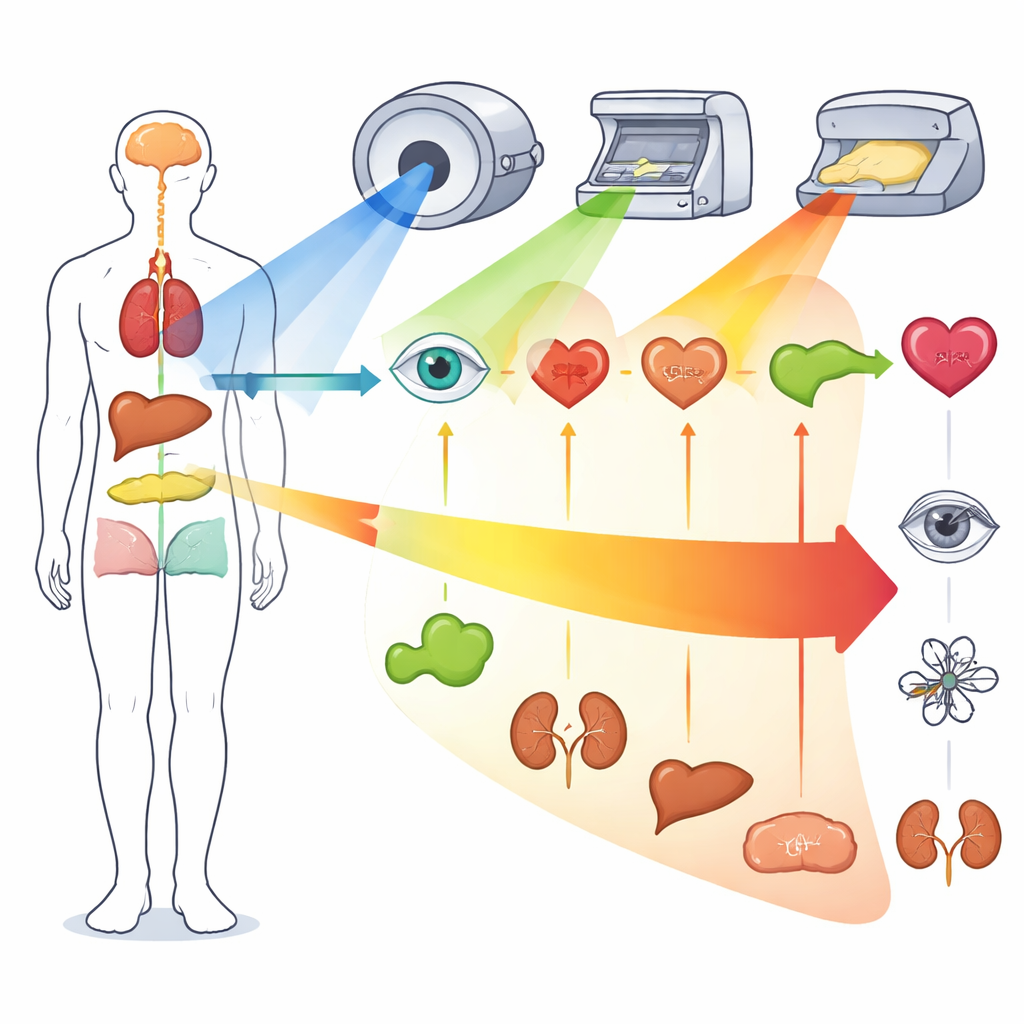
Pictures that reveal how old your organs really are
The researchers built aging clocks for seven major body systems: brain gray matter, brain white matter, heart, liver, kidney, pancreas, eyes, and overall body composition (fat, muscle, and bone). They used 1,777 measurements automatically extracted from MRI scans, eye imaging, and body scans in more than 11,000 healthy adults. With machine‑learning models, they predicted each person’s age from these scan features. The difference between the predicted age of an organ and a person’s actual age—the "age gap"—served as a measure of how quickly or slowly that organ appeared to be aging.
Organs age together, but some drive the others
The team then examined how these organ age gaps relate to one another across the body. They found that some organs, especially the heart and overall body composition, were tightly linked to others. For example, an older‑than‑expected body composition was tied to older-appearing pancreas and kidney, while an older brain gray matter was closely linked to older brain white matter, and also related to heart and body aging. These patterns suggest that certain organs act as hubs in the body’s aging network, where changes in heart or body fat and muscle may ripple out and influence aging elsewhere.
Early warning signals for disease and death
The crucial test was whether these organ‑specific age gaps could forecast future health problems. Following participants over time, the researchers showed that the greater an organ’s age gap, the higher the person’s risk of diseases that primarily affect that organ—and of dying. An older‑than‑expected brain strongly predicted dementia and stroke; an older heart predicted hypertension, heart failure, and rhythm problems; an older kidney predicted renal failure; an older pancreas and eye predicted diabetes and glaucoma, respectively. On top of this, the average age gap across all seven organs predicted a wide range of illnesses and overall mortality, even after accounting for ordinary risk factors like chronological age, sex, body mass index, smoking, and drinking.
What blood and lifestyle say about organ aging
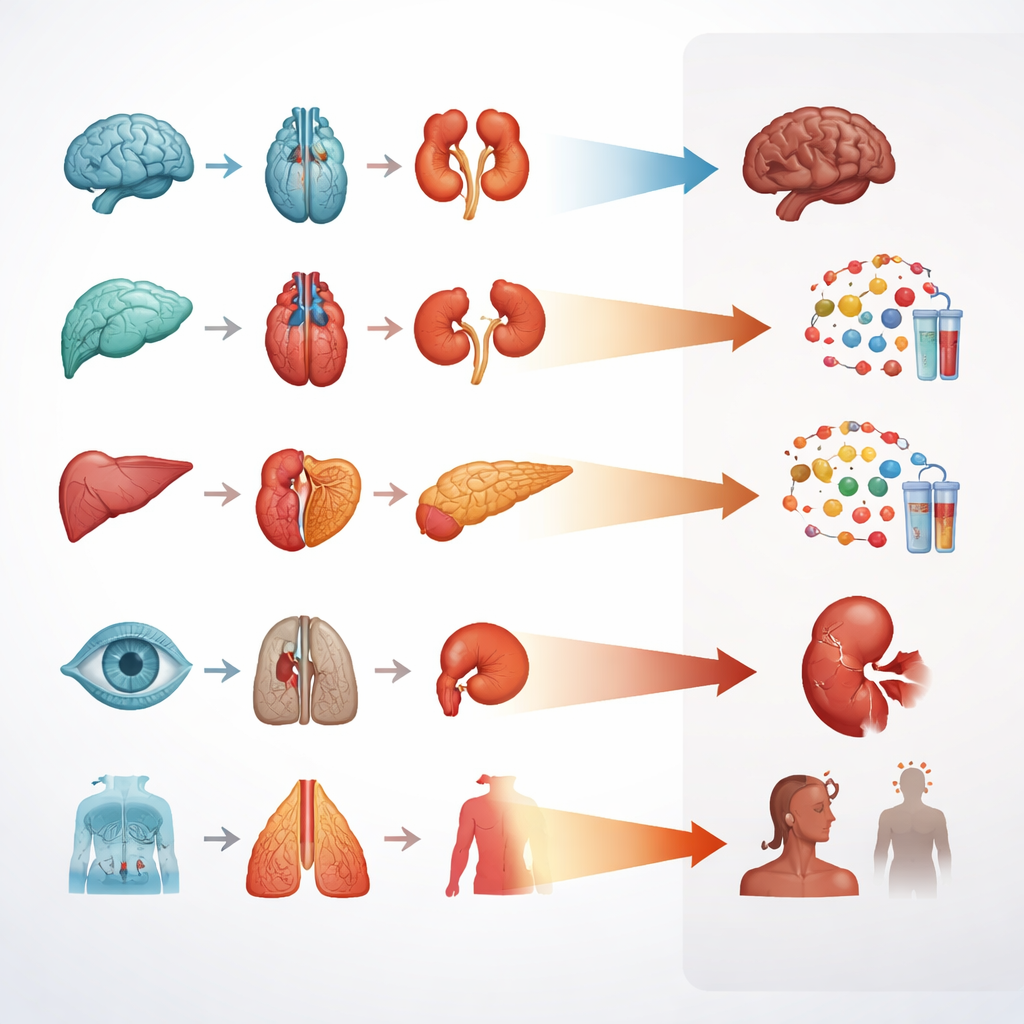
Because organs constantly exchange substances with the bloodstream, the authors next asked whether blood tests mirror the imaging‑based age gaps. They linked organ aging to 299 routine and advanced blood biomarkers and nearly 3,000 blood proteins. Clear patterns emerged. The liver, kidney, and pancreas—key metabolic organs—showed especially rich links to fats, lipoproteins, and other metabolic markers. Classic clinical measures such as creatinine and cystatin C rose with older kidney age, while many proteins tied to local brain, liver, or pancreas function fell as those organs appeared older on scans. In contrast, proteins involved in chronic inflammation tended to rise with organ aging across the board, echoing the idea of "inflammaging." Lifestyle and everyday experiences also mattered: more television watching, heavier smoking, and worse self‑rated health were linked to faster aging in multiple organs, whereas more physical activity, stronger handgrip, and higher cereal intake were tied to slower aging, particularly for body composition and pancreas.
From molecular clues to possible treatments
To probe biology even more deeply, the study used genetic tools to test whether certain proteins might actively drive organ aging rather than simply track it. They identified 14 proteins with evidence that changing their levels could alter the aging of specific organs, including the brain, kidney, pancreas, and eye. Several of these proteins already have drugs that target them, or are being studied in clinical trials for other conditions. While this work does not prove that such drugs will safely slow organ aging in people, it highlights concrete molecular targets for future laboratory experiments and, potentially, precision therapies.
What this means for the future of aging care
Taken together, this research shows that medical imaging can be repurposed into organ‑by‑organ aging clocks that reflect both visible structure and hidden molecular changes in the body. These clocks not only capture how fast each organ is wearing out but also add predictive power beyond simple birthdate and standard risk scores, especially for conditions like dementia, heart disease, diabetes, and kidney failure. In the long run, such tools could help doctors spot quietly accelerating organ damage years before symptoms appear, match people to targeted lifestyle changes or drugs, and track whether those interventions truly slow the biological aging of the organs that matter most.
Citation: Ren, P., Su, W., You, J. et al. Imaging-based organ-specific aging clock predicts human diseases and mortality. npj Digit. Med. 9, 278 (2026). https://doi.org/10.1038/s41746-026-02488-7
Keywords: biological age, medical imaging, organ aging, disease risk prediction, aging biomarkers