Clear Sky Science · en
Risk Prediction of Chronic Kidney Disease Progression in Type 2 Diabetes Mellitus Across Diverse Populations
Why this matters for people with diabetes
Many people with type 2 diabetes eventually develop problems with their kidneys, sometimes leading to dialysis or a transplant. Yet for any one person, it is hard for doctors to say who will see their kidney function worsen quickly and who will stay stable for years. This study shows how long-term medical records and modern computer techniques can be combined to forecast kidney trouble years in advance, giving patients and clinicians more time to act.
Following thousands of patients over many years
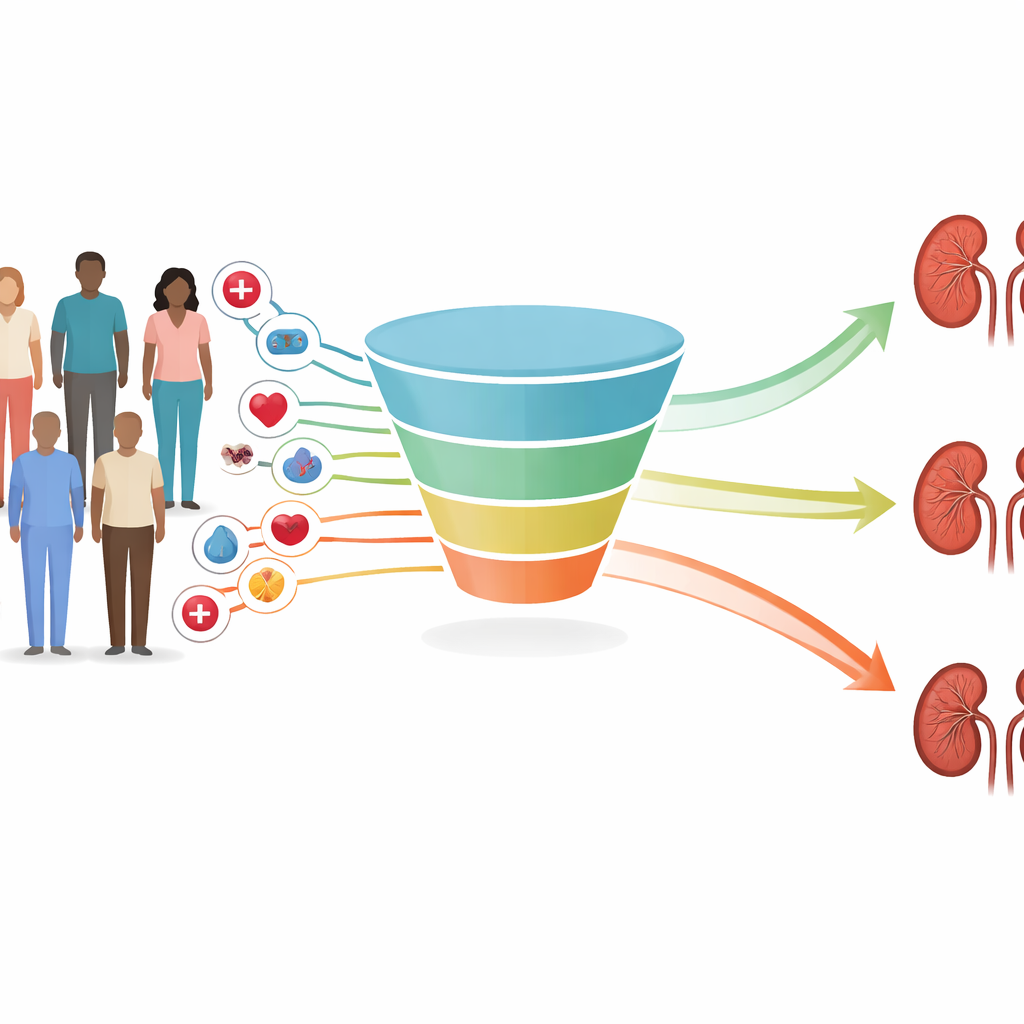
The researchers drew on electronic health records from Hong Kong’s public health system, which serves most of the local population. They focused on more than 220,000 adults with type 2 diabetes who had repeated kidney tests between 2003 and 2019, and then narrowed in on those whose kidneys were in the earlier, lower-risk stages at the start. Over 17 years, they tracked who progressed to more serious stages of chronic kidney disease and who remained stable. To reflect how care is delivered in real life, they built separate prediction models that look two, five, or ten years into the future.
Teaching computers to read health histories
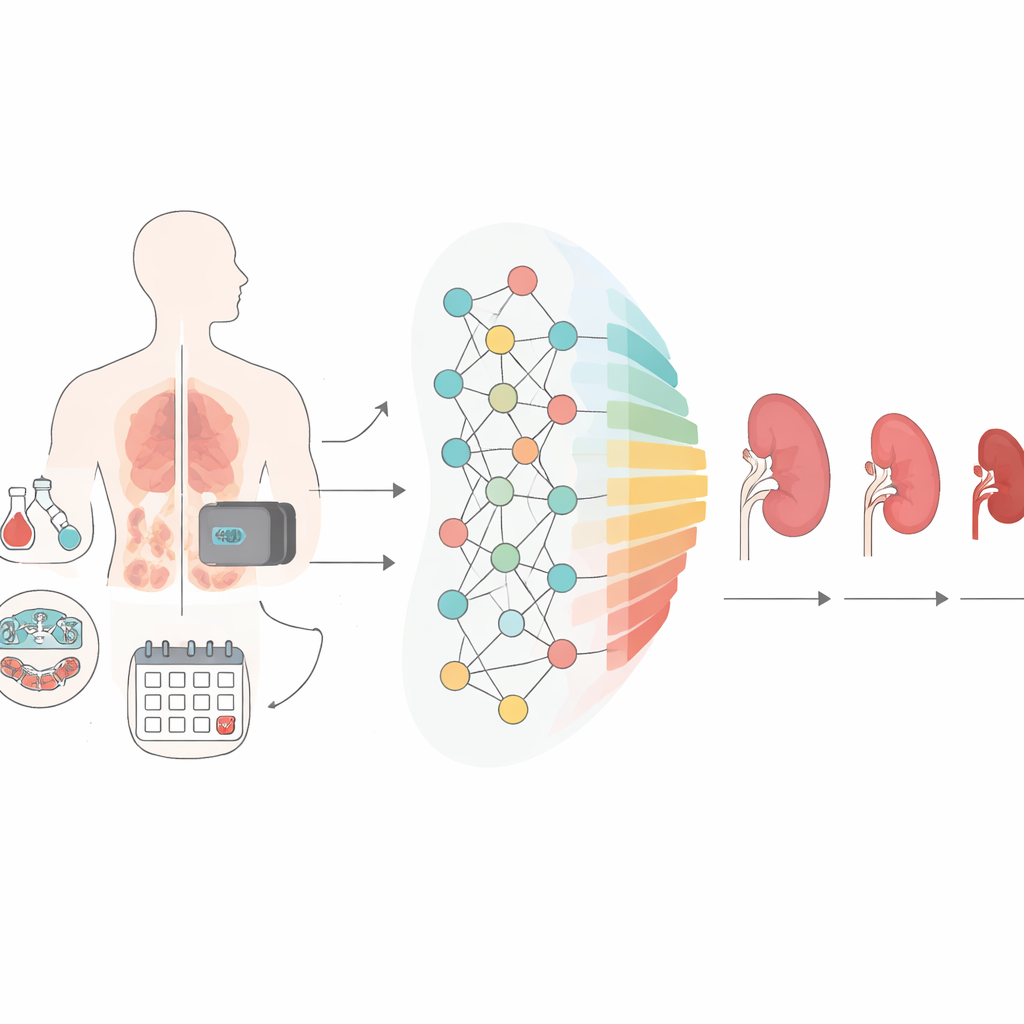
Instead of using only a few simple risk factors, the team trained deep learning models—flexible computer systems that can uncover patterns across many pieces of information at once. The models took in a mix of 21 routinely collected measures, including age, sex, body size, blood fats, blood sugar control, kidney-related blood tests, blood pressure, smoking history, and records of key medications such as blood pressure drugs and insulin. For situations where fewer tests are available, they also created a pared-down version that used 15 of the most commonly measured items. The models were trained on 80% of the data and checked on the remaining 20%, with special methods used to fill in missing values and guard against overfitting.
How well the predictions worked
Across all timeframes, the deep learning models were more accurate than traditional statistical tools and other machine learning methods. For patients in Hong Kong, the full model correctly ranked people’s future kidney risk with an area under the ROC curve of about 87% at two years, 85% at five years, and 85% at ten years, meaning it could usually tell who would worsen sooner. The simplified model performed only slightly less well. When the same models were applied to two independent research cohorts—the UK Biobank and the China Health and Retirement Longitudinal Study—they still worked reasonably well, even though many detailed lab or prescription records were missing in those datasets. This suggests the approach can carry over to different countries and health systems.
What drives risk and how results can guide care
To make the predictions understandable for clinicians, the team used an analysis technique that shows how much each factor contributes to the model’s decisions. The strongest signals were blood creatinine (a marker of kidney filtering ability), sex, age, blood pressure, long-term blood sugar, and recent use of medicines that affect the kidneys and blood pressure. The computer’s risk scores were then fed into standard survival analysis tools to draw curves showing how quickly people at low, medium, or high predicted risk tend to progress. In each group, those with higher predicted risk moved to worse kidney stages sooner and had shorter kidney-health “survival” times, confirming that the scores carry real clinical meaning. Importantly, performance was generally similar for men and women, though there were some differences in longer-term predictions in one external cohort.
What this could mean for everyday treatment
In essence, the study delivers a practical way to turn routine clinic data into personalized forecasts of kidney health for people with type 2 diabetes. A doctor could enter a patient’s age, lab results, and recent prescriptions and obtain an estimated chance of kidney decline over the next several years, along with a visual curve of expected disease course. Those flagged as high risk could receive closer follow-up, tighter blood pressure and sugar control, and earlier referral to kidney specialists, while low-risk patients might avoid unnecessary visits. Although the authors note that the model cannot prove which treatments prevent disease, and more work is needed to include additional data types and populations, their framework points toward a future where quiet shifts in lab values and medication patterns can be translated into clear, actionable warnings long before kidneys begin to fail.
Citation: Zhao, Y., Lu, S., Lu, J. et al. Risk Prediction of Chronic Kidney Disease Progression in Type 2 Diabetes Mellitus Across Diverse Populations. npj Digit. Med. 9, 250 (2026). https://doi.org/10.1038/s41746-026-02439-2
Keywords: type 2 diabetes, chronic kidney disease, risk prediction, electronic health records, deep learning