Clear Sky Science · en
Impact of broadband availability and digital literacy on video telehealth use among cancer patients
Why Your Internet Skills Matter for Cancer Care
For many people with cancer, getting to the doctor’s office is hard—because of distance, bad weather, fatigue, or cost. Video visits promise a way to see specialists from home. But this study shows that two things determine who actually benefits from video telehealth: the strength of the local internet and how comfortable patients are using technology. Understanding this balance helps explain why some people can easily see their cancer team on screen while others are left out.
The Promise and the Gap
During the COVID-19 pandemic, video visits quickly became a routine part of cancer care. In theory, this should help people in small towns, on farms, or with limited means get the same expertise as those near major hospitals. Yet clinics still see big differences in who uses video visits. The researchers suspected that both neighborhood internet service and personal comfort with devices like smartphones and laptops shape these patterns, and they set out to measure how each factor contributes.
Internet Access: More Than Just Speed
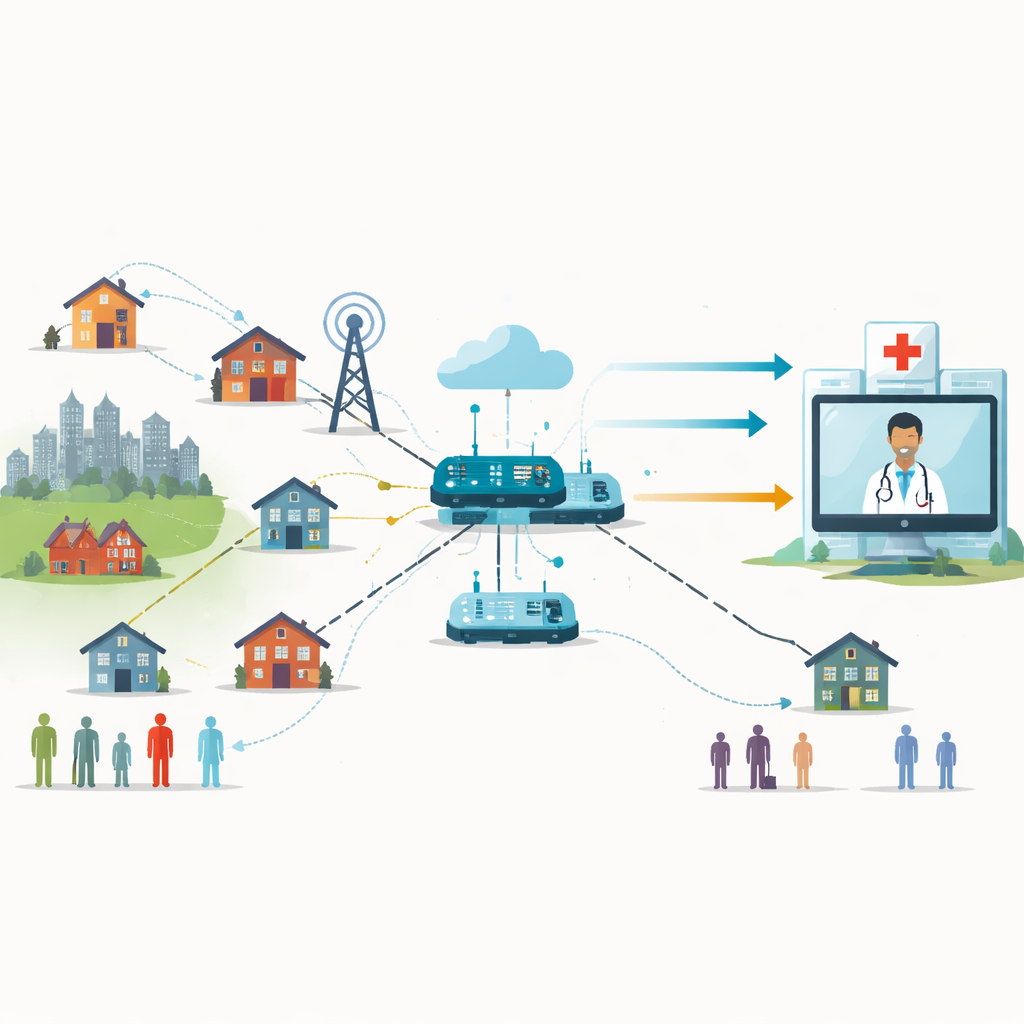
The team examined records from nearly 14,000 cancer patients seen at a large health system between mid-2020 and late 2021. Using federal broadband maps, they linked each patient’s home to details about local internet service, including how many companies served the area and what download speeds were offered. They found that video visits were clearly less common in places with only one or no internet provider able to offer basic high-speed service (at least 25 megabits per second). In these “low-broadband” areas, patients had fewer video visits than those living where several providers competed, even when advertised speeds were similar. This suggests that choice and reliability—not just a speed number on paper—strongly influence whether patients can actually connect.
What Patients Can Do with the Technology They Have
Next, the researchers focused on more than 1100 patients from a largely rural region in the Upper Midwest. They mailed them a short survey called the Digital Equity Screening Tool, which asks about device access, internet connection, and comfort managing health care online. Here, personal digital skills stood out. Patients who rated themselves “very comfortable” with online health tasks, and who reached the highest survey score, were much more likely to have used video visits—especially in areas with weak broadband. Access to devices such as smartphones and tablets was common in all groups, but what differed most was how confident people felt using them and whether they needed help to get online.
Age, Schooling, and Life Circumstances
The study also looked at social and personal factors. Younger patients and those who had more total clinic visits tended to use video visits more often, no matter where they lived. People with more years of schooling were more likely to try video visits than those with less formal education, while reported money troubles did not clearly change video use. Many patients, even in rural areas, said transportation was not their main barrier. Instead, the key divide lay between those who could independently navigate apps, logins, and video platforms and those who struggled or needed regular assistance.
What This Means for Patients and Communities
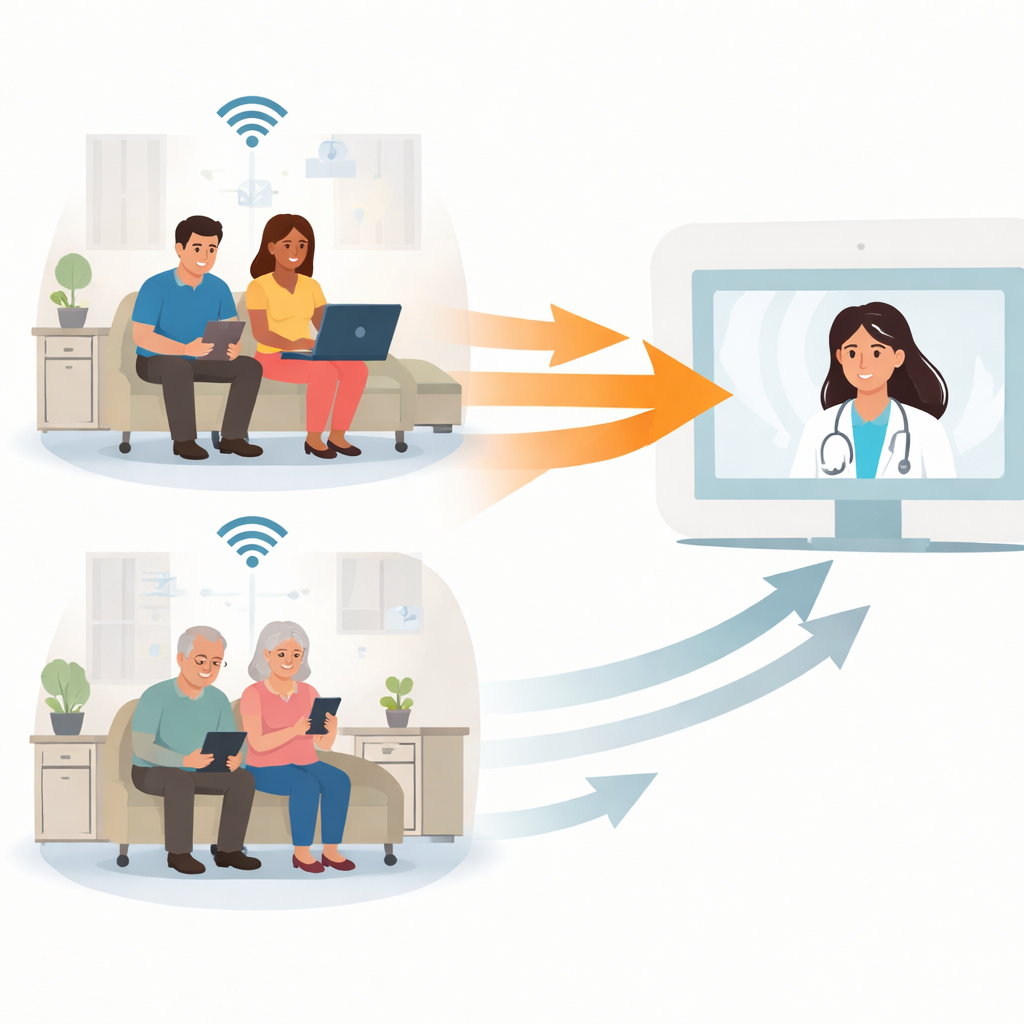
For patients, the message is hopeful but challenging: having strong internet nearby helps, but learning to use digital tools can often make an even bigger difference in whether you can see your cancer team by video. For communities and policymakers, the study argues that investing in broadband lines alone is not enough. Expanding reliable high-speed service, encouraging competition among providers, and at the same time offering simple, hands-on training and support for patients—especially older adults and those with less schooling—will be needed to make video cancer care truly reachable for everyone.
Citation: Pritchett, J.C., Sharma, P., Huang, M. et al. Impact of broadband availability and digital literacy on video telehealth use among cancer patients. npj Digit. Med. 9, 205 (2026). https://doi.org/10.1038/s41746-026-02397-9
Keywords: telehealth, cancer care, broadband access, digital literacy, health equity