Clear Sky Science · en
Predicting adverse events for risk stratification of chemotherapy based stem cell mobilization in multiple myeloma
Why this matters for patients and hospitals
Cancer care increasingly strains hospital capacity, especially for people with multiple myeloma who often need intensive treatments. One key step in their therapy is collecting stem cells after chemotherapy so they can later receive a stem cell transplant. Today, this step is usually done entirely in the hospital to monitor for complications, but that ties up beds for many days. This study asks a practical question with big implications: how much of this process could safely move to an outpatient setting, and can data and machine learning help doctors decide who truly needs to stay in the hospital and when?
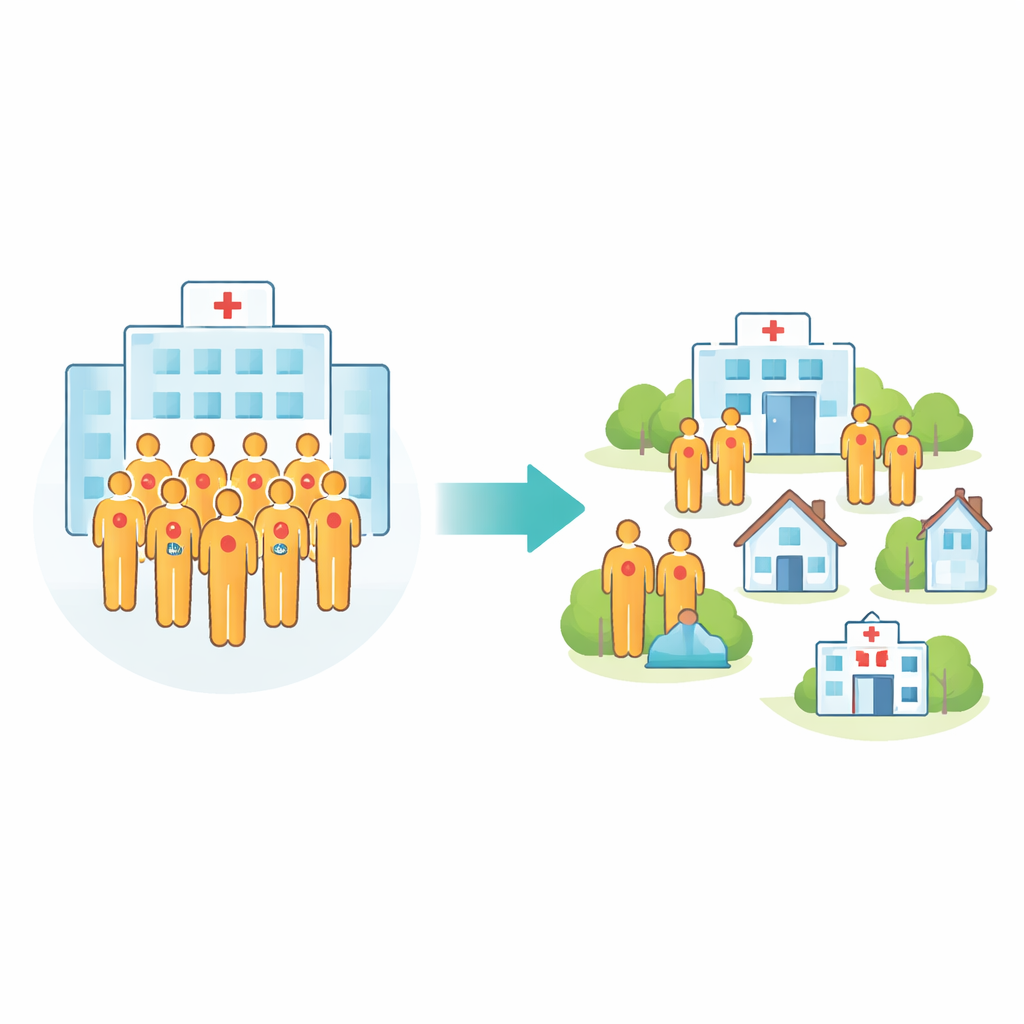
How stem cells are collected today
For eligible patients with multiple myeloma, high-dose chemotherapy followed by reinfusion of their own stem cells is a cornerstone of treatment. Before this transplant, doctors must first “mobilize” stem cells from the bone marrow into the bloodstream and then collect them. In this study from a German university hospital, 109 patients underwent chemotherapy-based mobilization with commonly used drug combinations, followed by daily injections that stimulate stem cell release. Nearly all patients—97 percent—ultimately had a successful collection, usually completed in one or two days. However, most stayed in the hospital from the start of chemotherapy until collection was done, occupying beds for almost two weeks on average.
Complications and when they occur
Although the collection itself worked well, side effects were common. About two thirds of patients experienced at least one serious problem that typically requires hospital care, such as fever due to low white blood cell counts, significant anemia needing a transfusion, or kidney issues needing intravenous fluids. Fever during the period of low immunity was the main driver of hospital stays. Importantly, the timing of severe problems fell into two clear clusters: a small group had early issues within the first three days, often linked to preexisting health problems; the much larger group developed complications later, typically around a week or more after treatment started. This “bimodal” pattern suggested there might be a safe window to keep many patients at home at the beginning of the process.
Simulating a shift to more home-based care
The researchers then built simple models to test different admission strategies on paper. They compared the current approach—everyone admitted before chemotherapy and kept until stem cell collection—against scenarios where patients without early warning signs would stay at home at first and only come to the hospital on a fixed later day, such as day five, or only if a complication developed. Across a wide range of scenarios, the number of hospital bed-days dropped dramatically. Even a cautious strategy, with relatively early admission and conservative assumptions about fevers, cut bed use by roughly one third. More ambitious approaches, where selected problems like mild kidney changes or some fevers were also managed as an outpatient, reduced total bed use by up to 90 percent in the simulations, without changing the underlying medical treatment.
Using data to predict who is at risk
To support such a shift, the team tested machine learning methods that used routine information—such as age, kidney function, blood counts, and treatment details—to predict which patients would later develop serious side effects and when these might begin. They set up a two-step framework: first, a classifier to estimate whether a severe event would occur at all; second, a timing model to estimate the day it would start for those at risk. The models performed very well for some complications, like worsening kidney values or need for blood transfusion, and less well for others, especially fever, where prediction was modest. Overall, the best models could estimate the onset of the first serious problem with an average error of just over one day, suggesting that more accurate, personalized admission plans may be possible as larger datasets become available.

What this means going forward
This work indicates that chemotherapy-based stem cell mobilization for multiple myeloma does not inherently require long, fully inpatient stays for most patients. Because severe complications tend to occur either very early or several days later, carefully designed outpatient programs—with close lab monitoring, clear triggers for rapid admission, and data-driven risk tools—could safely move much of the process out of the hospital. That would free scarce beds, likely improve quality of life for patients who prefer to be at home, and offer a template for using prediction models to organize other high‑risk cancer treatments more efficiently.
Citation: Schwarz, F., Levien, L., Maulhardt, M. et al. Predicting adverse events for risk stratification of chemotherapy based stem cell mobilization in multiple myeloma. npj Digit. Med. 9, 203 (2026). https://doi.org/10.1038/s41746-026-02394-y
Keywords: multiple myeloma, stem cell mobilization, outpatient cancer care, hospital bed management, machine learning in medicine