Clear Sky Science · en
Digital intervention mylovia improves sexual functioning in women with sexual dysfunction in randomized controlled trial
Why this matters for everyday life
Many women quietly struggle with low sexual desire, difficulty with arousal or orgasm, or pain during sex—but often never receive help. This study tested a new web-based program called mylovia that women can use on their own, at home, to improve their sexual well-being. The findings suggest that a private, affordable, digital tool can make a real difference, and may help close long-standing gaps in women’s health care.
A hidden but common problem
Sexual difficulties are far more common than most people realize. In Germany, almost half of sexually active women report at least one sexual problem in a year, and nearly one in five meet criteria for a diagnosable sexual disorder. These concerns can lower quality of life, harm self-esteem and body image, and strain relationships. Yet most affected women remain untreated—often because sexuality is still surrounded by shame and silence in medical settings, and because many doctors and therapists receive little training in this area. Existing care has also tended to focus more on reproduction and penetration than on women’s desire and pleasure.
A new kind of self-guided support
mylovia was designed to offer a broader, pleasure-centered approach. It is a self-guided online program that women can access on any web-enabled device. Through interactive, text-based “conversations,” audio exercises and downloadable materials, it teaches skills drawn from cognitive behavioral therapy and mindfulness-based sex therapy. Topics include basic sexual knowledge, body awareness, mindful self-exploration, communication with partners, managing unhelpful thoughts, and gradual exercises for women who experience pain with penetration. The idea is to bring the core elements of modern sex therapy into a flexible format women can use in private and at their own pace.

How the study was carried out
The researchers ran a randomized controlled trial, the gold standard for testing treatments. They recruited 252 adult women in Germany who met diagnostic criteria for sexual dysfunction or sexual pain–penetration disorder and who had low scores on a standard questionnaire of sexual function. All could continue any usual care they were receiving. Half were randomly assigned to receive six months of access to mylovia in addition to treatment as usual; the other half received only information about available treatment and counseling options. The main question was whether sexual functioning, measured after three months, would improve more in women who used mylovia.
What changed for participants
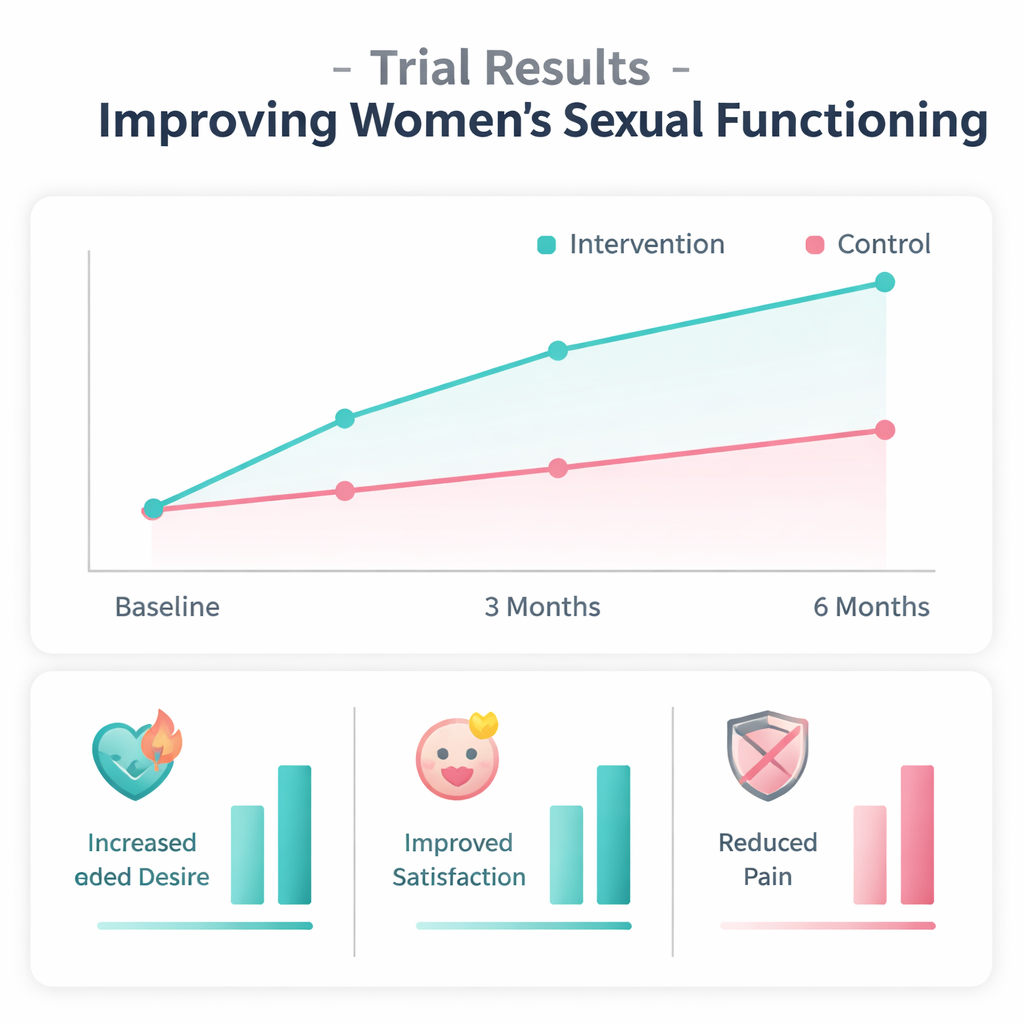
After three months, women in the mylovia group reported clearly better sexual functioning than those in the comparison group. On the Female Sexual Function Index, their scores improved by an average of 3.7 points more than controls—a medium-sized effect that is similar to results from many in-person therapies. A responder analysis showed that women using mylovia were more than three times as likely to experience a meaningful, reliable improvement in their sexual functioning. They also reported higher sexual desire and satisfaction, and more helpful thoughts and behaviors around sexual pain. These gains in overall sexual function and pain-related beliefs largely persisted at six months, although differences in desire and satisfaction became smaller as more women in the control group sought other forms of help.
Safety, satisfaction, and who it helped
The program appeared safe: unplanned medical treatments and other adverse events were rare and occurred at similar rates in both groups, and no problems were linked to the intervention itself. In fact, women using mylovia were less likely to experience a worsening of their sexual symptoms. On average, users said they would be fairly likely to recommend the program, though some noted they would not normally discuss sexual problems with friends or colleagues, which may underestimate satisfaction. Subgroup analyses suggested that the program was helpful for women with and without current psychotherapy, for those with and without a history of sexual abuse, and across different contraceptive methods and relationship statuses. Effects were somewhat smaller for women whose main issue was pain with penetration, a pattern seen in other psychological treatments as well.
What this means going forward
To a lay reader, the core message is straightforward: a structured, self-guided online program can meaningfully improve many women’s sexual lives without notable risks. mylovia’s results are on par with more traditional, therapist-led approaches, yet it offers extra advantages—privacy, flexibility, lower cost, and the possibility of reaching women who might never walk into a specialist’s office. While more research is needed in more diverse groups, including single and queer women and people with complex medical or psychological backgrounds, this study suggests that carefully designed digital therapeutics could become a standard part of care for female sexual dysfunction and help narrow the longstanding gender gap in sexual health services.
Citation: Blaszcyk, W., Büttner, M., Betz, L.T. et al. Digital intervention mylovia improves sexual functioning in women with sexual dysfunction in randomized controlled trial. npj Digit. Med. 9, 115 (2026). https://doi.org/10.1038/s41746-026-02385-z
Keywords: female sexual dysfunction, digital therapeutic, mindfulness-based sex therapy, online intervention, women’s sexual health