Clear Sky Science · en
Prospective real-world implementation of deep learning systems in healthcare: a systematic review guided by implementation science
Why smarter hospital tools matter to you
Hospitals around the world are starting to use deep learning—a powerful form of artificial intelligence—to read scans, spot eye disease, and sort patients by risk. But there is a big difference between a clever computer program that works in a lab and one that safely helps real doctors and patients every day. This article looks at what happens when these systems are actually put to work in clinics and hospitals, and asks a simple question with big consequences: do they really make care faster, safer, and fairer in the real world?
From promising idea to everyday medical tool
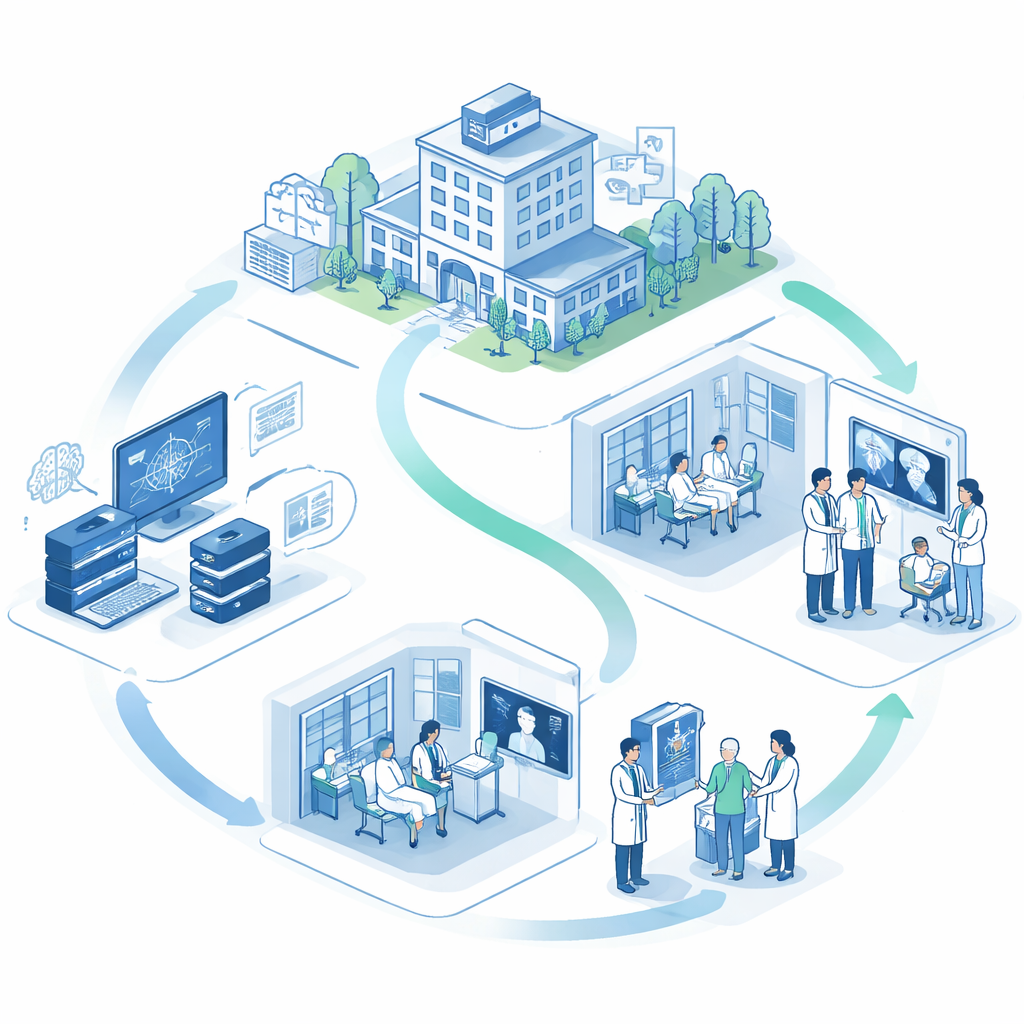
The authors reviewed 20 studies in which deep learning tools were tested prospectively—that is, used on patients as care was delivered, rather than only on stored data. These studies covered skin disease, eye conditions, ear problems, and lung and brain scans. Many took place in busy clinics or national screening programs, and several were run through telemedicine, where images are taken in one place and read in another. All the systems were built on a kind of pattern-recognizing network that excels at reading images, such as retinal photos or CT scans.
How these systems changed daily care
Across the studies, deep learning systems were woven into existing workflows rather than replacing doctors. Some tools helped sort urgent CT brain scans so patients with brain bleeding were seen sooner. Others scanned retinal images for diabetic eye disease, filtering out low-risk cases so specialists could focus on those most likely to lose vision. In dermatology, image-based systems for rashes and moles offered second opinions that boosted doctors’ confidence, even when the final decisions remained with human experts. Overall, these tools tended to shorten waiting times, maintain or improve diagnostic accuracy, and streamline large screening programs.
What worked well—and what was overlooked
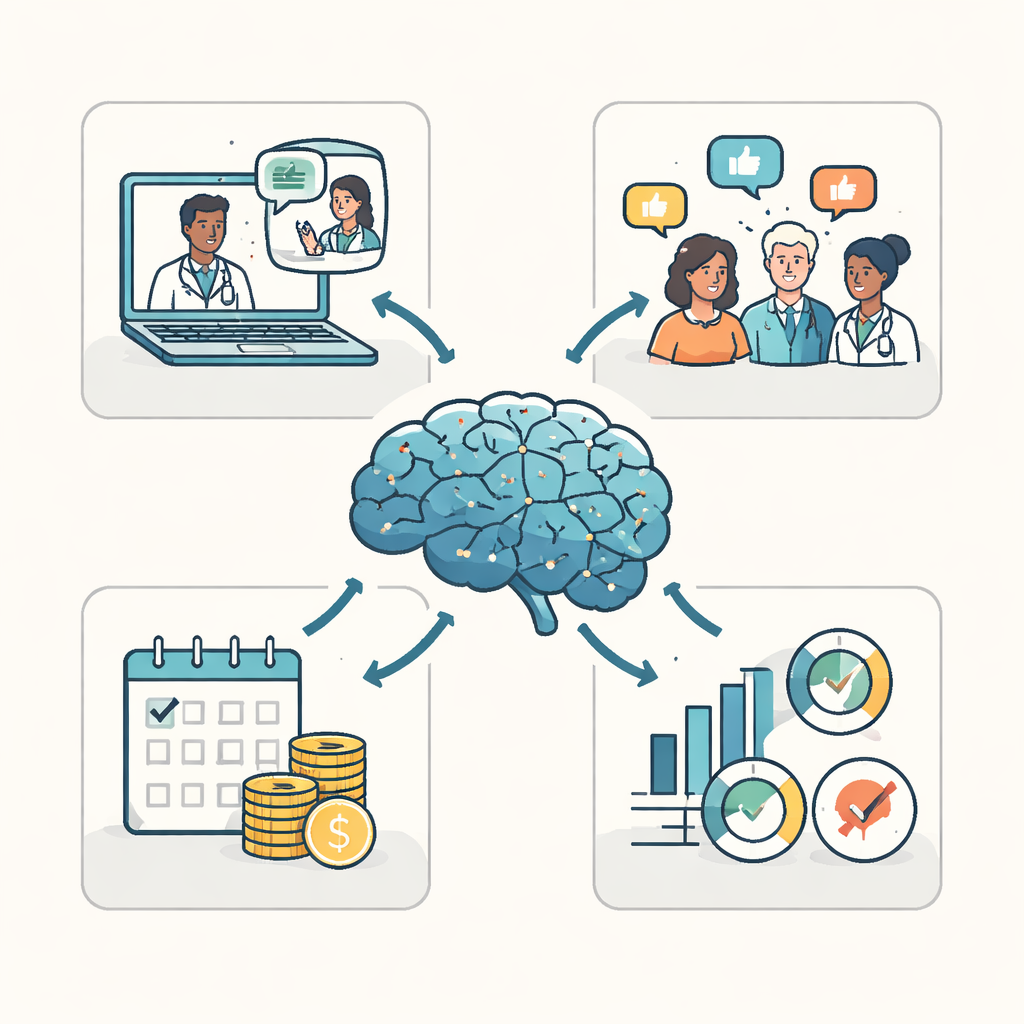
The review found that most projects paid careful attention to whether the systems were accurate, fit the clinic’s needs, and were actually used by staff. Measures like sensitivity, specificity, and speed were routinely tracked, and many teams monitored performance during deployment to catch drops in quality. Patients and clinicians were often satisfied with the tools, especially when they clearly saved time or made follow-up more reliable. Yet only one study closely examined the cost of running such a system, and none followed it long enough to judge whether it could be sustained over years as technology, staff, and health policies change.
Making sure benefits reach everyone
The studies also revealed early efforts to make deep learning tools more equitable. Some projects explored whether skin-tone differences changed how well skin-disease systems worked, and others experimented with using smartphone photos instead of specialized cameras so that rural or under-resourced clinics could still benefit. A few national programs tried plugging AI into paper-based systems, only to run into slow internet and poor data sharing. These experiences suggest that the success of deep learning in medicine depends as much on infrastructure, training, and local context as on clever algorithms.
What this means for future medical AI
To a layperson, the message is straightforward: deep learning systems can genuinely help doctors deliver faster and often better care, but today’s real-world trials are just scratching the surface. We still know little about long-term costs, how to keep these tools up to date, and how to guarantee that all patient groups benefit equally. The authors argue that future studies should be designed from the start to test both medical impact and practical issues like usability, trust, cost, and staying power. Only then can hospitals move from exciting demonstrations to dependable, lasting AI helpers at the bedside and in the clinic.
Citation: Tseng, R.M.W.W., Ong, L.C., Goh, J.H.L. et al. Prospective real-world implementation of deep learning systems in healthcare: a systematic review guided by implementation science. npj Digit. Med. 9, 172 (2026). https://doi.org/10.1038/s41746-026-02358-2
Keywords: deep learning in healthcare, clinical workflow, medical AI implementation, telemedicine screening, healthcare innovation