Clear Sky Science · en
Co-designing with frail nursing home residents to gamify a VR-based physio-cognitive intervention
Bringing Joy Back Into Daily Care
Many people imagine nursing homes as quiet places where days blend together. This study shows how carefully designed virtual reality (VR) “bike rides” through familiar city streets can turn routine exercise into something residents actually look forward to. By working hand-in-hand with frail older adults, the researchers created a playful system that not only kept people moving longer, but also lifted spirits, sparked memories, and helped ease feelings of isolation.
A Virtual Bike Ride Through the Old Neighborhood
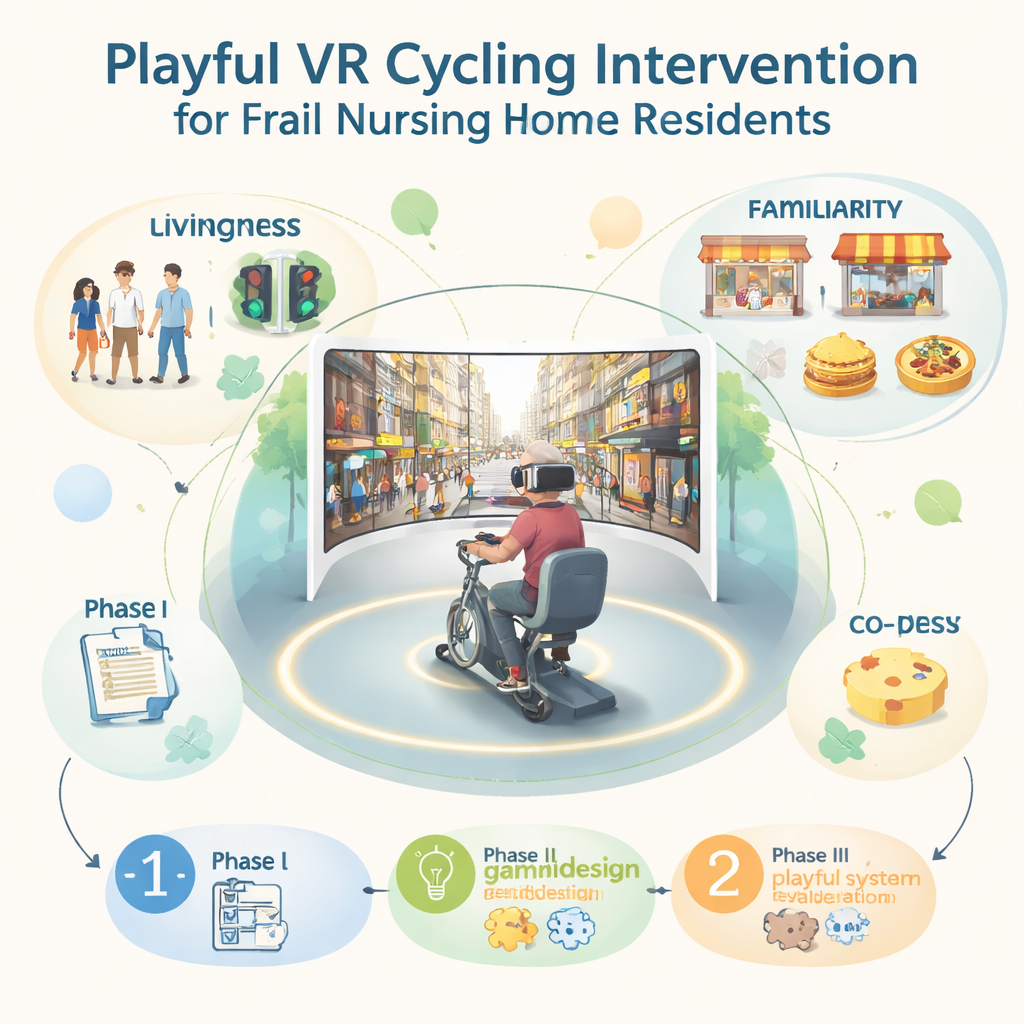
The team started with a simple idea: combine gentle physical activity with mental stimulation, in a way that feels natural and enjoyable. They built a stationary bike linked to a large curved screen showing life-size digital versions of real Hong Kong streets that residents once walked. Pedaling moved the bike forward in the virtual city, and turning the handlebars steered left or right. This let residents “go out” on a self-directed ride while staying safely seated indoors. The first tests compared this VR bike with a standard pedal exerciser. While both groups exercised for about the same amount of time at first, those using the VR streets showed more interest, came back more willingly, and talked about the experience as play rather than therapy.
Designing for Lively, Familiar, and Clear Worlds
Listening closely to residents, their families, and therapists, the researchers discovered three things the virtual streets were missing. Some riders said empty roads felt like a scene after a war, so the team focused on “livingness” by adding moving traffic lights, swaying trees, and animated animals. Others recognized the area but not specific details, so the team boosted “familiarity” with local shop signs, favorite foods, old TV ads, and sounds from Hong Kong streets. A few found the world too dim or vague, so the designers enhanced “presence” with brighter, sharper scenes that were easier to see. These insights guided a second phase in which residents acted as co-designers, shaping how the system should look, sound, and feel.
Turning Exercise Into a Game
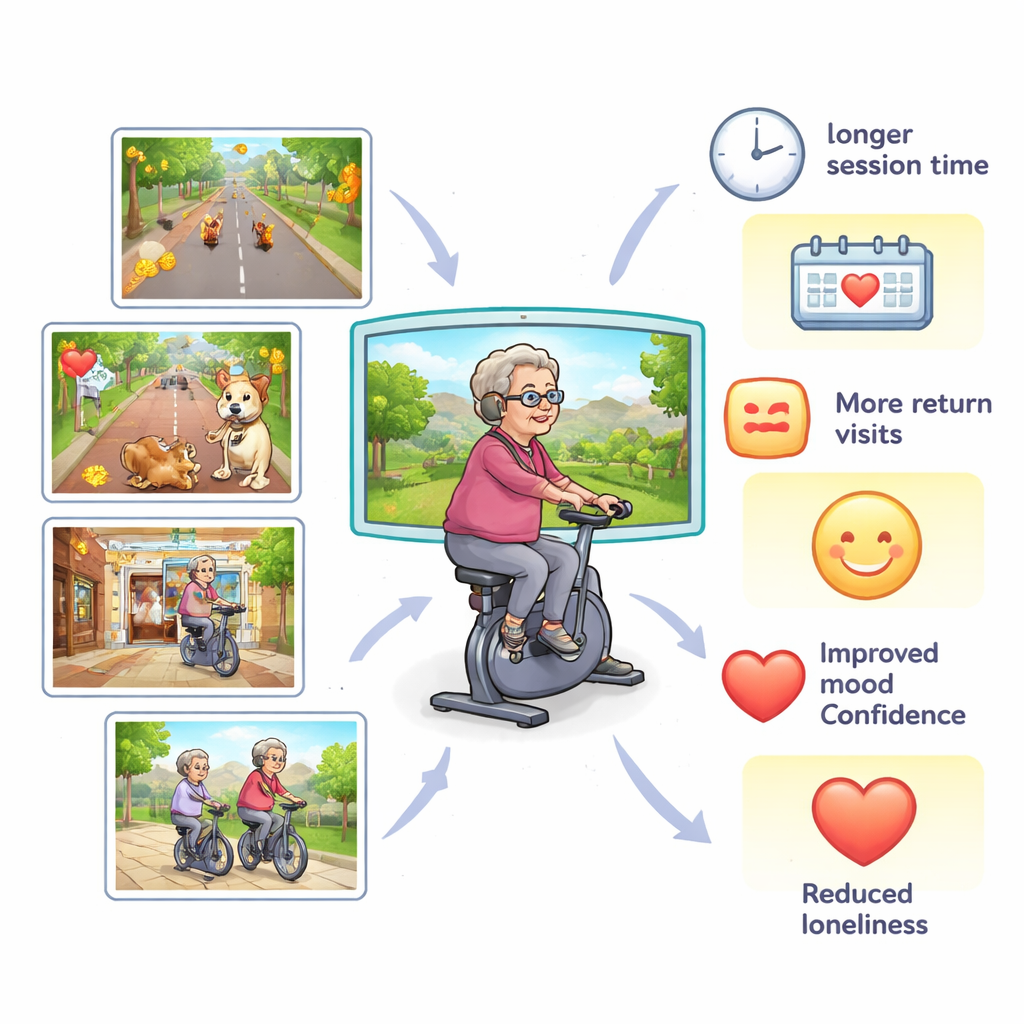
In the next stage, the team layered in simple game-like elements built around those three needs. Golden coins appeared along the road, giving riders a clear goal to chase as they pedaled and steered. Dynamic details—like dogs trotting along the sidewalk, birds in motion, or changing weather—made the streets feel alive. Short pop-up videos over storefronts showed nostalgic commercials or everyday scenes such as buying roast goose or visiting a supermarket, nudging memories and conversation. A special “companion cycling” mode let a therapist or family member ride alongside, subtly helping steer while keeping the older adult feeling in control. All of this was meant not to challenge reflexes, but to keep the activity playful, meaningful, and self-directed.
Longer Rides, Happier Feelings
After these changes, more residents signed up, including people who had previously refused or been considered too frail. On average, sessions lengthened from about 15 minutes to nearly 24 minutes, and many residents asked to keep going for 30 minutes or more, even when tired. They were more likely to initiate attendance and to say they wanted to return. Surveys taken before and after sessions showed increases in positive feelings such as interest, excitement, pride, and determination, while staff observed less visible distress and more chatting, laughter, and storytelling. Some participants even became more willing to try other physical activities afterwards, like using walkers or parallel bars, suggesting a boost in confidence and a sense of “I can still do this.”
Why This Matters for Families and Future Care
For families and caregivers, the message is straightforward: when activities are designed for fun, not just function, frail older adults are more likely to join in, stick with them, and feel better emotionally. This co-designed VR bike turns a mandatory-looking exercise into a game-like outing that rekindles memories and restores a sense of autonomy. The study suggests that in long-term care, designers and staff should treat residents not only as patients but as partners and players—prioritizing happiness and playfulness alongside safety. In doing so, simple technologies like a virtual bike ride might help reduce loneliness, support brain health, and make everyday life in nursing homes more worth living.
Citation: Tang, M., Fan, M. & Kan, G.L. Co-designing with frail nursing home residents to gamify a VR-based physio-cognitive intervention. npj Digit. Med. 9, 166 (2026). https://doi.org/10.1038/s41746-026-02351-9
Keywords: virtual reality, nursing homes, gamification, frailty, dementia care