Clear Sky Science · en
Wearable device derived electrocardiographic age and its association with atrial fibrillation
Why your heart might be older than you are
Many people now wear heart monitors on their chest or wrist, but these devices usually just warn about obvious rhythm problems. This study explores a more surprising idea: that a wearable can estimate how “old” your heart’s electrical system looks compared with your actual age, and that this hidden age gap may signal a higher chance of an irregular heartbeat called atrial fibrillation, a major cause of stroke.
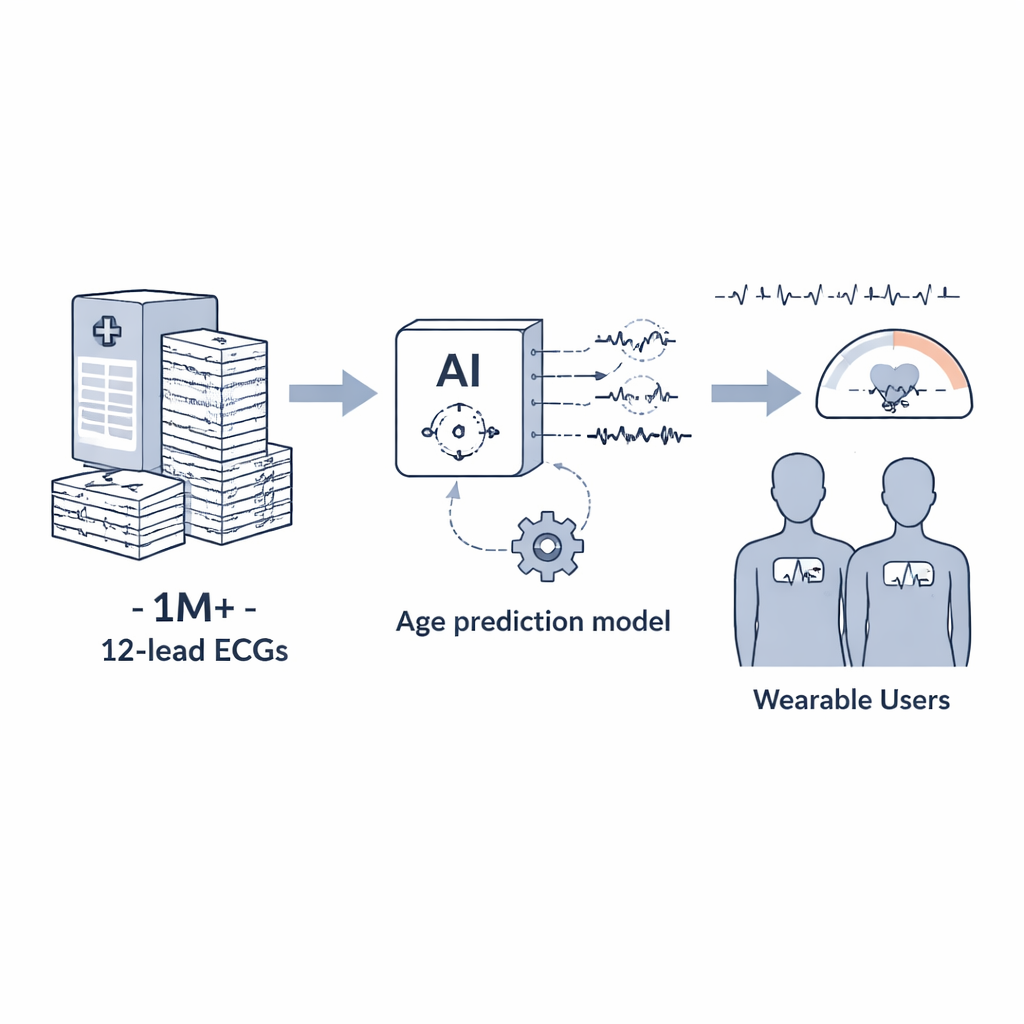
Turning hospital records into a smart heart age meter
The researchers built an artificial intelligence system, called PROPHECG-Age Single, to read the simple, single-line heartbeat signal captured by many wearable patches. Instead of starting with the small, noisy datasets that wearables usually produce, they first tapped into a giant hospital archive of more than one million standard, 12-line electrocardiograms (ECGs). Using an advanced technique known as a generative adversarial network, they converted these rich hospital ECGs into realistic single-line signals, as if they had been recorded by a wearable device. These synthetic signals were then used to train a deep-learning model to guess a person’s age just from 10 seconds of heart electrical activity.
Testing the tool in real people wearing patches
To see how well this system worked outside the lab, the team tested it in two groups of volunteers wearing different ECG patches in everyday life. One group, called S-Patch, included many people who already had atrial fibrillation. The other, Memo Patch, mostly included people without known rhythm problems. In both groups, the AI’s estimated “ECG age” roughly matched people’s real ages, usually within about 10 to 12 years on average—less precise than a typical birthday guess, but consistent across devices and recording conditions. Importantly, the model held up even when signals included common wearable issues like movement and minor electrical noise.
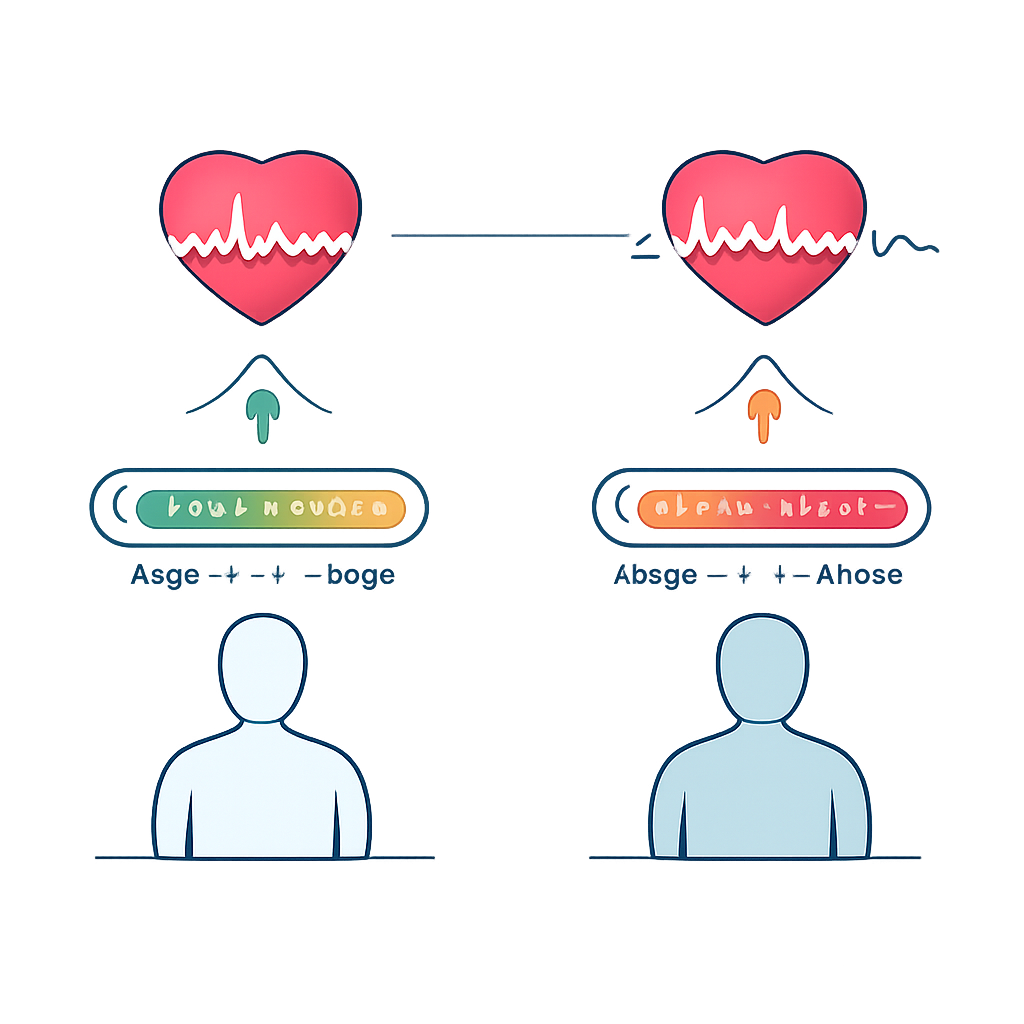
When your heart’s age runs ahead of the calendar
The key measure in this study was the “ECG age gap”: the AI-predicted heart age minus your actual age. A positive gap means your heart’s electrical system looks older than you are on paper. Across more than 2,000 people, those with atrial fibrillation tended to have a larger, more positive age gap than those without it. After accounting for many other risk factors—such as blood pressure, diabetes, and heart failure—each extra year of age gap was linked to about a 3% higher chance of having atrial fibrillation. People with more persistent forms of the rhythm problem also showed a progressively larger age gap, suggesting that a more “aged” electrical pattern goes hand in hand with more serious disease.
Linking hidden heart aging to how much AF you have
The researchers then looked at “AF burden”—the share of time a person’s heart spent in atrial fibrillation during monitoring. Among those who had at least one episode recorded, a larger ECG age gap was tied to more time spent in the irregular rhythm. On average, every extra year of age gap corresponded to roughly a 0.8 percentage point increase in AF burden. While this effect was modest and the external group was small, the pattern was consistent. The team also showed that a person’s ECG age gap stayed remarkably stable over days of continuous monitoring, hinting that it behaves more like a personal trait of the heart than random noise.
What this could mean for everyday heart monitoring
For non-specialists and future patients, the promise of this work is a simple, understandable number: how old your heart’s electrical system appears compared with your actual age. Even with imperfect accuracy, this “heart age gap” from a patch or wearable could flag people whose hearts seem to be aging faster and who may deserve closer watching for atrial fibrillation, long before they feel symptoms. The study does not prove cause and effect, and it was conducted mainly in one ethnic group, but it shows that continuous, single-lead wearables can do more than catch dramatic events—they can quietly track subtle, long-term changes in heart health that might one day guide earlier and more personalized prevention.
Citation: Park, S.H., Jin, J.H., Kim, J. et al. Wearable device derived electrocardiographic age and its association with atrial fibrillation. npj Digit. Med. 9, 157 (2026). https://doi.org/10.1038/s41746-026-02344-8
Keywords: atrial fibrillation, wearable ECG, heart age, digital biomarker, artificial intelligence