Clear Sky Science · en
Transdiagnostic Internet-delivered intervention for children and adolescents with anxiety and depressive disorders: a randomized controlled trial
Why this matters for families and schools
Across the globe, many children and teenagers struggle quietly with anxiety and depression, yet only a minority receive any professional help—especially in countries where mental health services are scarce. This study tested a six‑week online program designed to support Romanian youth aged 11 to 17 who had clinically diagnosed anxiety and/or depressive disorders. The program aimed not only to ease their emotional suffering but also to offer a low‑cost, scalable model that schools, clinics, and families could realistically use, even when there are few specialists available.
Big feelings, limited help
Anxiety and depression in young people are common, can start early in life, and often cast a long shadow into adulthood, affecting school performance, jobs, and relationships. During the COVID‑19 pandemic, these problems became even more frequent. Yet in Europe, only about one in four youth with mental health needs receive treatment, and the situation is worse in lower‑resource countries. Romania is one such setting, with very few child psychiatrists and psychologists per capita. For many families, traditional face‑to‑face therapy is simply not available or is too difficult to reach. The researchers therefore turned to the internet as a way to deliver structured psychological help directly to young people at home.
An online skills course for anxious and depressed youth
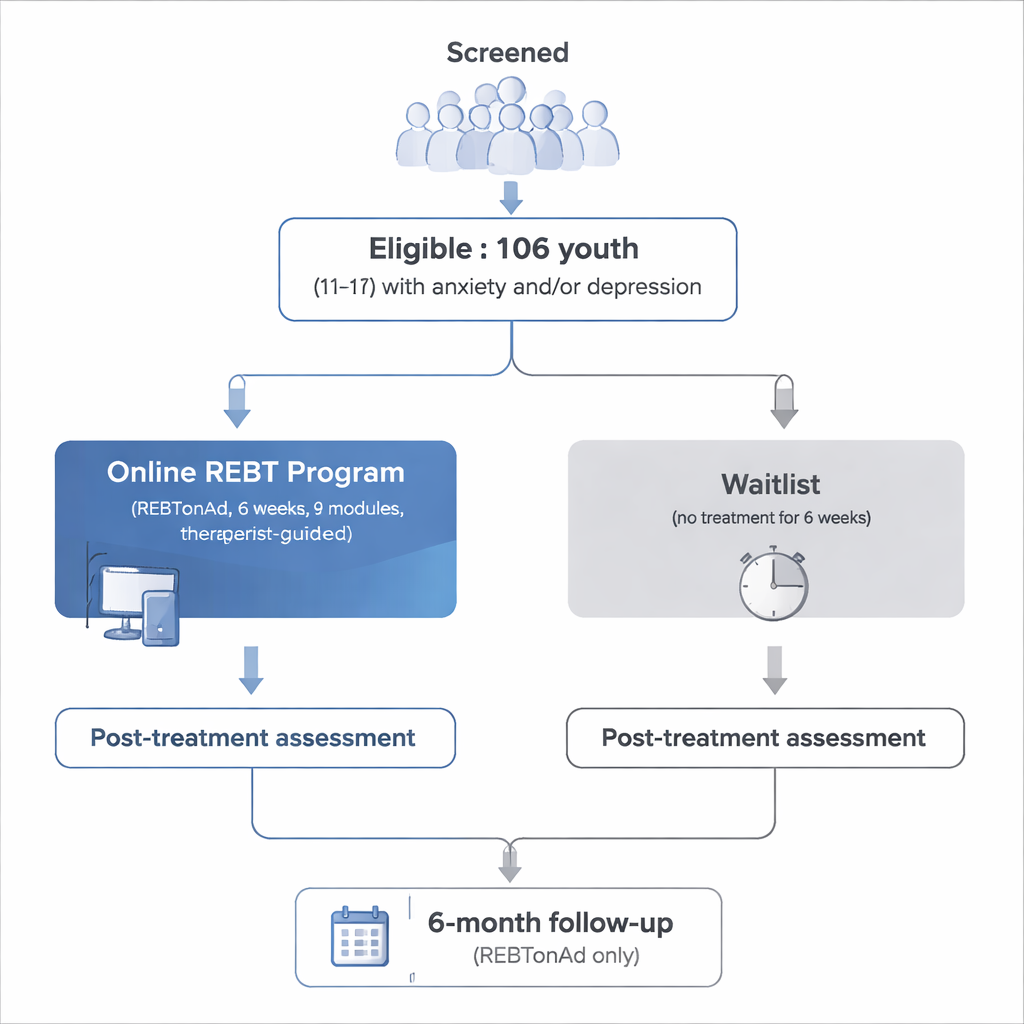
The team developed REBTonAd, a nine‑module online program based on Rational Emotive Behavior Therapy, a branch of cognitive‑behavioral therapy that focuses on how unrealistic, rigid, or harsh beliefs can fuel intense anxiety and sadness. Over six weeks, participants worked through modules that explained how emotions work, how thoughts influence feelings, and how to spot and challenge unhelpful thinking patterns. They practiced new ways of interpreting difficult situations, learned to face rather than avoid feared situations, and were encouraged to schedule pleasant or meaningful activities. Content came in youth‑friendly forms—short texts, videos, audio stories, and interactive exercises—with homework and printable rewards. Each young person had a trained master’s‑level therapist who gave written feedback through the platform and phoned parents weekly to coach them on how to support their child.
Putting the program to a fair test
To see whether REBTonAd truly helped beyond natural improvement over time, the researchers ran a randomized controlled trial. A total of 106 Romanian youth with a primary diagnosis of anxiety or depression were randomly assigned either to start the online program immediately or to a waitlist group that received no treatment for six weeks. Both groups filled out detailed questionnaires on their symptoms and quality of life at the start and after six weeks, and the treatment group was followed again six months later. The main yardstick was “internalizing problems”—a broad measure capturing anxiety, low mood, and related emotional difficulties as reported by the youth themselves.
What changed for the young people
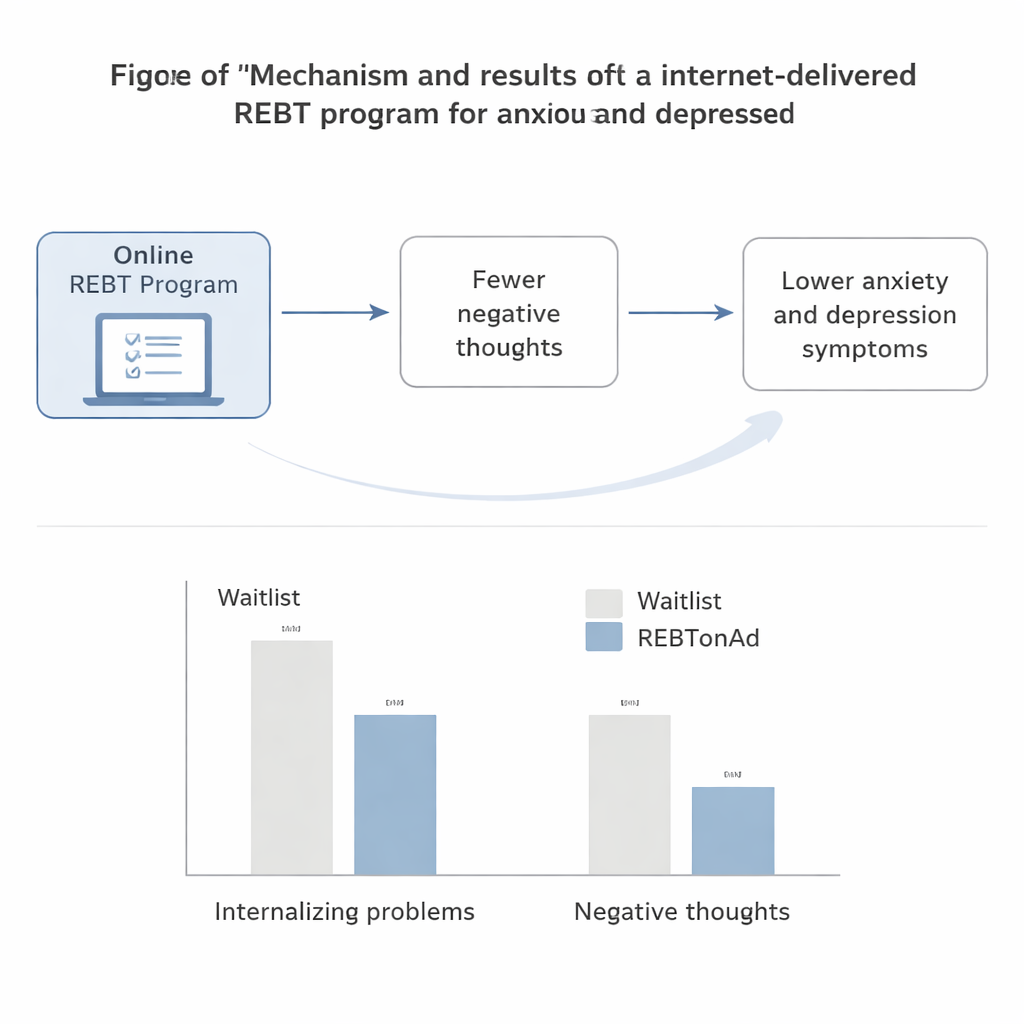
After six weeks, youth who completed REBTonAd improved more than those on the waitlist. Over half of the treatment group no longer scored in the clinical range for internalizing problems, compared with about one‑third in the waitlist group. The size of the difference between groups was moderate, a level considered meaningful in clinical research. The online program also led to larger drops in combined anxiety and depression symptoms and in “withdrawn/depressed” behavior. A key finding was that negative automatic thoughts—frequent, pessimistic ideas like “I can’t handle anything” or “Nothing will ever get better”—declined more in the REBTonAd group, and this shift statistically explained part of the improvement in emotional symptoms. In other words, feeling better was closely tied to thinking in a less negative way. Most participants reported high satisfaction, said they liked the program, and would recommend it to a friend. Importantly, benefits in the treatment group were maintained at the six‑month follow‑up, and no serious adverse events were reported.
Limits, challenges, and next steps
The study also highlighted real‑world challenges. About a quarter of participants did not complete post‑treatment assessments, especially in the waitlist group, perhaps due to online fatigue, long questionnaires, or skepticism about digital therapy in a context where such services are new. The short six‑week duration may not have been enough to shift deeper, long‑standing belief patterns, and the researchers did not compare REBTonAd to an active face‑to‑face or disorder‑specific therapy. They also noted that poverty, shared devices, and low mental health awareness in some families may limit who can benefit, even when internet access is widespread. Future work will need to refine the length and components of the program, tailor it to different combinations of problems, and test it against other treatments in everyday school or clinic settings.
What this means for young people and society
For parents, teachers, and policy makers, the message is encouraging: a brief, structured online course, guided by trained but not highly specialized therapists, can meaningfully reduce anxiety and depression in many teenagers, even in a country with few mental health professionals. By focusing on practical skills and on changing everyday negative thinking, REBTonAd offers a blueprint for how digital tools might help close the treatment gap for youth. While it does not replace in‑person care for those with very severe or complex difficulties, it represents a promising, scalable way to bring effective psychological support to more young people who need it.
Citation: Dobrean, A., Poetar, CR., Florean, IS. et al. Transdiagnostic Internet-delivered intervention for children and adolescents with anxiety and depressive disorders: a randomized controlled trial. npj Digit. Med. 9, 156 (2026). https://doi.org/10.1038/s41746-026-02341-x
Keywords: youth anxiety, online therapy, depression in adolescents, digital mental health, Romania