Clear Sky Science · en
Digital biomarkers for brain health: passive and continuous assessment from wearable sensors
Why Your Watch Could Help Protect Your Mind
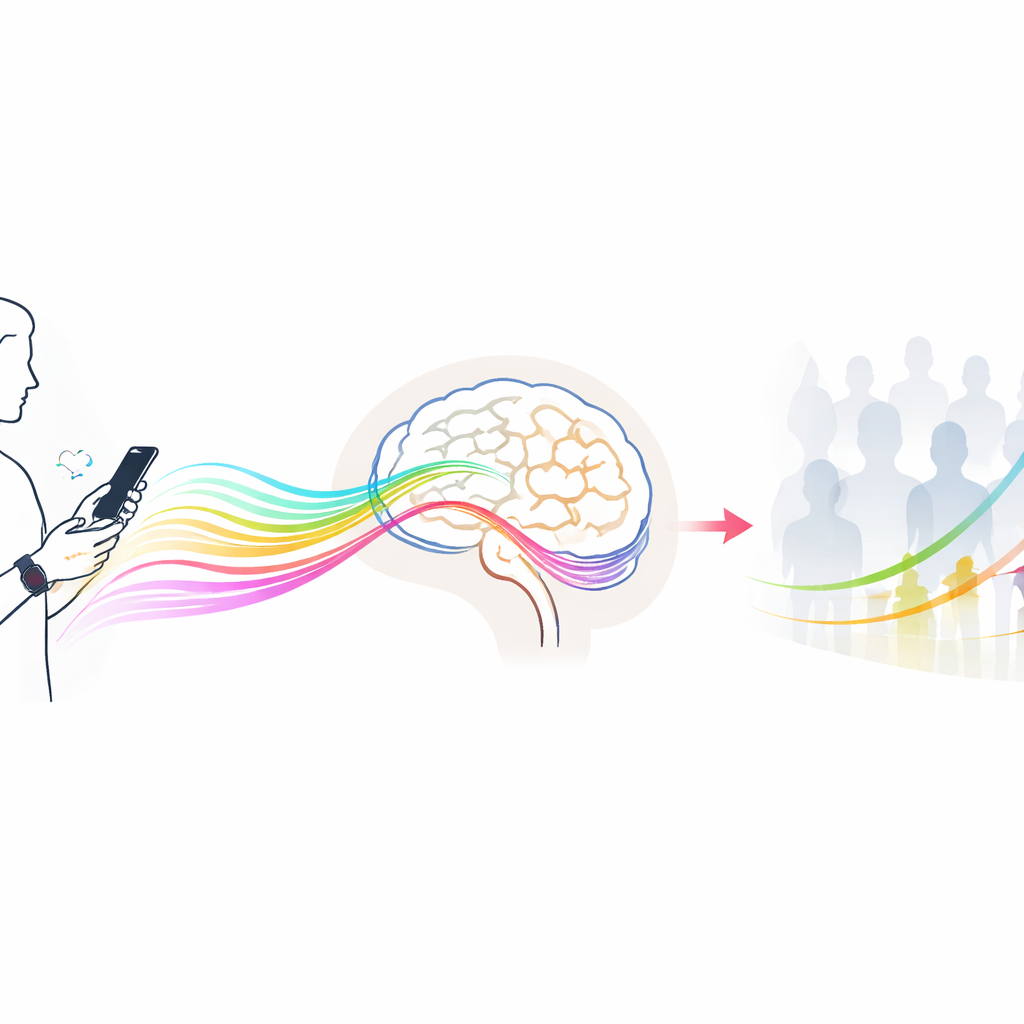
Many of us already wear devices that count our steps, track our sleep, and check our heartbeat. This study asks a simple but powerful question: can those quiet streams of data also reveal how our memory, attention, and mood are doing from day to day? If so, brain health could be followed continuously and gently in the background, long before serious problems appear.
Watching the Brain Without Tests
Instead of bringing people into a lab for long, tiring evaluations, the researchers followed 82 middle‑aged and older adults in Switzerland and France as they went about daily life for ten months. Everyone wore a consumer smartwatch and used a smartphone app. The devices automatically recorded movement, heart rhythm, sleep patterns, weather, and air quality around each person. Every three months, participants also completed online tasks that measured different kinds of thinking—such as memory, speed, and flexibility—and filled out questionnaires about feelings like stress, anxiety, and mood. In total, the team tried to predict 21 such brain‑related outcomes using only the passively collected data.
Turning Daily Signals into Brain Clues
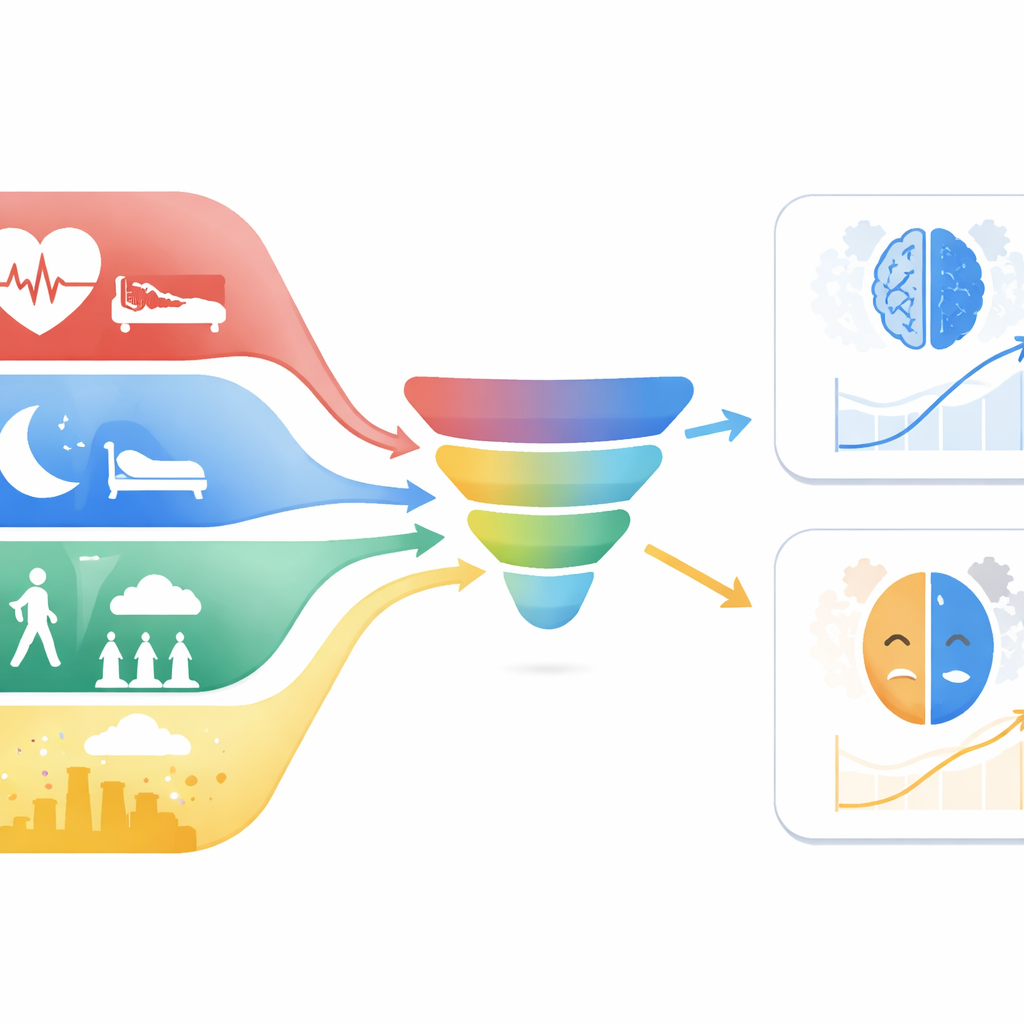
To link body and environment to mind, the team first cleaned the data to make sure devices were worn regularly—on average, valid information was available for more than 96% of each day. They then summarized the raw sensor readings into simple daily numbers, such as average heart rate over 24 hours, time spent in deep sleep, steps taken, and typical temperature or air pollution levels. Using several types of machine‑learning models, they trained computer programs to learn how combinations of these signals related to each person’s thinking test scores and self‑reported feelings. They checked the models in two challenging ways: predicting differences between people, and predicting how the same person changed from one three‑month wave to the next.
How Well Did the Invisible Tests Work?
The models could predict all 21 thinking and mood outcomes with modest error, usually between about 3% and 25% of each measure’s full range. Everyday feelings—such as stress, anxiety, positive mood, and negative mood—were generally easier to forecast than performance on timed thinking tasks. For example, the computer’s guesses about depression or anxiety were only off by single‑digit percentages on average, while more complex skills like verbal fluency were harder to capture. When compared with a very simple strategy that always guessed the average score for everyone, the smarter models clearly outperformed this baseline for some detailed thinking abilities like attention and cognitive flexibility, and tended to be at least as stable for most other outcomes. This suggests that passive data do contain genuine information about brain health, even if current datasets are still too small to show strong gains for every measure.
What Matters Most: Air, Weather, Sleep, and Heartbeats
A key question is not just whether prediction is possible, but which signals carry the most useful clues. The analysis showed that environmental exposures and heart‑related measures often rose to the top. Weather conditions and air pollutants—such as temperature, ozone, and fine particles—were especially important for explaining why some people tended to score higher or lower than others on thinking tests. Around‑the‑clock heart‑rate patterns, sleep quality, and physical activity helped explain how a given person’s thinking and mood shifted over time. For mood‑related outcomes in particular, movement and environmental factors worked together: active days in cleaner, milder air were more likely to align with better emotional states. This picture fits with earlier work showing that polluted, uncomfortable environments strain the brain over the long term, while disrupted sleep and stress‑related heart rhythms relate to day‑to‑day dips in mood and focus.
From Reactive Care to Early Warnings
The study has limits: participants were generally well educated, from a narrow geographic region, and free of diagnosed mental illness, so the findings may not yet apply to more diverse or at‑risk groups. The models also used daily summaries instead of minute‑by‑minute detail, and they tracked natural ups and downs rather than clear disease. Still, the results show that simple, widely available devices can quietly mirror meaningful changes in how we think and feel. Over time, such "digital biomarkers" could help establish a personal brain‑health baseline and flag subtle drifts away from it—prompting closer evaluation long before serious memory loss or mood disorders take hold. Rather than replacing doctors, these tools could serve as low‑burden early‑warning systems, supporting more preventive, personalized care for brain health across the lifespan.
Citation: Matias, I., Haas, M., Daza, E.J. et al. Digital biomarkers for brain health: passive and continuous assessment from wearable sensors. npj Digit. Med. 9, 197 (2026). https://doi.org/10.1038/s41746-026-02340-y
Keywords: digital biomarkers, wearable sensors, brain health, cognition and mood, passive monitoring