Clear Sky Science · en
Development of deep learning model to screen for primary open-angle glaucoma in African ancestry individuals
Why this matters for everyday eye health
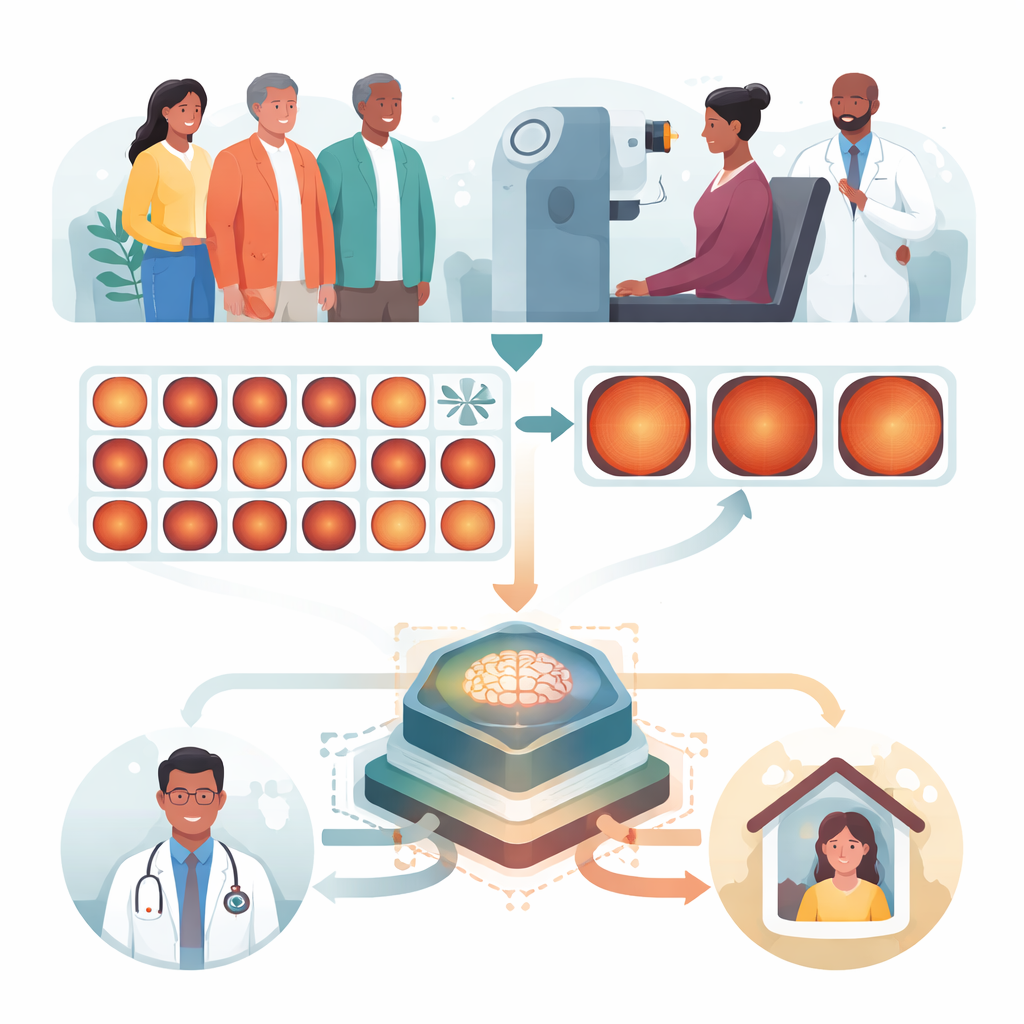
Glaucoma is one of the world’s leading causes of irreversible blindness, and it often steals vision silently before people notice any symptoms. This study explores how artificial intelligence can help catch a common form of glaucoma earlier, especially in African ancestry communities that face both higher risk and poorer access to specialist eye care. By teaching a computer to read eye photographs, the researchers hope to bring reliable glaucoma screening into primary care offices, community clinics, and low‑resource settings around the world.
The silent threat to sight
Primary open-angle glaucoma slowly damages the optic nerve, the cable that carries visual information from the eye to the brain. Early on, people usually feel fine and see well, even as their side vision begins to shrink. Because the disease progresses quietly and eye exams can be time-consuming and scarce in many regions, a large share of patients remain undiagnosed until their vision loss is permanent. This burden is especially heavy in African ancestry populations, who are both more likely to develop glaucoma and more likely to go blind from it, yet have historically been underrepresented in medical research and high‑quality image datasets.
Teaching computers to read eye images
The team built an automated screening system that studies color photographs of the back of the eye, known as fundus images. These pictures are relatively cheap and easy to capture, even outside a specialist’s office. From more than 64,000 images collected in the Primary Open-Angle African American Glaucoma Genetics (POAAGG) study, the researchers trained deep learning models to distinguish between eyes with glaucoma and those without. They compared two cutting‑edge approaches: a convolutional “ResNet” model and a “Vision Transformer,” which examines the image in patches and can highlight where it is focusing attention—often the cup-and-disc area of the optic nerve, where glaucoma-related changes appear.
Picking the clearest pictures first
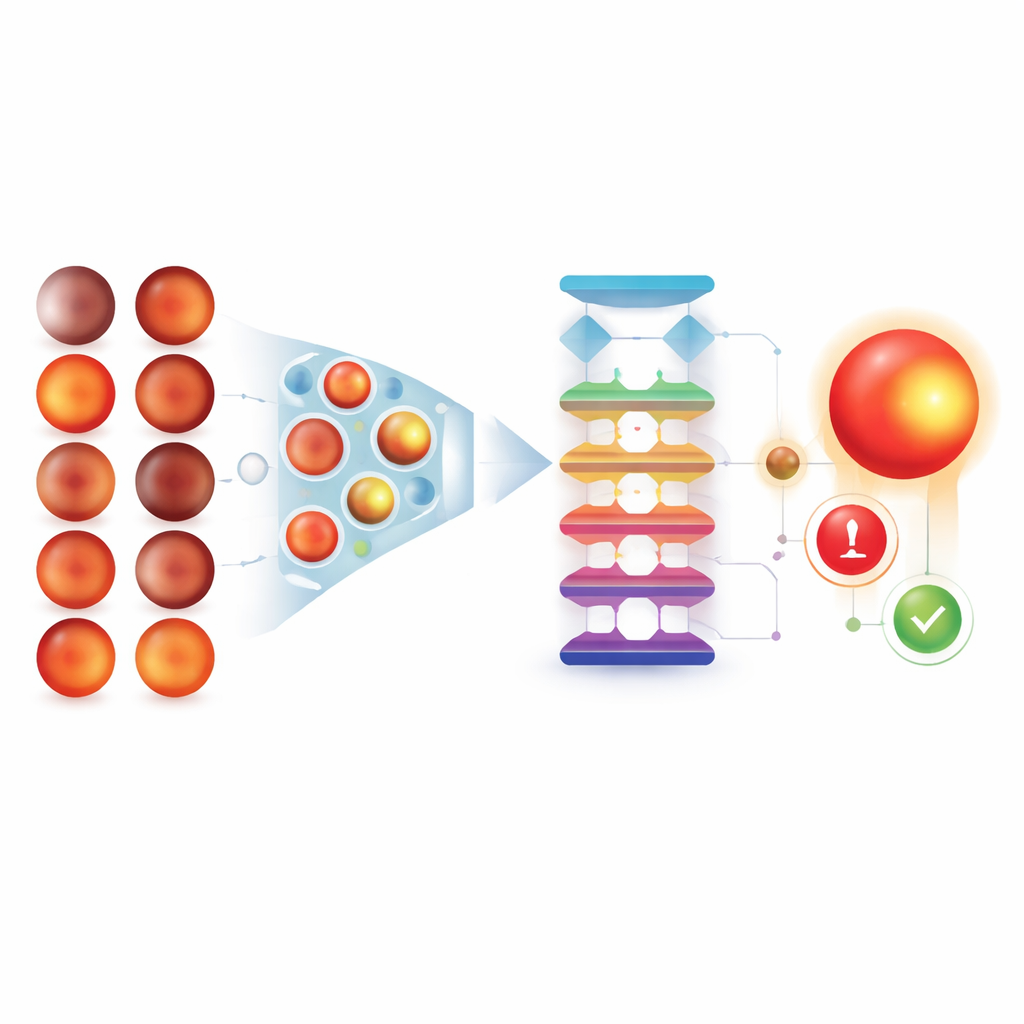
In real-world screening, several images are often taken at each visit to avoid problems like blinking or blur. Rather than feeding all of them to the model, the researchers asked whether carefully choosing only the most informative pictures could boost accuracy. They tested two automatic selection strategies. One used a segmentation model to outline the optic nerve and pick images with certain size features. The other—a binary classifier—learned to mimic expert graders at a reading center, separating “good” images from poor ones. Selecting just six high‑quality images per visit with the binary classifier matched the performance of human graders and clearly outperformed both using all images and the segmentation-based method.
Combining many clues into one answer
After selecting the best images from a visit, the system examined each one with the Vision Transformer and produced a probability that glaucoma was present. The researchers then explored how best to turn several probabilities into a single screening decision. Taking the simple average across the chosen images gave the most reliable results, slightly better than relying on only the most extreme value. Overall, this pipeline—image selection by the binary classifier, followed by per‑image prediction and averaging—achieved a high ability to separate glaucoma from non‑glaucoma cases. When tested on a separate dataset from Chinese patients, the model still performed well, and additional experiments showed that using a larger training set was crucial for this cross‑group transfer.
What this could mean for patients
The study shows that a carefully designed AI pipeline, trained on a large set of eye images from African ancestry individuals, can accurately flag people who may have glaucoma using only simple photographs. While the system does not yet reach the very strict thresholds some organizations recommend for full diagnostic tools, it is well suited as a pre‑screen in settings where eye specialists are scarce. With further validation on more diverse populations and cameras, and possible integration with other eye tests, such technology could one day be deployed in primary care clinics, community events, or rural health centers. The goal is straightforward: catch glaucoma earlier, refer those at risk to specialists, and prevent avoidable blindness—particularly in communities that have been most severely affected.
Citation: Li, S., Salowe, R., Lee, R. et al. Development of deep learning model to screen for primary open-angle glaucoma in African ancestry individuals. npj Digit. Med. 9, 214 (2026). https://doi.org/10.1038/s41746-025-02318-2
Keywords: glaucoma screening, artificial intelligence, retinal imaging, African ancestry health, deep learning medicine