Clear Sky Science · en
Quantitative HER2 tissue and plasma profiling predicts the activity of trastuzumab deruxtecan for breast cancer
Why this research matters to patients
For people living with metastatic breast cancer, new drugs can bring hope—but they do not work equally well for everyone. This study asks a practical question: can we better predict who will benefit most, and for longest, from a widely used targeted drug called trastuzumab deruxtecan (often shortened to T-DXd)? By taking a closer, more precise look at tumor samples and blood, the researchers show that fine-grained measurement of a molecule called HER2—and of certain DNA and protein markers—can reveal which cancers are most likely to respond to this treatment.
A targeted drug with uneven results
T-DXd is an "antibody–drug conjugate," a kind of guided missile that seeks out cells displaying the HER2 protein and delivers a chemotherapy-like payload directly inside them. Originally used for tumors with very high HER2 levels, it is now approved for nearly nine out of ten patients with metastatic breast cancer, including those with low or even absent HER2 by standard tests. Yet in everyday practice, some patients enjoy long periods of disease control on T-DXd, while others see their cancer progress after only a few months. Traditional lab methods, which sort tumors into HER2-positive, HER2-low, or HER2-zero categories, have done a poor job of explaining these differences.
Tracking changes in the tumor over time
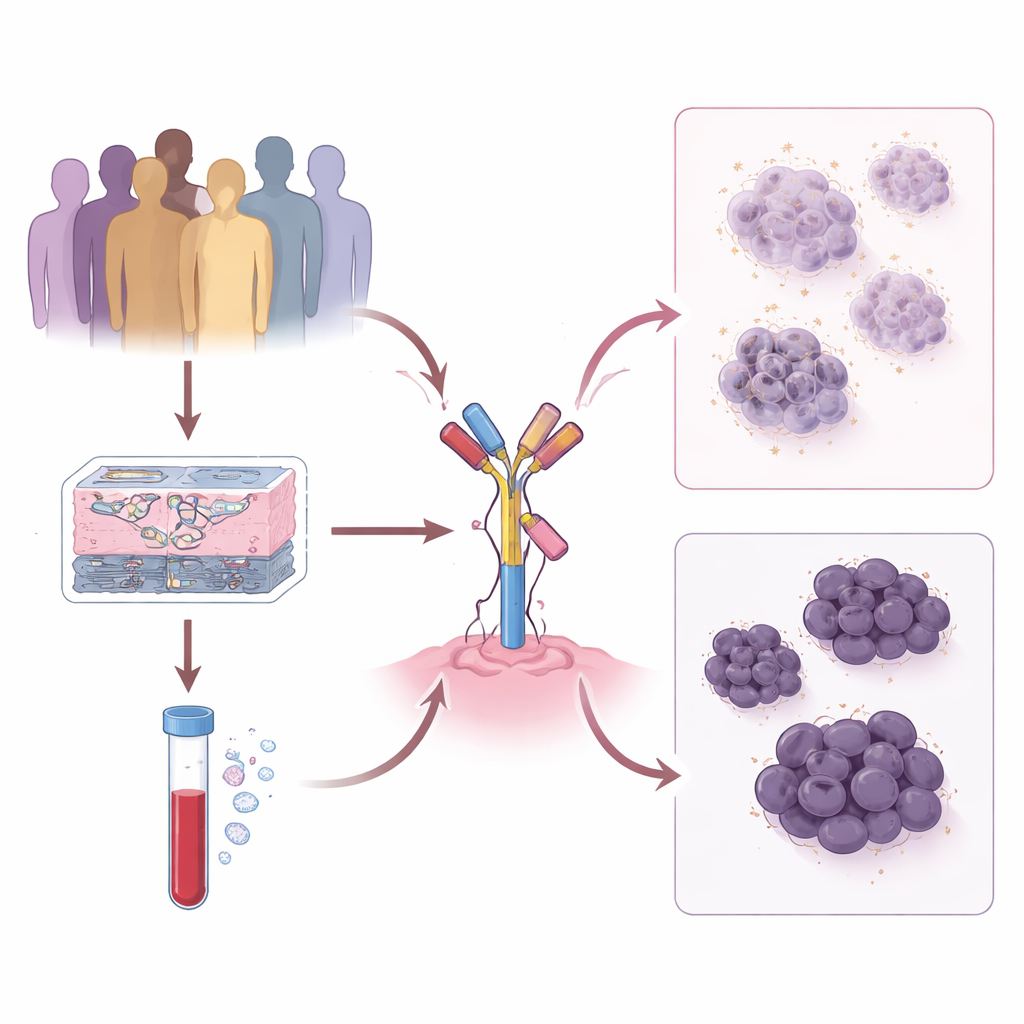
The team examined 191 patients treated with T-DXd at two major U.S. cancer centers, reviewing how their cancers behaved and how HER2 levels changed from the original tumor to later metastases. They found that simple, one-time labeling of a tumor as HER2-low or HER2-zero missed important dynamics. Patients whose cancers stayed clearly HER2-positive lived the longest on T-DXd, followed by those whose tumors consistently showed low—but stable—HER2 levels. In contrast, when HER2 switched between low and zero over time, the benefit from T-DXd was notably shorter. These patterns suggest that the more stably a tumor depends on HER2, the better this drug can work.
Measuring HER2 with a finer ruler
To move beyond coarse categories, the researchers applied a suite of modern tests to tumor tissue. One used quantitative immunofluorescence to precisely count HER2 protein; another used a high-throughput protein array; a third read gene activity profiles related to the HER2 region of the genome. Across all three, the message was consistent: higher quantitative HER2 levels—whether measured as protein on the cell surface, activated (phosphorylated) forms, or messenger RNA—were tied to longer time until the next treatment and better overall survival on T-DXd. In the same patients, the usual pathology readout (HER2-positive, low, or zero) barely distinguished outcomes, underscoring that "how much" HER2 is present matters more than which check box it falls into.
Clues from blood tests and other tumor markers
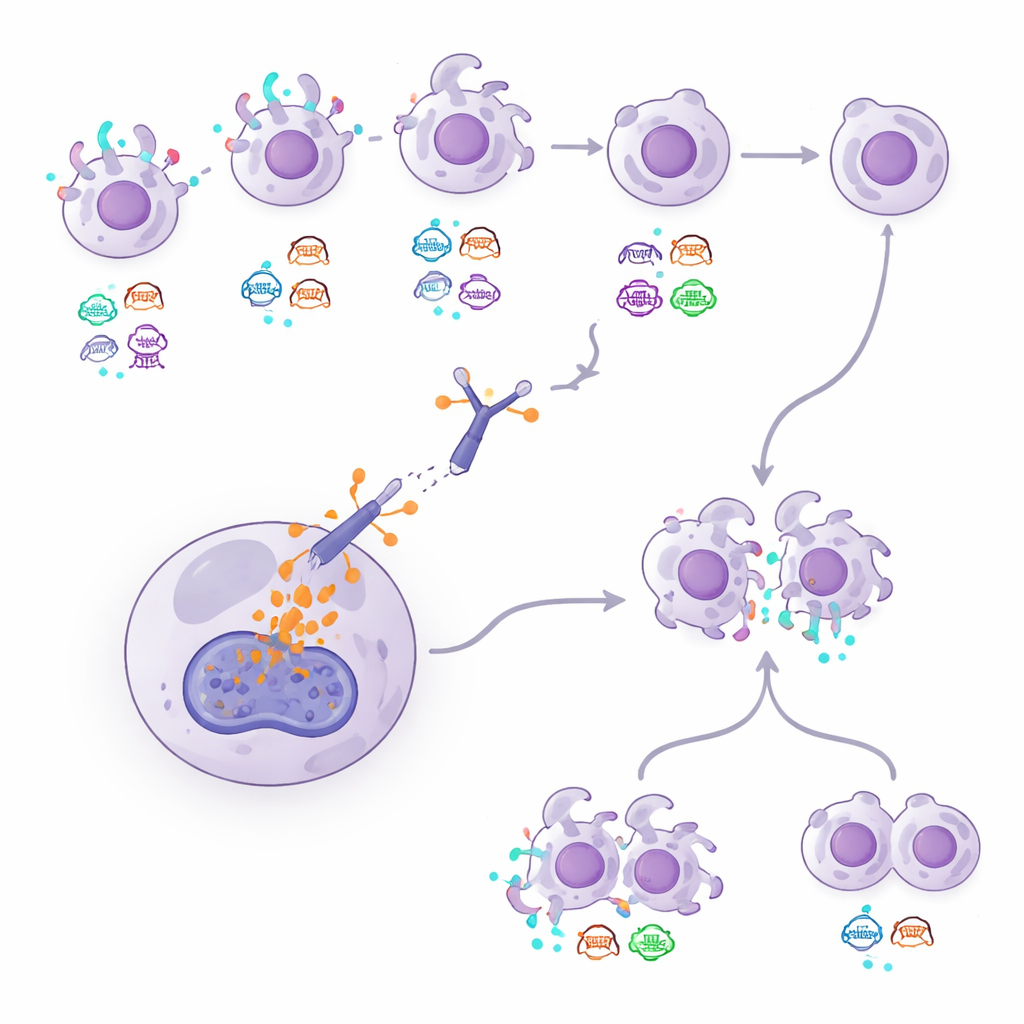
Because repeated biopsies can be invasive, the study also tested a blood-based approach that analyzes fragments of tumor DNA circulating in the bloodstream. Using a method called DNADX, the investigators grouped patients’ blood samples into biological clusters and calculated a HER2-related DNA signature. Patients whose blood showed stronger HER2 signals tended to stay on T-DXd longer, while those with DNA patterns linked to more aggressive, fast-growing disease fared worse. The researchers also noted that, in cancers labeled HER2-negative, high levels of a protein called topoisomerase 1 inside tumor cells were linked to poorer outcomes, hinting that the way the drug’s payload is handled by the cell can influence success. Certain gene losses or mutations, such as changes in the ERBB2 and TP53 genes and enrichment of ARID1B mutations after treatment, emerged as possible markers of resistance.
What this means for patients and clinicians
Overall, the study shows that T-DXd is an effective real-world treatment, especially for patients whose tumors are strongly and consistently driven by HER2. But it also makes clear that traditional HER2 testing is too blunt an instrument to guide this powerful drug. By using more sensitive measurements on tissue and blood, doctors may eventually be able to pinpoint those patients most likely to benefit from T-DXd, spare others from ineffective therapy, and better plan the order in which different antibody–drug conjugates are used. While these advanced tests are not yet routine and need validation in larger groups, they point toward a future in which treatment choices for metastatic breast cancer are tailored using detailed molecular portraits, not just broad labels.
Citation: Tarantino, P., Kim, SE., Hughes, M.E. et al. Quantitative HER2 tissue and plasma profiling predicts the activity of trastuzumab deruxtecan for breast cancer. npj Precis. Onc. 10, 141 (2026). https://doi.org/10.1038/s41698-026-01365-6
Keywords: HER2 testing, trastuzumab deruxtecan, metastatic breast cancer, liquid biopsy, antibody–drug conjugates