Clear Sky Science · en
Landscape of circular RNAs in acute myeloid leukemia and their clinical significance
Why circles in our genes may matter for leukemia
Acute myeloid leukemia is an aggressive blood cancer that still kills many patients despite modern treatments. This study looks at an unusual type of molecule called circular RNA—loops of genetic material that form closed circles instead of the usual straight strands. Because these circles are surprisingly stable, they might act as long‑lasting signposts of how a patient’s disease behaves and how it responds to drugs. Understanding this hidden layer of biology could help doctors fine‑tune diagnosis and treatment, bringing us closer to truly personalized care for leukemia.
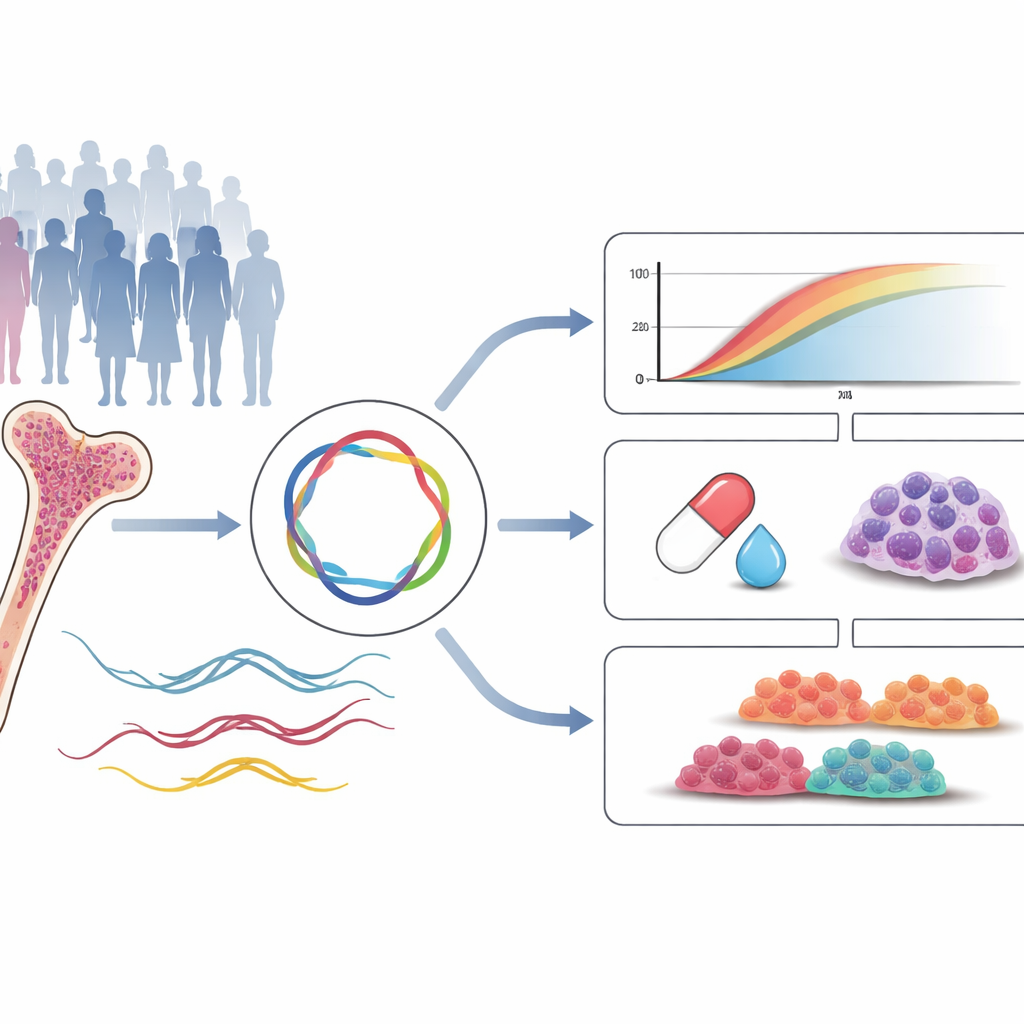
Mapping hidden loops in leukemia cells
The researchers analyzed RNA sequencing data from 315 adults in Sweden with acute myeloid leukemia, one of the largest groups of such patients studied for circular RNA so far. Using several computer tools to cross‑check one another, they cataloged more than 5700 high‑confidence circular RNAs arising from over 2600 genes. Most of these circles were made from the parts of genes that normally code for proteins, and thousands were present in many different patients, showing that circular RNAs are a common feature of leukemia cells rather than rare oddities. When the team compared patients with healthy blood‑forming cells, they found 402 circular RNAs that were consistently higher or lower in leukemia, and their parent genes were tied to the formation and function of blood and immune cells.
Circles that predict how long patients live
The team then asked whether any of these RNA loops tracked with how well patients did over time. They found two stand‑out circles whose higher levels were linked to patients living longer. Importantly, this pattern did not show up when they looked at the regular, straight RNA from the same genes, suggesting that the circular forms carry extra information that standard tests miss. When the researchers adjusted for age, genetic mutations, and other known risk factors, one of these circles still predicted survival on its own, indicating that it could become a useful marker alongside today’s genetic risk scores.
Signals that hint at better or worse treatment response
Beyond survival, the scientists explored whether circular RNAs might flag which drugs work best for which patients. For a subset of individuals whose leukemia cells had been tested against hundreds of medicines in the lab, several circular RNAs were tied to better or worse drug sensitivity. For example, patients with high levels of one protective circle tended to have leukemia cells that were more easily killed by the drug lenalidomide across three independent patient groups. Another circle was linked to stronger responses to the drug rucaparib. These relationships held up even when similar analyses based on the regular gene transcripts did not, again pointing to unique information contained in the circular forms.
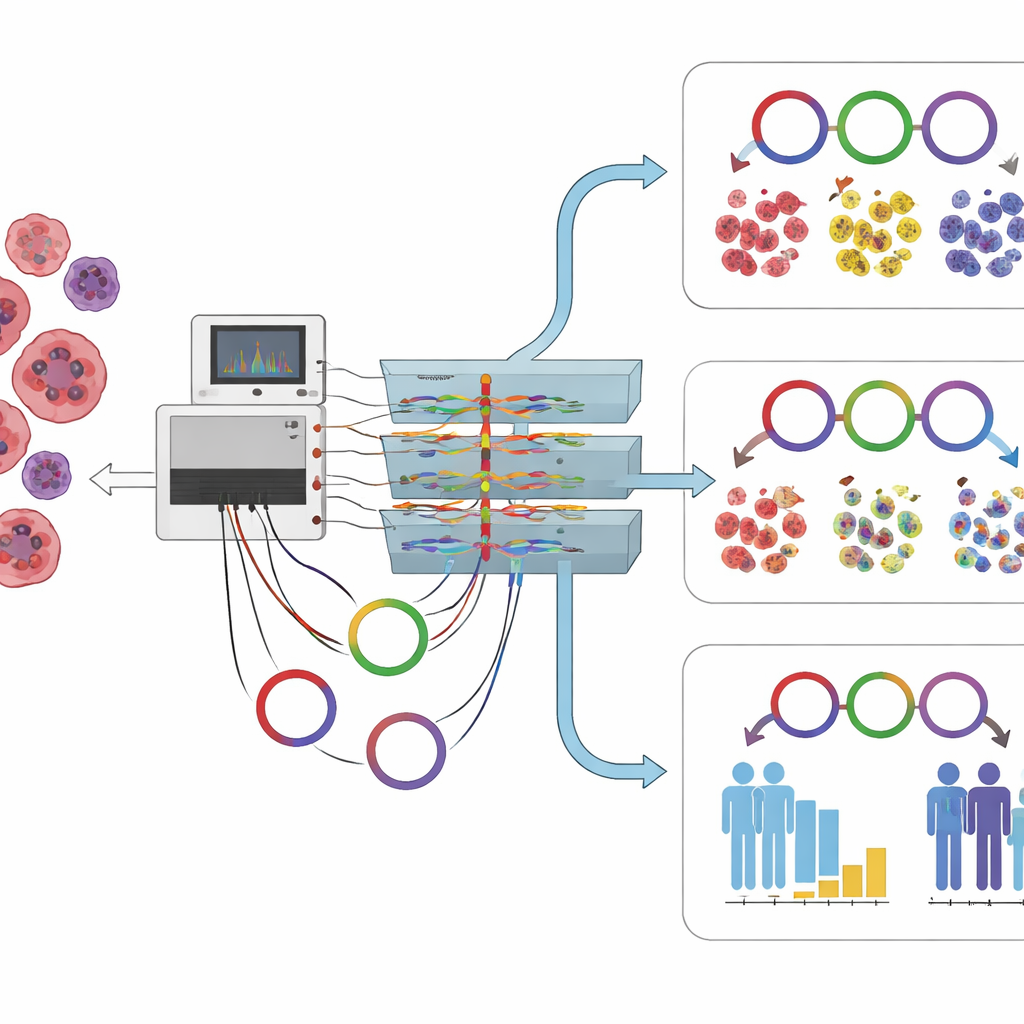
Refining risk groups within the same cancer label
Doctors already sort acute myeloid leukemia into risk groups using the ELN2022 system and by looking at key mutations. The researchers discovered that circular RNAs can further sharpen these categories. They identified 451 circles whose activity was specific to either the most favorable or the most adverse risk groups. In one striking example, within the group usually labeled “favorable,” a particular circle was associated with older age, much lower chances of achieving complete remission after initial therapy, and shorter survival—essentially uncovering a hidden high‑risk subset among people who would otherwise be considered relatively safe. Similar patterns appeared when the team focused on major molecular subtypes defined by hallmark mutations, where certain circles again separated patients with better or worse outcomes.
What this means for future leukemia care
This work draws the most detailed picture to date of circular RNAs in acute myeloid leukemia and shows that these loops are more than biochemical curiosities. They can distinguish leukemia cells from healthy blood cells, refine existing risk groups, and point to drugs that may work better for specific patients. The study is based on statistical links rather than direct lab experiments, so more work is needed to prove how these circles influence leukemia biology and treatment response. Still, the findings suggest that adding circular RNA measurements to genetic testing could one day help doctors predict who is likely to respond to which therapy and who may need more aggressive or alternative treatment from the outset.
Citation: Nguyen, TH., Nguyen, MH., Nguyen, HN. et al. Landscape of circular RNAs in acute myeloid leukemia and their clinical significance. npj Precis. Onc. 10, 116 (2026). https://doi.org/10.1038/s41698-026-01357-6
Keywords: acute myeloid leukemia, circular RNA, cancer biomarkers, precision medicine, drug response