Clear Sky Science · en
Clinical and molecular characteristics of Class II and III BRAF mutations in colorectal cancer
Why some colon cancers behave differently
Colon and rectal cancers may look similar under a microscope, yet some spread quickly while others grow more slowly or respond better to drugs. This study asks why, focusing on changes in a gene called BRAF that are already used to guide treatment for some patients. By analyzing tumors from more than twenty‑four thousand people, the researchers show that not all BRAF mutations are equally dangerous and that some rarer types may actually predict longer survival and a better chance of benefit from certain targeted drugs.

Three flavors of a cancer-driving gene
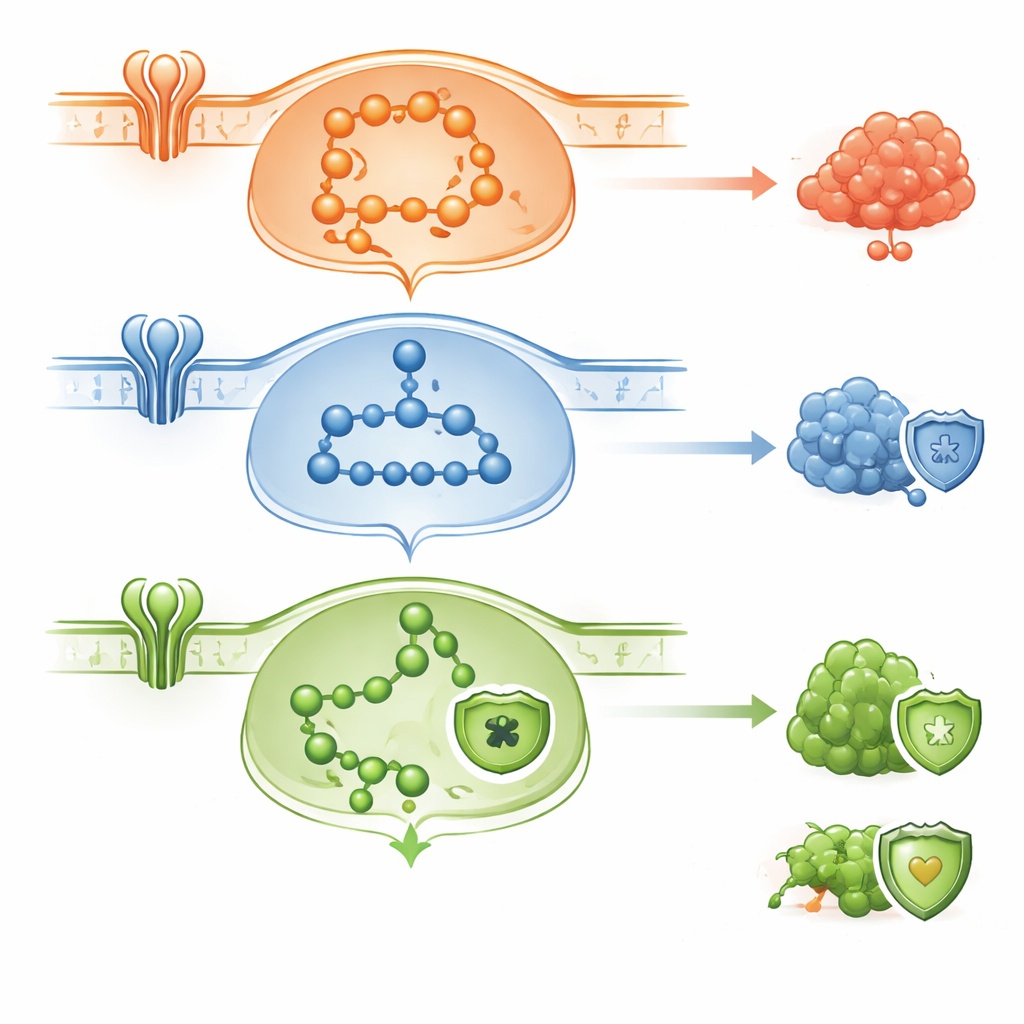
BRAF is part of an internal wiring system that tells cells when to grow. In colorectal cancer, doctors traditionally concentrated on one common type of BRAF change, known as class I, which usually signals a hard‑to‑treat, fast‑moving disease. The new work highlights two much less common types, called class II and class III. These forms alter how the BRAF protein pairs up with itself or with partner proteins, changing how strongly the growth signal is sent. Class II mutations tend to send a strong signal through BRAF pairs, while class III mutations have weaker activity and rely more heavily on other switches in the pathway.
What the big dataset revealed
The team examined DNA and RNA from tumors of 24,327 patients with metastatic colorectal cancer that did not have mismatch repair defects. They sorted tumors into those with class I, II, or III BRAF mutations or with no BRAF mutation at all. Class I mutations were found in about 5% of patients, whereas class II and III together appeared in under 2%. Class I tumors more often arose on the right side of the colon and were linked with particular molecular patterns, while class II and III tumors more often appeared on the left side and resembled tumors without BRAF changes in several gene‑expression signatures.
Survival differences across BRAF types
When the researchers followed patients over time, clear differences emerged. People whose tumors carried the rare class III BRAF mutations lived longer than those with class I mutations, with median overall survival around two years for class III versus about a year and a half for class I. Class II mutations showed survival in between these groups. Patients without any BRAF mutation did best overall. The study also found that additional mutations in related genes called RAS made outcomes worse for patients with class II or III BRAF changes, cutting survival times roughly in half in some comparisons. This suggests that looking at BRAF alone is not enough; doctors must consider the broader network of growth‑signal genes.
Clues to drug response from tumor activity scores
To understand how these genetic differences might affect treatment, the authors used RNA readouts to estimate how active key signaling routes were inside the tumors. Measures of the MAPK pathway, a central growth circuit, were highest in class I tumors and lower in class II and III, especially when RAS was not mutated. They also applied a previously developed “cetuximab score,” based on gene‑expression patterns that predict benefit from drugs blocking the EGFR receptor. Class II and III tumors scored more favorably than class I, and class III tumors without RAS mutations had the most encouraging scores, resembling tumors known to respond to EGFR‑targeted antibodies in the clinic.
What this means for patients and future therapies
For people facing colorectal cancer, these findings underline that the label “BRAF‑mutant” hides important differences. Tumors with class III—and possibly class II—BRAF mutations appear less aggressive than those with the common class I change, particularly when RAS is normal. They may also be more open to existing EGFR‑blocking drugs, and they are candidates for new medicines now in development that target BRAF pairs or related proteins. In practical terms, the study supports more detailed genetic testing and reporting of BRAF mutation class and RAS status, so that treatment decisions and discussions about prognosis can be better tailored to each individual.
Citation: Sahin, I.H., Xiu, J., Baca, Y. et al. Clinical and molecular characteristics of Class II and III BRAF mutations in colorectal cancer. npj Precis. Onc. 10, 146 (2026). https://doi.org/10.1038/s41698-026-01329-w
Keywords: colorectal cancer, BRAF mutations, precision oncology, EGFR targeted therapy, RAS pathway