Clear Sky Science · en
Clinical validation of a tissue-agnostic genome-wide methylome enrichment assay to monitor response to pembrolizumab
Watching Cancer Treatment Through a Simple Blood Draw
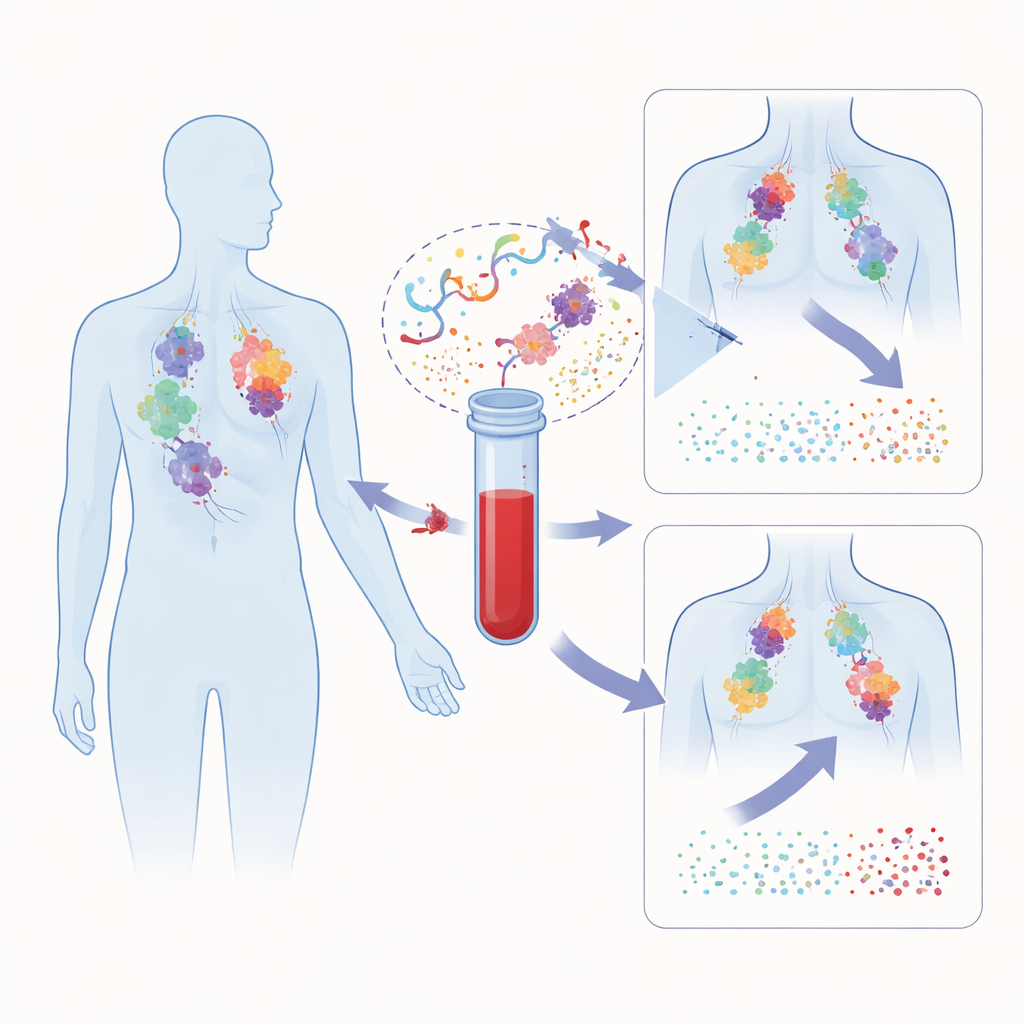
People with advanced cancer and their doctors often wait weeks or months to know whether an immunotherapy drug is truly working. Scans can be confusing, and repeated tissue biopsies are invasive or even impossible. This study explores a new kind of blood test that reads tiny chemical marks on tumor DNA floating in the bloodstream, offering a faster and less invasive way to see if the drug pembrolizumab is helping.
Why Current Checks Are Not Enough
Immunotherapy drugs such as pembrolizumab can produce remarkable and long-lasting responses, but only in a fraction of patients. Today, clinicians rely on tumor features like PD-L1 levels or mutation counts measured from tissue biopsies, along with periodic imaging scans. These approaches have important drawbacks: biopsy samples are not always available, may not reflect the whole tumor, and are usually measured only once before treatment begins. Imaging can be misleading because immune cells rushing into the tumor can temporarily make it appear larger, a phenomenon known as pseudoprogression. Together, these limitations mean that patients may continue ineffective therapies for months before it becomes clear they are not working.
A Universal Blood Test Instead of Tumor Biopsies
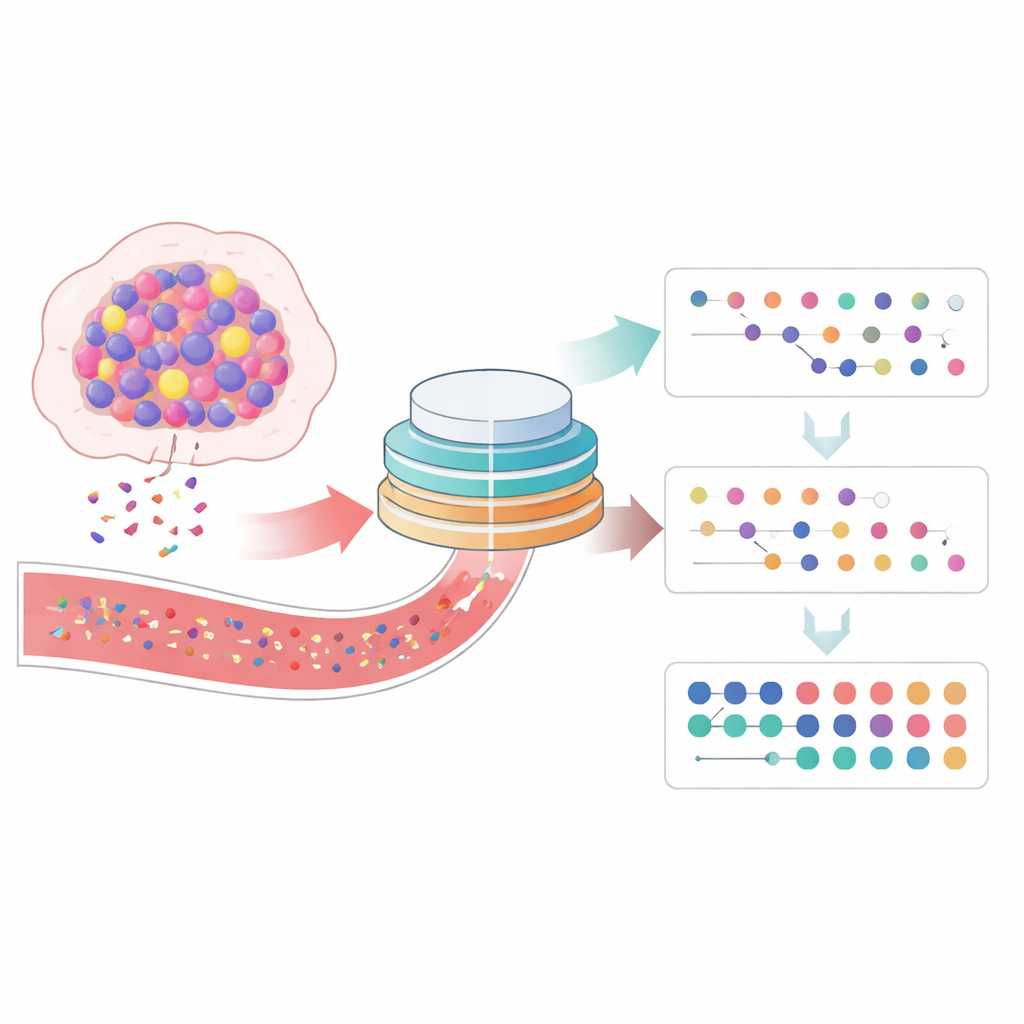
The researchers tested a “tissue-agnostic” blood assay that does not need a prior sample of a patient’s tumor. Instead, it focuses on DNA methylation—stable chemical tags that decorate DNA and differ between healthy and cancer cells. Tumors constantly shed DNA fragments into the bloodstream, creating circulating tumor DNA (ctDNA). Using a technique called cfMeDIP-seq, the team enriches and sequences only methylated fragments from plasma and then applies a classifier trained on large cancer and non-cancer datasets. This produces a numeric ctDNA score that reflects how much tumor-derived DNA is present in the blood, regardless of where the cancer started in the body.
Tracking Pembrolizumab Response Across Many Cancers
To see whether this test could monitor response to immunotherapy, the scientists analyzed 241 blood samples from 69 people with various advanced solid tumors enrolled in the INSPIRE trial. Participants, who had not previously received immunotherapy, were treated with pembrolizumab alone and had blood drawn before treatment and then every three cycles, starting around the third treatment. The main question was simple: does the ctDNA score go up or down from the start of treatment to the third cycle? Patients were grouped accordingly and followed for tumor responses, time without disease worsening, and overall survival.
What Changes in Tumor DNA Revealed
Half of the patients showed a drop in ctDNA score by the third cycle, and half showed an increase. The early pattern was striking: none of the patients whose ctDNA increased had a meaningful tumor shrinkage, and nearly all failed to benefit from therapy. In contrast, almost all patients who responded clinically had a decrease in ctDNA. A falling score was strongly linked with better chances of tumor shrinkage, longer periods before the disease progressed, and, in simpler analyses, longer overall survival. When the team looked beyond that single early timepoint, they found that patients whose ctDNA levels stayed below their initial baseline throughout treatment tended to live longer and remain progression-free longer than those whose ctDNA ever climbed above baseline.
How This Test Compares With Other Signals
The team also compared ctDNA changes to more familiar markers such as PD-L1 expression and tumor mutation burden measured from tissue. While higher PD-L1 levels showed some relationship with benefit in basic analyses, these tissue markers lost significance once ctDNA dynamics were included in more complex models. In contrast, early shifts in ctDNA remained a strong, independent indicator of how patients would fare, especially for progression-free survival. Importantly, this performance matched what had previously been achieved using personalized, tumor-informed ctDNA tests that require prior sequencing of each patient’s tumor—yet the new assay works from blood alone and can be applied across many cancer types.
What This Could Mean for Patients
In everyday terms, this study suggests that a specialized blood test can tell, within a few treatment cycles, whether pembrolizumab is likely helping a patient’s cancer. A consistent drop in tumor DNA in the blood signals a better chance of benefit, while rising levels warn that the disease may be resisting therapy. Because the method does not depend on having tumor tissue and can be repeated over time, it could allow doctors to make earlier, better-informed choices about continuing, changing, or intensifying treatment. Larger prospective trials will be needed, but this work provides strong evidence that reading methylation patterns in blood-borne tumor DNA could become a powerful, broadly usable tool for guiding immunotherapy.
Citation: Stutheit-Zhao, E.Y., Zhong, Y., Melton, C.A. et al. Clinical validation of a tissue-agnostic genome-wide methylome enrichment assay to monitor response to pembrolizumab. npj Precis. Onc. 10, 129 (2026). https://doi.org/10.1038/s41698-026-01327-y
Keywords: circulating tumor DNA, immunotherapy monitoring, liquid biopsy, DNA methylation, pembrolizumab