Clear Sky Science · en
Kinic index: an artificial intelligence-driven predictive model and multitarget drug discovery framework for hepatocellular carcinoma patients
Why this research matters
Liver cancer is one of the deadliest cancers worldwide, in part because tumors differ greatly from one patient to another and often resist current drugs. This study introduces a new way to sort liver cancer patients into risk groups and, at the same time, search for new medicines tailored to their disease. Using advanced artificial intelligence (AI), the researchers built a tool called the Kinic Index that links subtle chemical marks on proteins to patient survival and to promising drug targets.
A new chemical mark with big consequences
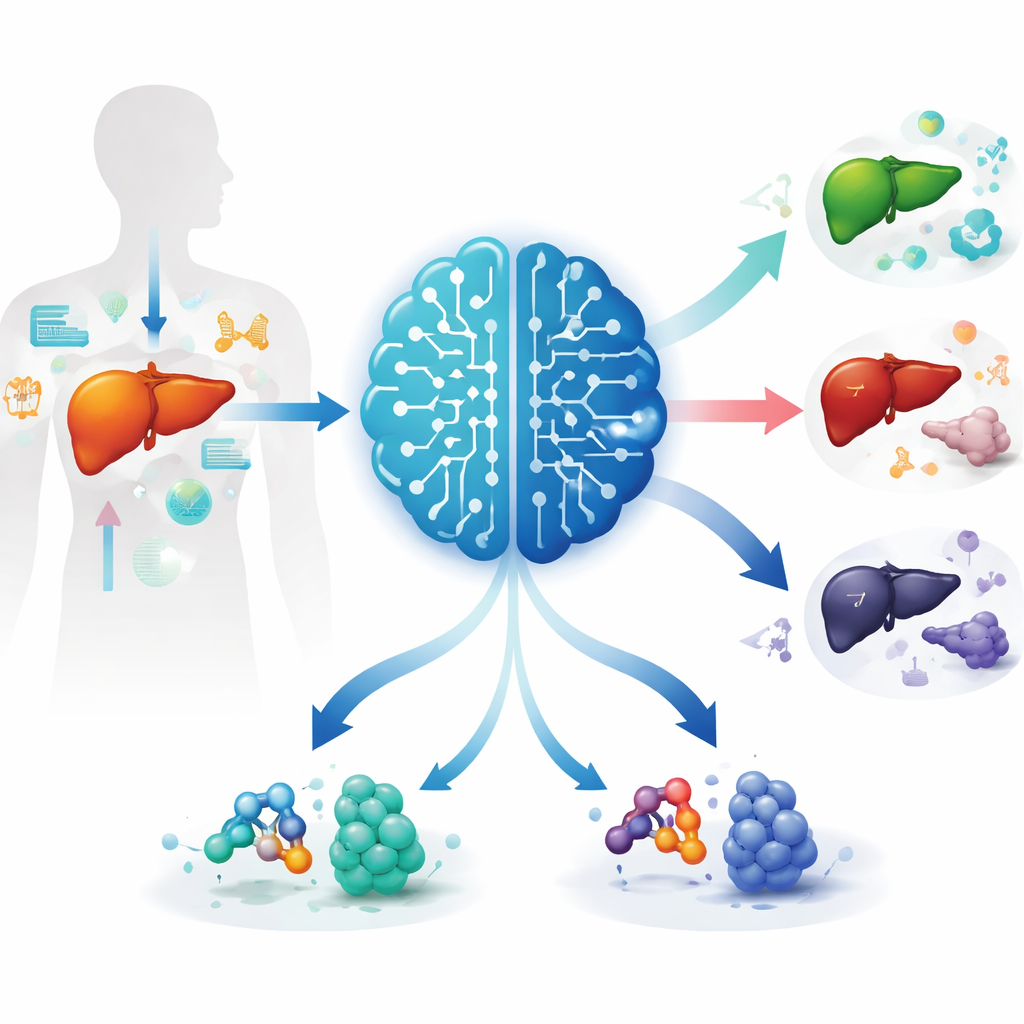
In recent years, scientists discovered a new kind of chemical tag on proteins in liver cells, called isonicotinylation. These tiny marks can change how DNA is packed and how cancer-related genes are switched on or off. The team gathered large datasets from hundreds of liver tumors and healthy livers, looking for genes whose activity is tied to this new modification. They found dozens of such genes and showed that many of them sit in biological pathways that control how cells handle fats, drugs, and other chemicals, as well as how cancers grow and spread.
Sorting patients into higher and lower risk
To turn these findings into something useful in the clinic, the scientists used machine learning to group liver cancer patients based on the activity of isonicotinylation‑related genes. Two main subgroups emerged. One subgroup showed stronger activity of certain genes and had clearly worse overall survival. This high‑risk group also had signs of a more aggressive tumor environment: faster cell division, greater genetic instability, and an immune landscape that suggested tumors might evade the body’s defenses. The other subgroup showed more active detox and metabolism pathways and had better outcomes, hinting that these molecular patterns could help doctors predict how patients will fare.
An AI score that highlights two key genes
Building on these patterns, the researchers created the Kinic Index, an AI‑driven score that combines several machine‑learning methods to predict a patient’s risk of death. They tested over a hundred model combinations and picked the one that performed best in both a major cancer database and an independent patient cohort. The score proved to be a strong and independent predictor of survival, even after accounting for age and tumor stage. Importantly, a technique called SHAP, which explains how AI models make decisions, pointed to two genes—CYP2C9 and G6PD—as the most influential. Single‑cell and spatial analyses showed that both genes are mainly active in malignant liver cells with high spreading potential, and that their activity is tightly linked to how tumors interact with nearby immune and support cells.
From risk scores to candidate drugs
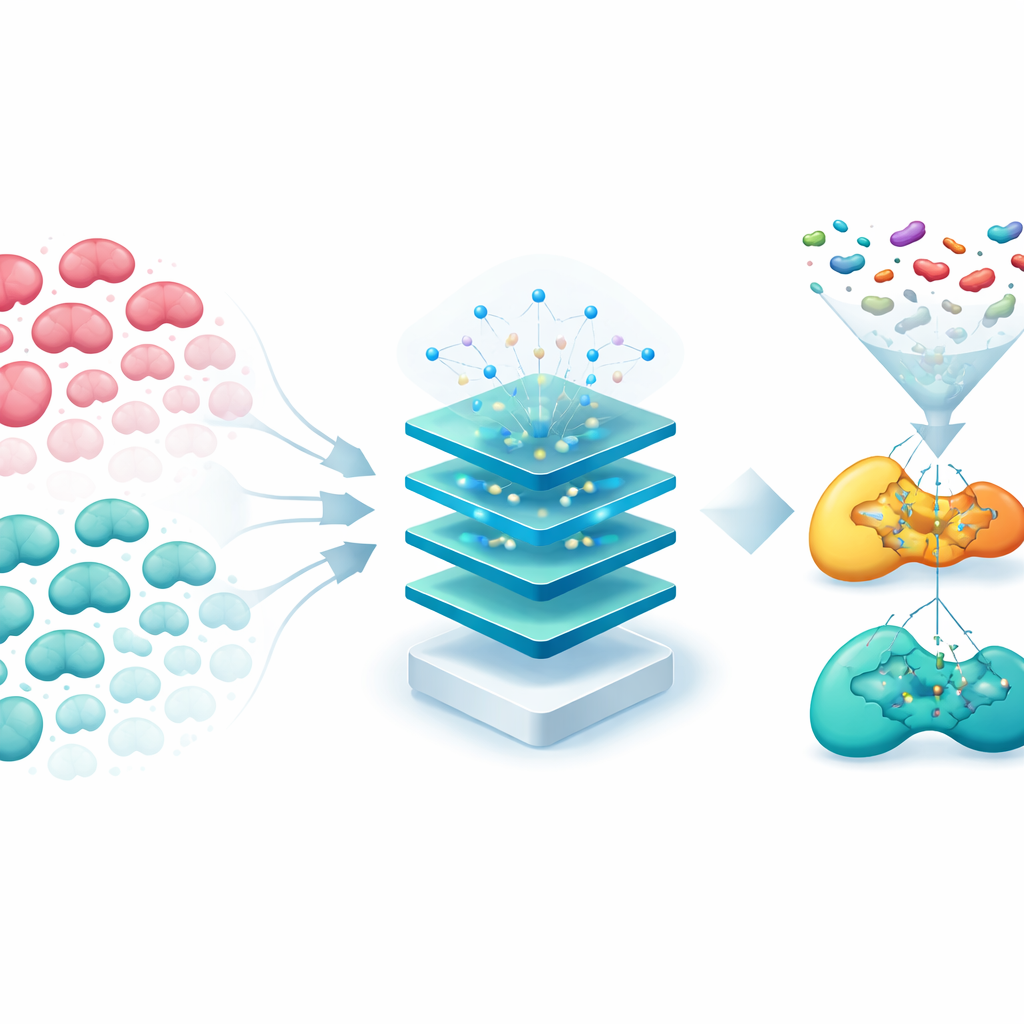
The study did not stop at prognosis. The team used a deep‑learning framework called GraphBAN to screen more than 200,000 chemical compounds for their ability to bind CYP2C9 and G6PD. They then applied an AI tool that predicts how well a compound is absorbed, processed, and tolerated in the body, narrowing the list to just a handful of drug‑like molecules. Computer docking simulations suggested that two candidates, each aimed at one of the key proteins, fit snugly into highly favorable pockets on their targets and formed stable complexes over time. These results propose concrete starting points for new medicines designed to disrupt the metabolic weak points of liver tumors highlighted by the Kinic Index.
What this means for future care
Put simply, this work shows how AI can connect three crucial steps in modern cancer care: understanding how a new protein mark shapes tumor behavior, turning that knowledge into a risk score that separates fragile patients from more stable ones, and rapidly homing in on new drug candidates that hit the right molecular targets. If confirmed in further studies and clinical trials, the Kinic Index could help doctors identify liver cancer patients who need more intensive treatment, select therapies that fit their tumor’s biology, and guide the development of multi‑target drugs that anticipate and counter drug resistance.
Citation: Zhou, J., Jiang, Y., Yu, M. et al. Kinic index: an artificial intelligence-driven predictive model and multitarget drug discovery framework for hepatocellular carcinoma patients. npj Precis. Onc. 10, 132 (2026). https://doi.org/10.1038/s41698-026-01324-1
Keywords: hepatocellular carcinoma, precision oncology, artificial intelligence, epigenetic modification, drug discovery