Clear Sky Science · en
Natural polysaccharide riclin acts as an immune adjuvant to enhance chemotherapy efficacy in NSCLC
Why this matters for cancer patients
Chemotherapy can be a double-edged sword: while it attacks tumors, it also weakens the body’s own defenses, leaving patients vulnerable to infections and fatigue. This study explores a natural sugar-based compound called riclin, made by friendly bacteria, that is taken by mouth. In mice with a common type of lung cancer, riclin helped rebuild the immune and blood-forming systems damaged by chemotherapy, while also making the cancer drug work better. The work hints at a future where a simple oral supplement could make harsh treatments both safer and more effective.
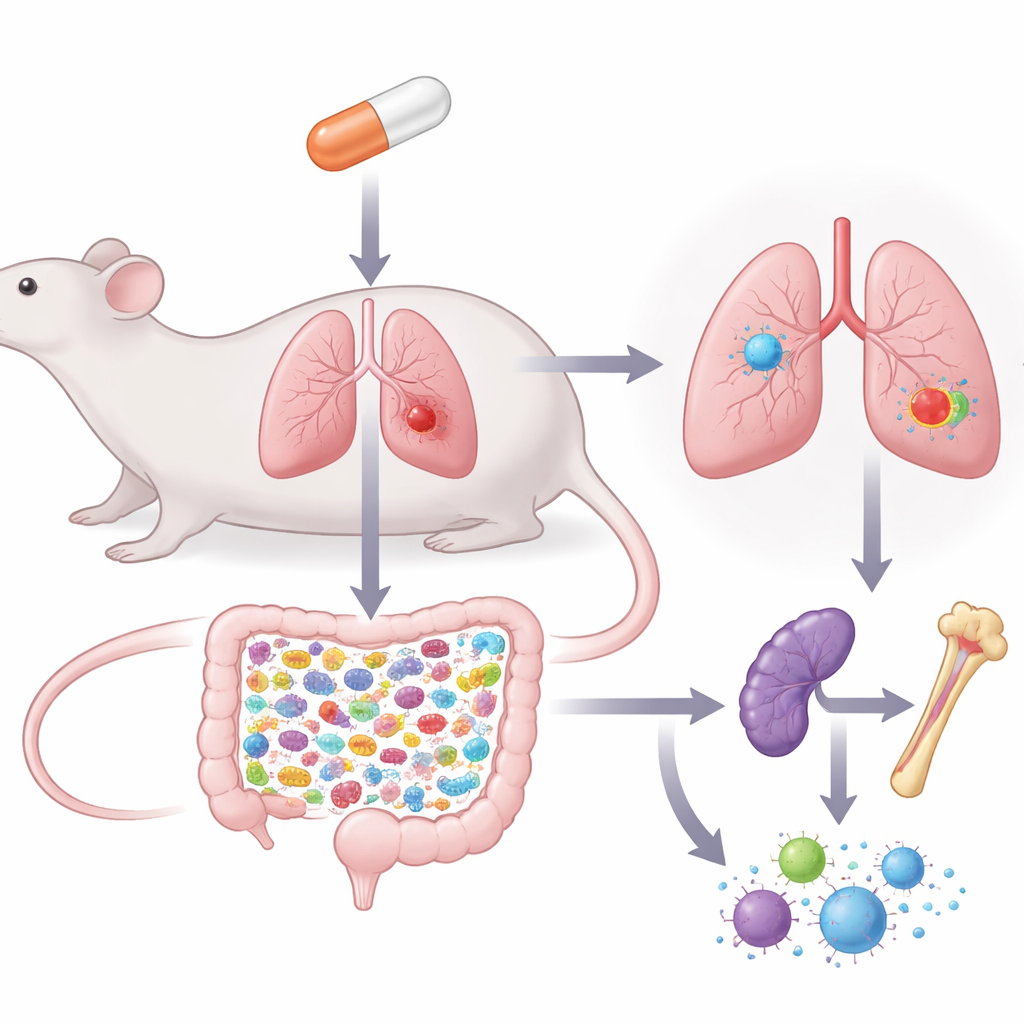
A helper for a standard lung cancer drug
The researchers focused on non-small cell lung cancer, the most common and deadly form of lung cancer. A standard drug for this disease, gemcitabine, can shrink tumors but often suppresses the immune system and the bone marrow that makes new blood cells. The team asked whether riclin, a long-chain sugar (polysaccharide) previously shown to be safe and non-toxic, could serve as an “immune booster” to counter these side effects. By giving riclin by mouth to mice receiving gemcitabine, they tested whether the combination could cut tumor burden while avoiding the usual crash in white blood cells, platelets, and key immune organs such as the spleen and thymus.
How gut microbes and blood cells respond
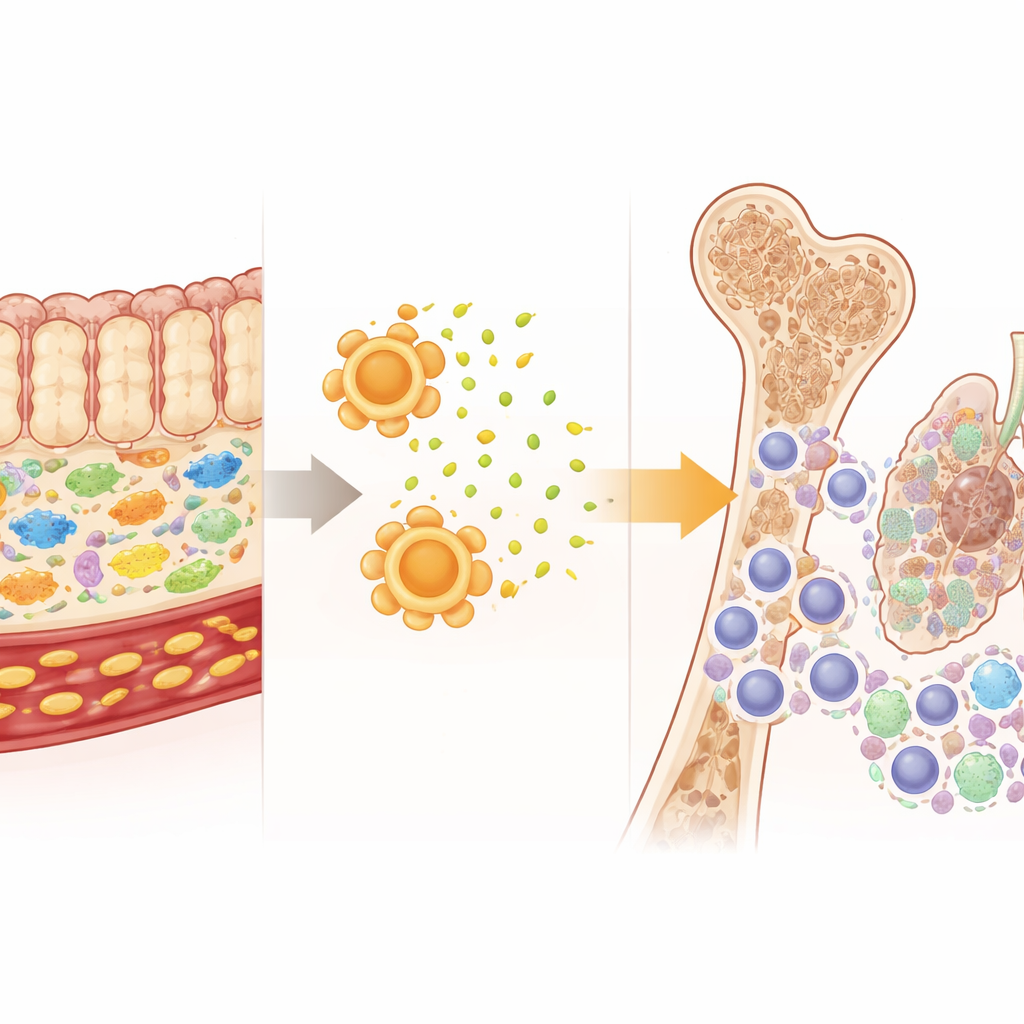
Riclin’s journey begins in the gut. When healthy mice received oral riclin, their intestinal bacteria shifted in a targeted way: certain groups linked to beneficial immune effects became more common, while potentially harmful ones declined. At the same time, chemical fingerprints in the gut changed. Levels of several small fatty acids and other metabolites, known to influence immune cells throughout the body, rose. These changes suggest that riclin reshapes both the types of microbes living in the intestine and the helpful signaling molecules they produce, strengthening the communication lines between gut, immune organs, and bone marrow.
Waking up the body’s defenders
The team then looked directly at frontline immune cells. In cell culture, riclin made macrophages—scavenger cells that patrol tissues—larger, more active, and better at engulfing particles. These cells released more signaling proteins that rally broader immune responses. In live mice, riclin switched on gene programs in the spleen and bone marrow that are linked to immune activation and the production of new blood cells. Key control pathways that coordinate inflammatory signals with the growth of fresh immune and blood-forming cells were engaged, and blocking these pathways with drugs blunted riclin’s benefits. Together, these results indicate that riclin does more than nudge the immune system; it actively reboots the machinery that builds and maintains it.
Protecting against chemotherapy damage
When mice were treated with gemcitabine alone, they lost weight, their spleens and thymuses shrank, and their blood counts fell—hallmarks of strong treatment-related toxicity. Adding riclin changed this picture. Mice receiving both gemcitabine and riclin kept more stable body weight and healthier immune organ sizes, and their white blood cells, lymphocytes, neutrophils, and platelets recovered toward normal levels. Inside the bone marrow, riclin promoted the survival and division of early blood-forming cells, reduced cell death, and preserved the delicate structure of the tissue. At the same time, riclin restored immune cell numbers and activity in the spleen, including key T cell populations that are central to directing attacks on tumors.
Making chemotherapy hit tumors harder
Most strikingly, in a mouse model of lung cancer, riclin made gemcitabine more potent against tumors. The combination treatment shrank tumors far more than gemcitabine alone—reducing overall tumor burden by nearly all of its initial mass in some cases—while still guarding the immune system from severe suppression. Tumor-bearing mice given riclin showed stronger T cell responses in their spleens and increased levels of pro-immune signaling molecules in their blood, suggesting that the body’s own defenses were being recruited to help the drug clear cancer cells. This dual effect—stronger tumor control with less systemic damage—is rare among current treatment add-ons.
What this could mean for future care
For a lay reader, the core message is that riclin acts like a smart shield and amplifier for chemotherapy: it helps gut microbes and immune organs work together so that the body can better tolerate and even amplify the effects of a standard cancer drug. While these findings are in mice and gemcitabine was the only drug tested, they point toward an appealing concept—an oral, microbe-friendly supplement that protects the immune and blood-forming systems while helping anticancer drugs do their job. Before riclin could be used in people, researchers will need to test it with other treatments, map out its safety in detail, and determine appropriate dosing. If those steps succeed, riclin or similar compounds could become part of combination therapies designed to make cancer treatment not only more powerful but also kinder to the body.
Citation: Miao, Y., Liu, X., Tao, J. et al. Natural polysaccharide riclin acts as an immune adjuvant to enhance chemotherapy efficacy in NSCLC. npj Precis. Onc. 10, 108 (2026). https://doi.org/10.1038/s41698-026-01318-z
Keywords: non-small cell lung cancer, chemotherapy side effects, gut microbiome, immune adjuvant, polysaccharides