Clear Sky Science · en
Dual pancreatic carcinomas: clonally related or independent primaries?
Why Two Pancreas Tumors Matter
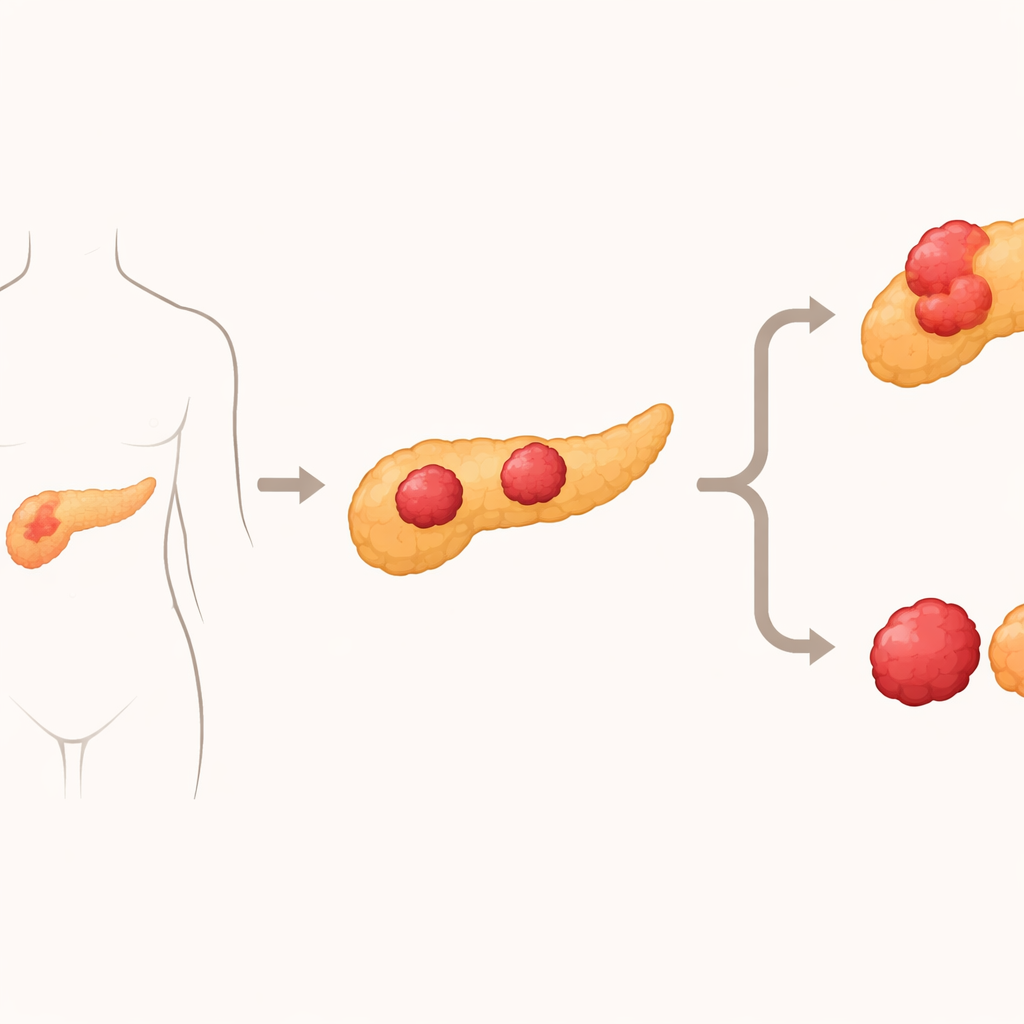
When someone is found to have two cancers in the pancreas, doctors face a crucial question: are these spots branches of the same original tumor, or are they two separate cancers that just happened to arise in the same organ? The answer shapes how we think about the disease, what treatments to use, and what to expect in the future. This study looks closely at patients with this rare situation to understand how often these twin tumors are truly related and what their biology can tell us about pancreatic cancer behavior and treatment.
Looking at a Rare Group of Patients
The researchers reviewed records from a major cancer center and identified 22 people who had two distinct pancreatic ductal adenocarcinomas, the most common type of pancreatic cancer. In some patients, both tumors showed up at the same time on scans; in others, the second growth appeared months or even years after the first had been removed. To be sure they were studying truly separate-appearing tumors, the team excluded cases where a new mass clearly grew directly out of the old one or from a positive surgical margin. They then collected detailed information on risk factors, treatments, microscopic tumor appearance, and long-term outcomes.
How the Tumors Were Compared
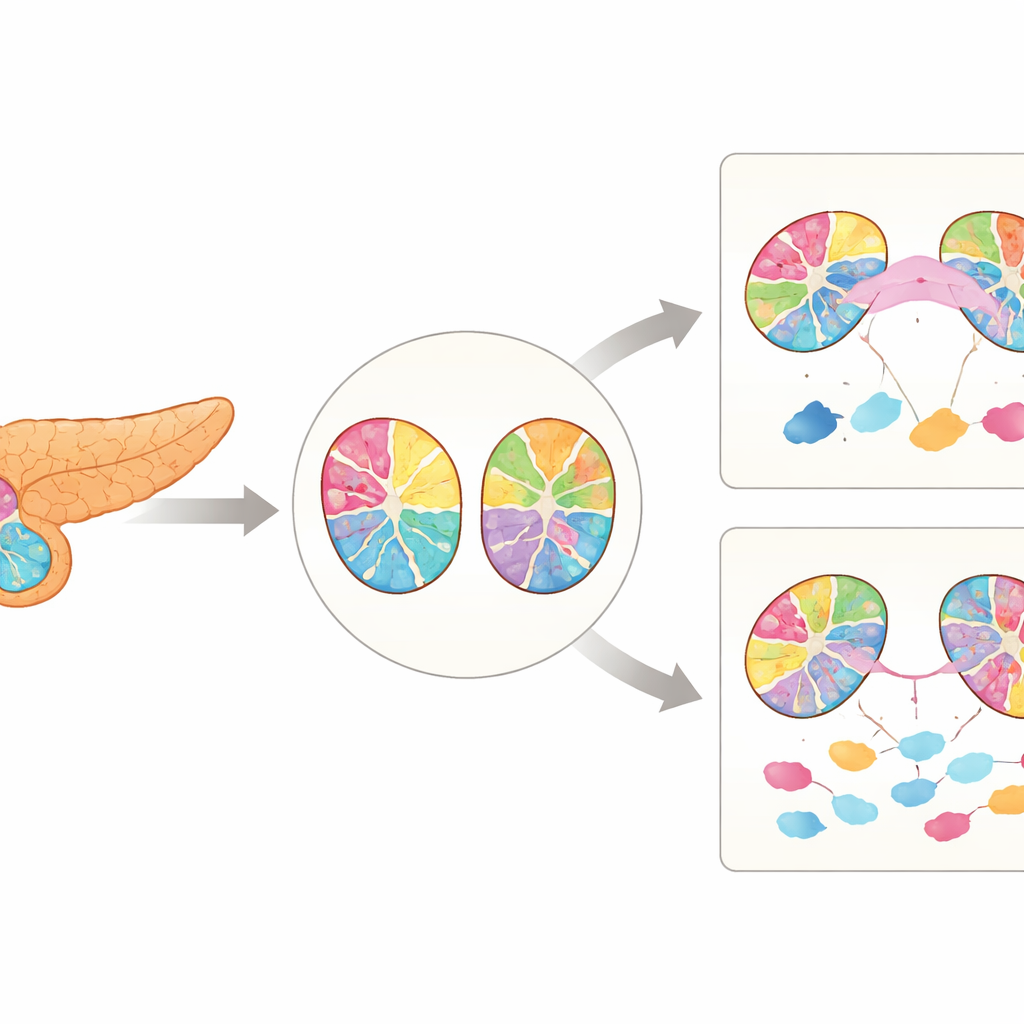
Modern DNA sequencing allowed the team to move beyond what can be seen under the microscope. For 10 patients, they could sequence both tumors and compare their genetic mutations and larger DNA changes. If two tumors shared many of the same mutations, especially in key cancer-driving genes, this strongly suggested they came from a common ancestral cell and represented spread within the pancreas. If their mutation patterns were completely different, this pointed instead to two independent cancers that arose separately. The researchers also used highly sensitive techniques to double-check ambiguous cases where only a few shared changes were detected.
Most Twin Tumors Are Biological Cousins
The genetic comparisons revealed that in most patients, the two cancers were closely related. In six of ten fully sequenced pairs, more than half of the mutations were shared, including all major driver mutations, confirming that one tumor had effectively “seeded” another site within the pancreas. Additional cases with similar DNA copy patterns and rare shared mutations were also judged to be related. Only one clearly proven example showed two tumors that were genetically distinct, despite arising in the same person within just over a year. This finding proves that truly independent pancreatic primaries can occur, but they seem to be the exception rather than the rule.
A Gentler Biology Than Usual
When the team stepped back and looked at the whole group, they noticed that these patients’ cancers tended to have features linked to a somewhat milder form of pancreatic disease. Many tumors were early stage, lymph nodes were often free of spread, and precursor growths in the ducts of the pancreas were common. Genetically, there was an unusually high share of tumors lacking the typical KRAS mutation or changes in another gene called SMAD4, both of which are often tied to more aggressive behavior. Most tumors fit a so-called “classical” tissue pattern rather than a harsher “basal” type. Consistent with this picture, patients in the study generally lived longer than is typical for pancreatic cancer, even though nearly all eventually had the entire pancreas removed.
What This Means for Patients and Care
For people with two pancreatic tumors, this work suggests that the second spot usually represents a local offshoot of the first cancer rather than a brand-new disease. Yet the rare independent case shows that doctors should not assume all such tumors are related. Because targeted drugs now exist for specific genetic alterations, the authors argue that each new pancreatic tumor should be genetically profiled whenever possible, especially if a targeted therapy is being considered. Overall, these isolated intrapancreatic recurrences appear to reflect a more slow-moving form of pancreatic cancer, and patients may benefit from carefully tailored combinations of surgery and systemic treatment rather than one-size-fits-all approaches.
Citation: Schoenfeld, J.D., Ravichandran, V., Tarcan, Z. et al. Dual pancreatic carcinomas: clonally related or independent primaries?. npj Precis. Onc. 10, 112 (2026). https://doi.org/10.1038/s41698-026-01313-4
Keywords: pancreatic cancer, tumor genetics, clonal evolution, precision oncology, KRAS mutations