Clear Sky Science · en
AI accelerate the identification of druggable targets by 3D structures of proteins and compounds
Why Faster Cancer Drug Discovery Matters
Cancer drugs are notoriously slow and expensive to develop, often taking more than a decade and billions of dollars before a single medicine reaches patients. Many promising ideas fail along the way because researchers struggle to pick the right biological targets and to sift through vast chemical possibilities. This article explains how new forms of artificial intelligence are reshaping that process. By teaching computers to understand the three-dimensional shapes of proteins and drug molecules, and to learn from huge collections of genetic and clinical data, scientists hope to find better cancer medicines faster and at lower cost.
From Trial and Error to Smarter Design
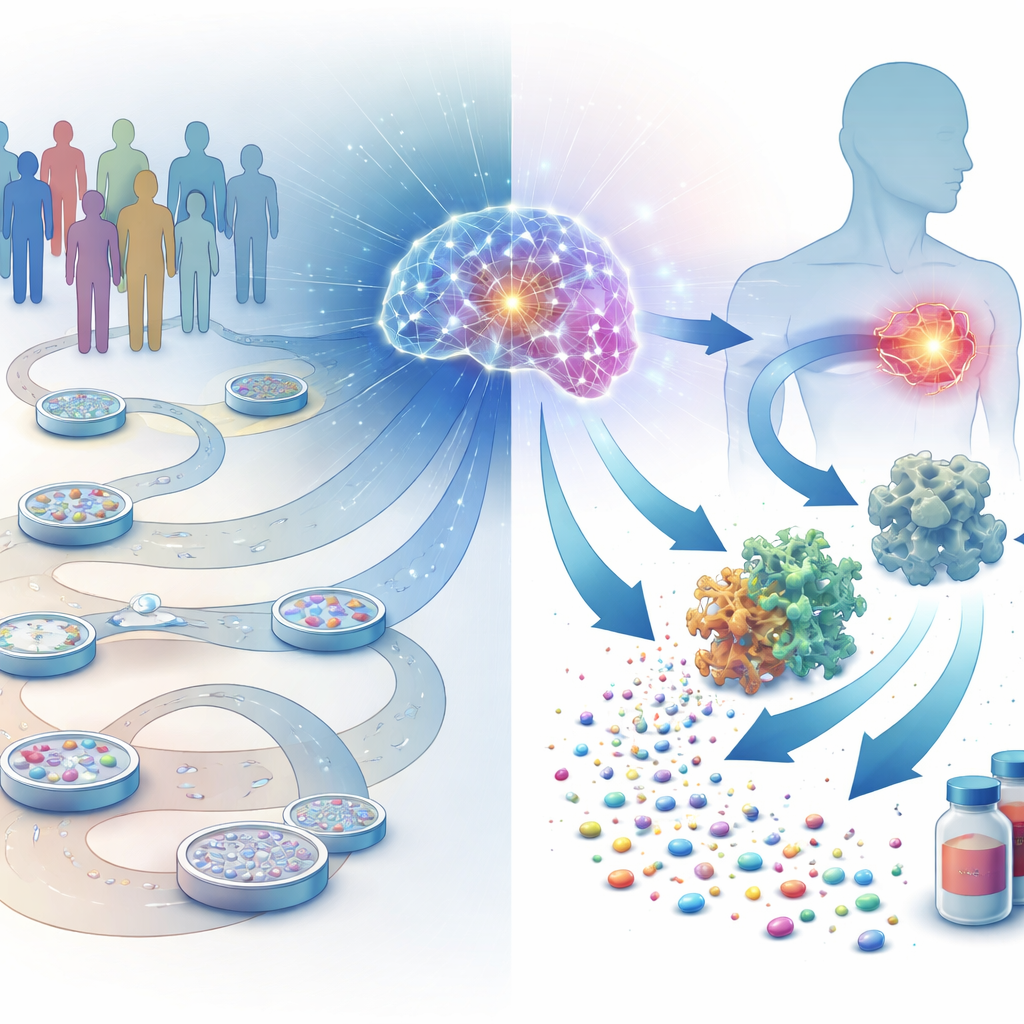
Traditional drug discovery resembles an elaborate trial-and-error process. Researchers first pick a handful of biological targets—such as proteins that control how tumor cells grow—then test thousands of chemicals in the lab to see which ones stick to those targets. The most promising “hits” are slowly refined to improve safety, how long they last in the body, and how well they reach tumors. Even with the help of earlier generations of computer modeling, this pipeline is long, failure-prone, and particularly challenging in cancer, where tumors are genetically diverse and quickly become resistant to treatment. The review shows how artificial intelligence builds on older computer-aided drug design tools but is better suited to the messy, complex data produced by modern biology.
How AI Finds New Cancer Targets
One major use of AI is in deciding what to aim at in the first place. Modern cancer research produces “multi-omics” data—detailed measurements of DNA mutations, gene activity, proteins, chemical tags on DNA, and more. Humans and simple algorithms struggle to see clear patterns in this flood of information. Machine-learning systems can scan these mixed data sources, link them with patient outcomes, and highlight which genes or pathways seem most important for a particular cancer. The article describes platforms that combine genetic data with patterns mined from scientific papers and clinical trials to rank potential targets and estimate how easily they might be affected by a drug. AI models can even predict how single-letter changes in a protein or paired gene weaknesses make tumor cells particularly vulnerable, suggesting opportunities for highly selective therapies.
Searching Chemical Space with Virtual Screening
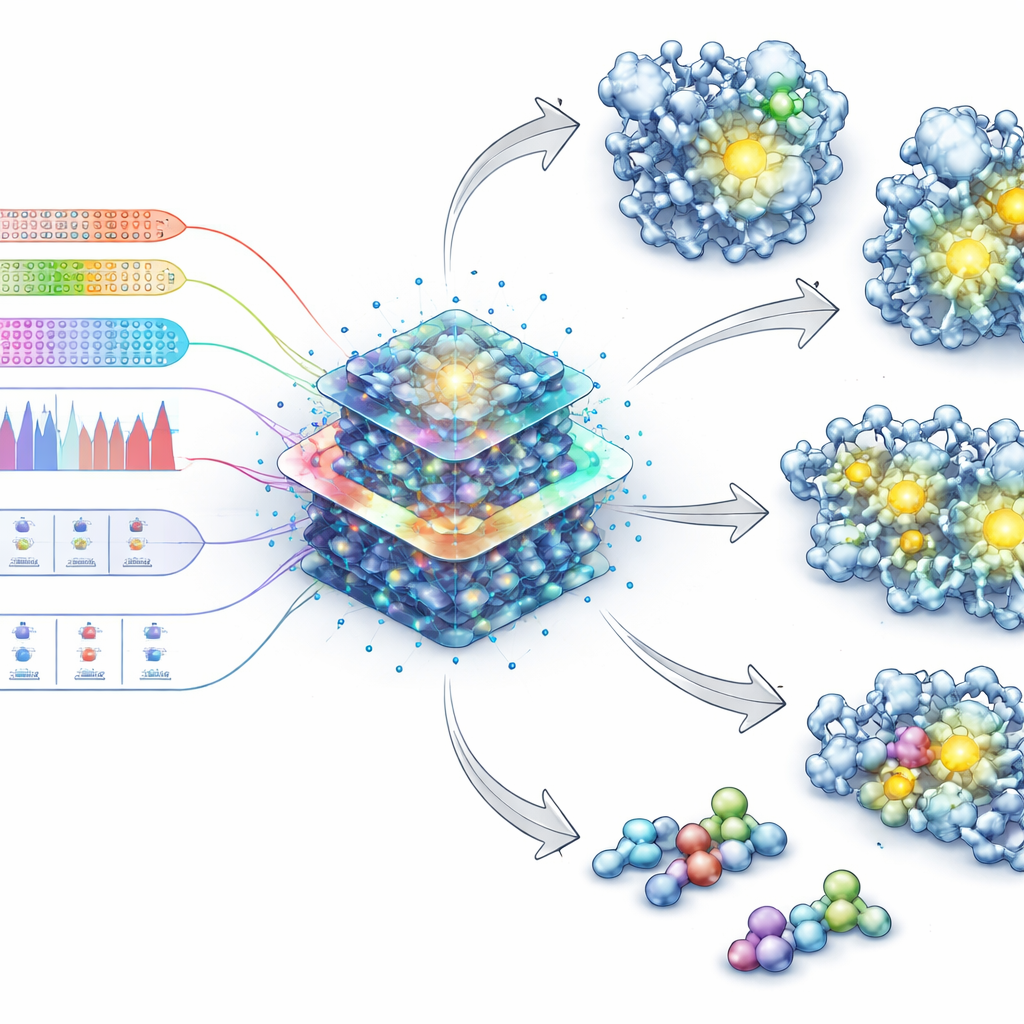
Once a target looks promising, researchers still face an enormous space of possible drug molecules. Virtual screening uses computers to simulate how small molecules might interact with a target’s three-dimensional surface. AI improves this step in several ways. Deep-learning models now predict protein structures directly from their amino-acid sequences, providing detailed shapes even when no crystal structure exists. Other neural networks learn from known protein–drug complexes to quickly estimate how well new molecules might bind, allowing scientists to screen millions or even billions of candidates in silico before testing a small, prioritized set in the lab. AI also boosts methods that work without full structural knowledge by learning subtle relationships between molecular features and biological effects, helping filter out weak or toxic compounds early.
Designing New Molecules from Scratch
Beyond searching existing chemical libraries, generative AI can invent entirely new molecules that have never been seen before. These models learn the “language” of chemistry and then propose fresh combinations of atoms that should satisfy multiple goals at once, such as strong binding to a cancer target, good behavior in the body, and low toxicity. Some systems even condition their designs on tumor gene-expression patterns, effectively tailoring candidate drugs to specific cancer subtypes. The review surveys several families of generative models, each offering different trade-offs between diversity, realism, and ease of chemical synthesis. It also notes that current methods still struggle with explaining why a design works and with ensuring that proposed molecules can actually be made and tested.
Hurdles, Ethics, and the Road to the Clinic
Despite striking progress, the article emphasizes that AI is not a magic button. These models are only as good as the data they learn from, which can be incomplete, biased toward common cancers, or locked behind paywalls. Many powerful neural networks function as “black boxes,” making it hard for doctors and regulators to trust their recommendations. Researchers are therefore working on explainable AI techniques that reveal which molecular features or genetic signals drive a prediction. There are also practical constraints: running state-of-the-art models requires significant computing power and expertise, and the use of sensitive patient data raises privacy and oversight concerns. Still, several AI-guided cancer drugs have already entered clinical trials, hinting at what is possible.
What This Means for Future Cancer Care
In plain terms, the article concludes that AI is turning drug discovery from a slow, largely manual search into a more informed, feedback-driven process. By connecting detailed views of tumors with precise maps of protein shapes and vast chemical libraries, AI systems can suggest better targets, discard weak ideas early, and propose new molecules tailored to the biology of specific cancers. Challenges around data quality, transparency, and regulation remain, but early clinical successes suggest that AI-designed drugs are moving from computer screens toward real treatments. If these trends continue, future cancer patients could see therapies that arrive faster, fail less often, and are more closely matched to the unique features of their disease.
Citation: Li, D., Shi, S., Yu, Z. et al. AI accelerate the identification of druggable targets by 3D structures of proteins and compounds. npj Precis. Onc. 10, 133 (2026). https://doi.org/10.1038/s41698-026-01310-7
Keywords: cancer drug discovery, artificial intelligence, protein structure, virtual screening, generative drug design