Clear Sky Science · en
Personalized ctDNA analysis for detection of residual disease and recurrence in surgically treated HNSCC patients
Why watching for a cancer comeback matters
For people treated for head and neck cancer, the end of surgery and radiation is not always the end of the story. Tumors can quietly return months or even years later, often before symptoms appear or scans pick them up. This study asks a simple but powerful question: can tiny fragments of tumor DNA, drifting in a patient’s blood or saliva, warn doctors of a hidden comeback early enough to change the outcome?
A new type of follow-up test
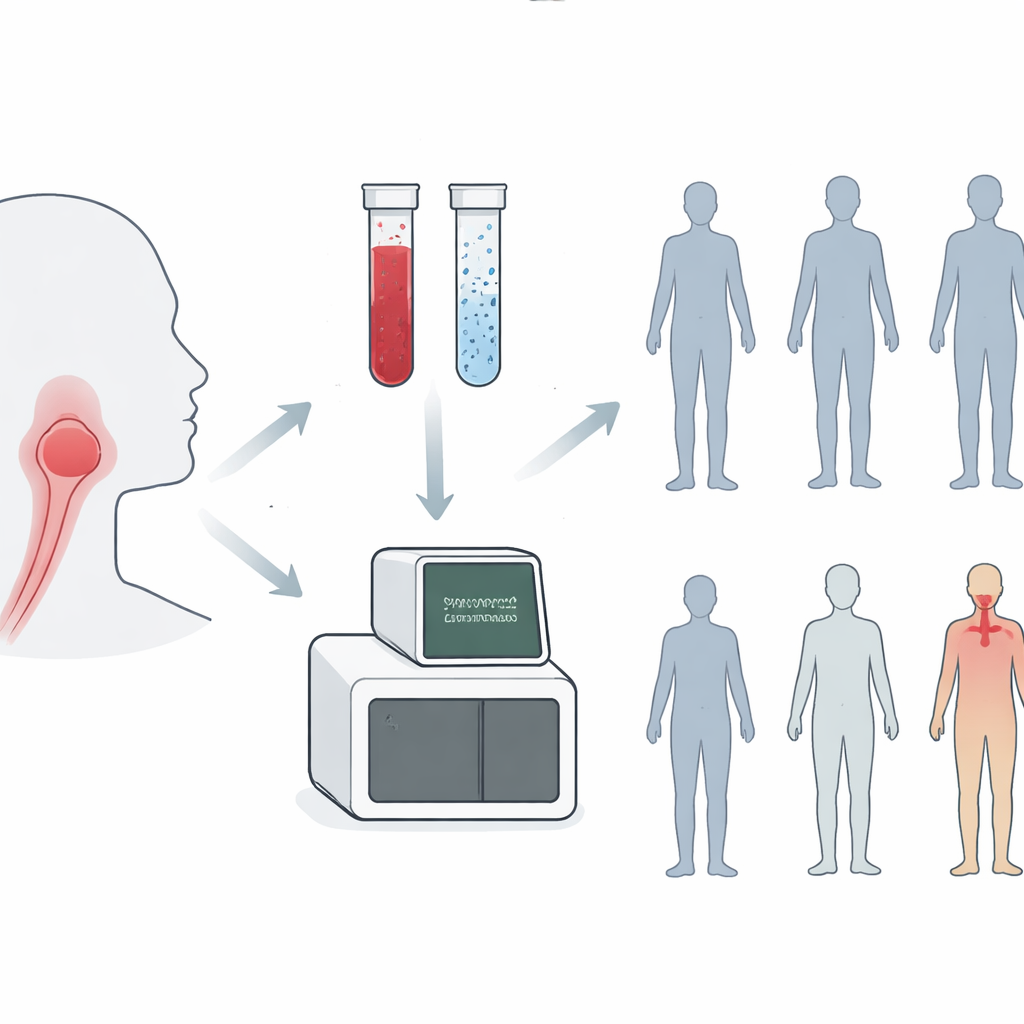
The researchers focused on head and neck squamous cell carcinoma, a common and often aggressive cancer of the mouth, throat, and voice box. Standard follow-up relies on physical exams, scopes, and imaging, which can miss early recurrences, especially in scarred or surgically altered tissue. The team tested a more sensitive approach: a personalized "liquid biopsy" that searches blood and saliva for DNA changes unique to each patient’s tumor. Using whole-exome sequencing on tumor samples from 76 surgical patients, they built custom panels of dozens of mutations per person and then repeatedly screened 656 blood and 128 saliva samples taken before and after treatment.
What tumor DNA in blood can reveal
Before surgery, tumor DNA was detectable in the blood of 87% of patients, and in more than 80% of available saliva samples, with the highest saliva detection in cancers of the mouth and oropharynx. Higher levels of this circulating tumor DNA were linked to more advanced disease, larger tumor volume, and involvement of lymph nodes, as well as molecular signs of fast-growing, aggressive tumors. In the laboratory, tumors that shed more DNA tended to show higher cell proliferation and increased activity in growth and invasion pathways, suggesting that the amount of tumor DNA in circulation reflects not just how big the cancer is, but how biologically active it is.
Spotting relapse months before it shows
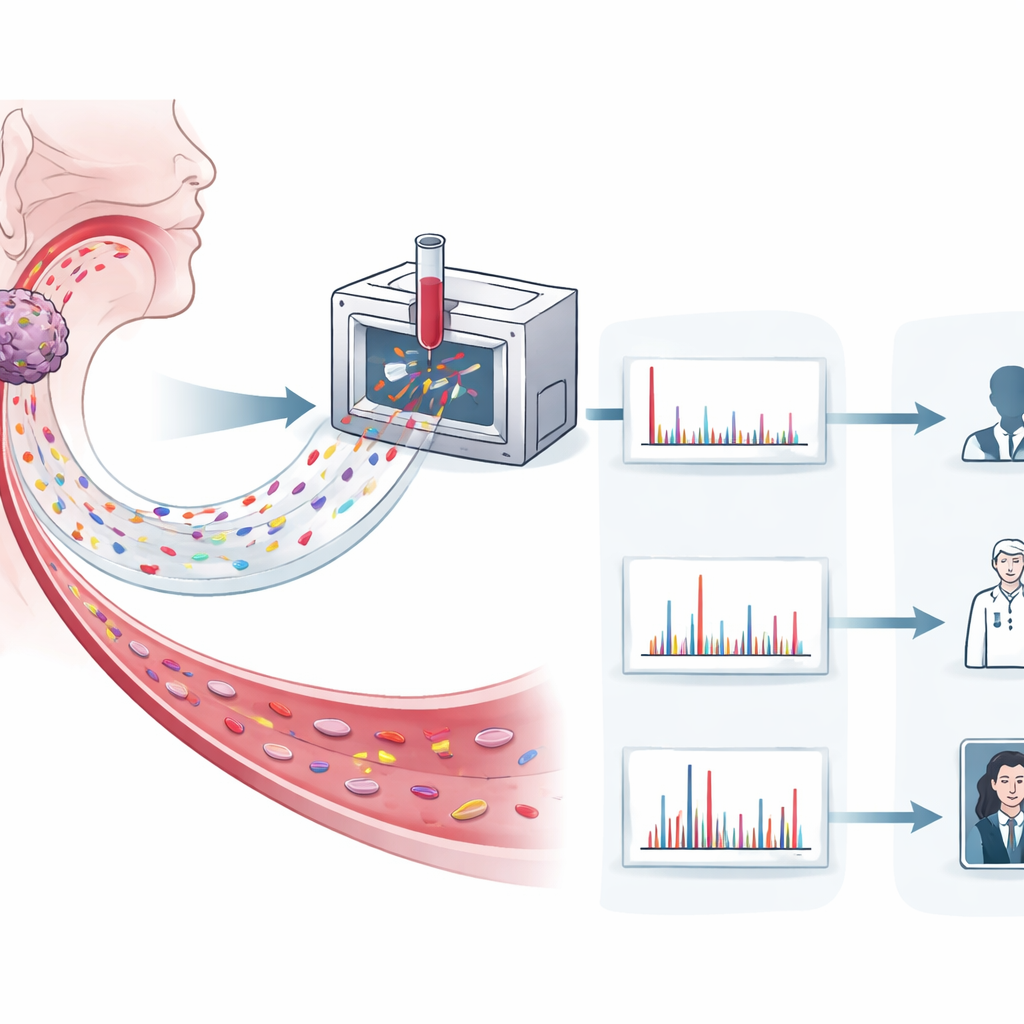
After surgery and any additional radiation or chemotherapy, the team used serial blood tests to watch for molecular traces of cancer that standard exams could not see. Among patients who eventually relapsed, tumor DNA in blood taken at least two weeks after surgery signaled recurrence in 91.3% of cases, sometimes more than a year before clinical confirmation and in one case as early as 500 days in advance. Patients whose tumor DNA remained or reappeared after treatment had a dramatically higher risk of the cancer coming back, while those who cleared these signals generally stayed disease-free. In a subset of patients, saliva sampling provided even earlier warning than blood, especially for tumors in the mouth and throat.
Guiding treatment and clarifying mysteries
The liquid biopsy did more than just predict recurrence. In some patients with suspicious spots in the lung or liver, comparing DNA from the new lesion with the original tumor showed whether the new growth was a metastasis or a completely new cancer. This distinction is crucial, because it changes both prognosis and treatment strategy. The tests also highlighted how postoperative timing matters: a single blood draw early after surgery can miss low-level residual disease, especially when normal DNA released by surgical trauma dilutes the tumor signal. Repeated sampling over time improved detection and reduced the risk of false reassurance.
What this means for patients
To a layperson, the main message is that a customized blood or saliva test can act like a smoke detector for returning head and neck cancer. By tracking each patient’s unique tumor DNA fingerprints, doctors can often see trouble long before scans or symptoms reveal it. This early warning could allow additional surgery or radiation while cure is still possible, and spare low-risk patients from needless imaging and treatment. Although larger trials and practical questions about cost, timing, and access remain, the study shows that serial liquid biopsies have real potential to transform follow-up care from a reactive search for visible tumors into a proactive, molecular-level watch for the earliest embers of disease.
Citation: Flach, S., Pipinikas, C., Huberty, T. et al. Personalized ctDNA analysis for detection of residual disease and recurrence in surgically treated HNSCC patients. npj Precis. Onc. 10, 103 (2026). https://doi.org/10.1038/s41698-026-01309-0
Keywords: liquid biopsy, head and neck cancer, circulating tumor DNA, minimal residual disease, cancer recurrence monitoring