Clear Sky Science · en
Non-invasive epidermis sampling for DNA methylation-based prediction of skin cancer phenotypes
Why a skin test like this matters
Skin cancer is one of the most common cancers in the world, and our skin is constantly bombarded by sunlight and other environmental stresses. Doctors would like a simple way to check how much damage has quietly built up in the outer skin layers, long before visible spots or tumors appear. This study describes a new, painless “tape” method that can pull off a thin layer of skin cells and read chemical marks on their DNA to estimate how old the skin really is and whether it shows warning signs linked to cancer.
A gentle way to collect skin cells
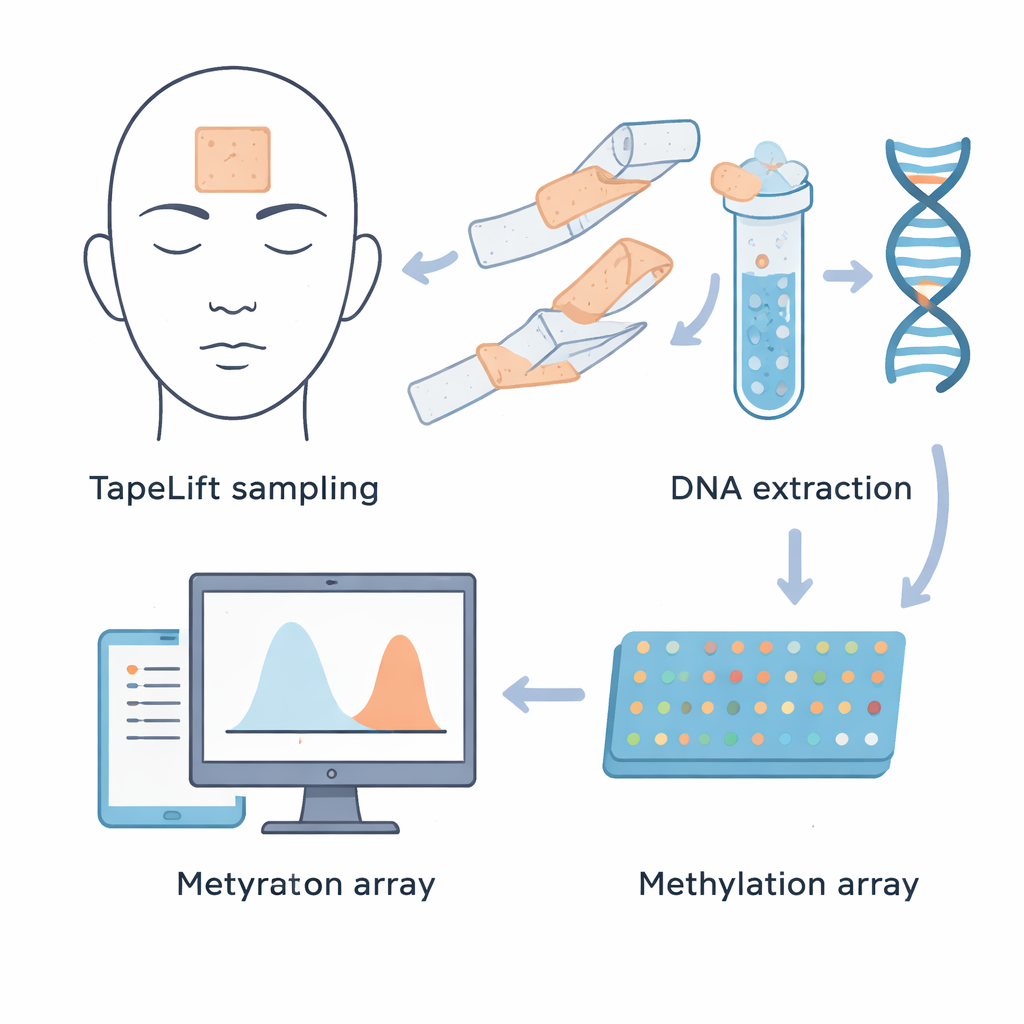
Traditional methods to study skin at the DNA level usually involve taking a small biopsy with a scalpel or punch, which is invasive, can scar, and is not ideal for large-scale screening. The researchers instead refined a tape-stripping technique: a small square of soft adhesive on a flexible film is pressed onto the forehead and peeled off, collecting cells from the outermost epidermal layers. By using four such strips from the same spot and an optimized extraction procedure, they were able to recover enough intact genetic material from over one hundred volunteers of different ages to run detailed DNA tests that previously required far larger samples.
Reading chemical tags on DNA
The team focused on DNA methylation, a tiny chemical tag that cells place on specific DNA letters. These tags help control which genes are on or off and change in characteristic ways with age, sun exposure, and cancer development. Using a high-density “microarray” chip, they measured methylation at more than half a million sites across the genome. To make the results reliable despite the small DNA amounts, they carefully filtered out probes that behaved inconsistently and kept only high-confidence positions. When they compared the methylation patterns from TapeLift samples with those from traditional skin samples and other organs, the tape-derived data clustered tightly with known epidermis profiles, showing that the method truly captures skin-specific information.
Telling how old your skin really is
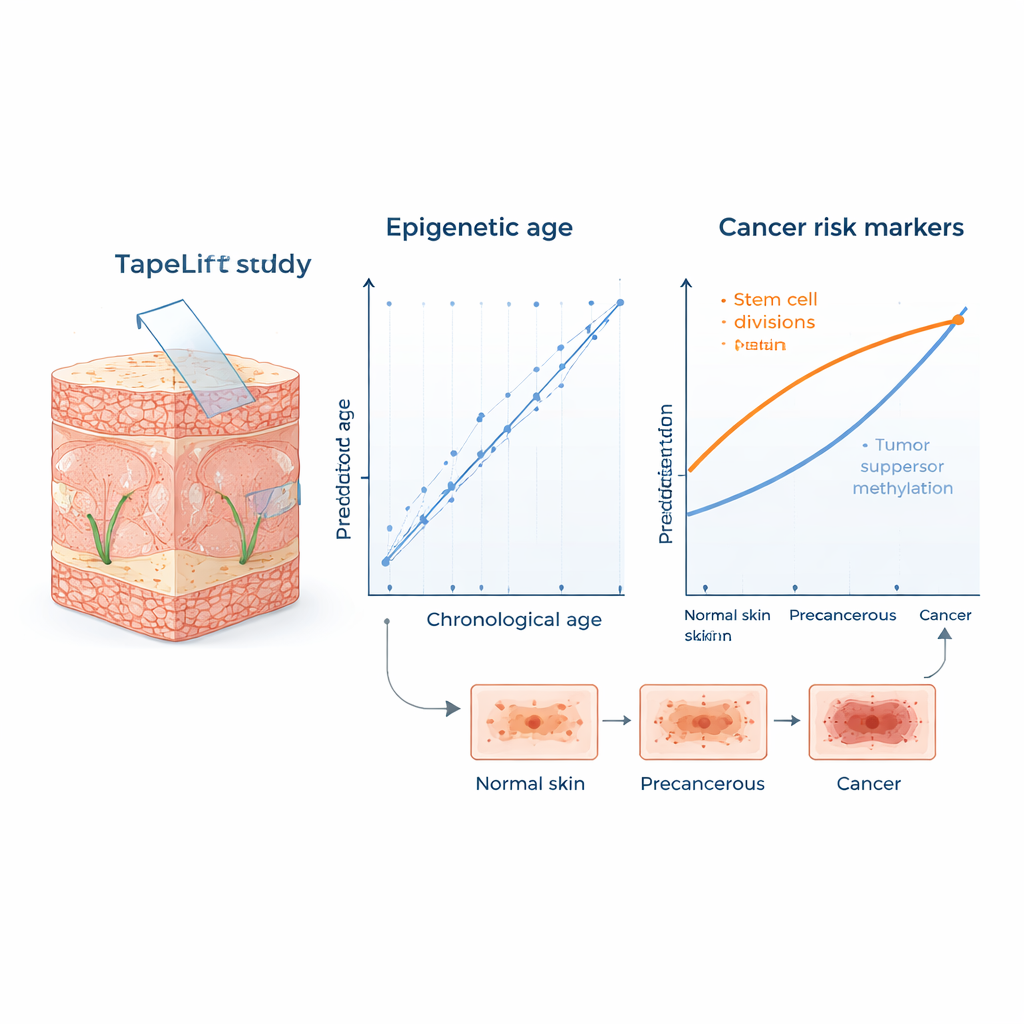
Because methylation patterns drift in a predictable way over time, scientists can build “epigenetic clocks” that estimate age from DNA alone. Existing clocks trained on standard samples performed poorly on the tape-derived data, likely because many of their key sites were unreliable under low-DNA conditions. The authors therefore trained new clocks directly on TapeLift methylation profiles from donors aged 18 to 85. One model used 157 key sites; another used broader patterns across thousands of sites. Both were able to predict a person’s age from their forehead tape with an average error of about four to six years, rivaling the best clocks in other tissues. In a separate validation group, the clocks again performed well, suggesting they are robust enough for real-world use in tracking how fast an individual’s skin is aging.
Spotting early cancer-related changes
Beyond aging, the researchers asked whether the tape samples also carry signals tied to keratinocyte cancers, such as basal cell carcinoma and cutaneous squamous cell carcinoma. They applied existing methylation-based “mitotic clocks” that estimate how often skin stem cells have divided, a process that tends to speed up in precancerous tissue. In TapeLift samples, mitotic age rose steadily with chronological age and was even higher in published datasets from actinic keratoses (a common precursor lesion) and full-blown tumors. They also tracked 50 tumor-suppressor genes whose control regions became progressively more methylated from young to old skin and showed even stronger methylation in cancer samples. Several of these genes are already known to be silenced in epithelial cancers, highlighting their promise as non-invasive risk markers.
What this means for everyday skin health
In plain terms, this work shows that a few painless strips of adhesive tape from the forehead can provide a detailed chemical snapshot of the skin’s biological age and its hidden cancer-related changes. The new TapeLift method consistently delivers enough high-quality DNA for large methylation panels, supports accurate “age of the skin” readouts, and detects patterns linked to increased cell turnover and the quiet silencing of protective genes. With further development, such tape-based tests could help evaluate anti-aging treatments, flag people at higher risk for skin cancer before lesions appear, and open the door to routine, non-invasive monitoring of skin health in both clinics and everyday life.
Citation: Rodríguez-Paredes, M., Feng, Y., Gilliam, O. et al. Non-invasive epidermis sampling for DNA methylation-based prediction of skin cancer phenotypes. npj Precis. Onc. 10, 89 (2026). https://doi.org/10.1038/s41698-026-01302-7
Keywords: skin cancer, DNA methylation, epigenetic clock, tape stripping, non-invasive screening