Clear Sky Science · en
Preoperative positive ctDNA analysis is associated with the tumor microenvironment, and the risk of recurrence in non-metastatic colorectal cancer
Why a blood test before surgery matters
For people facing surgery for colon or rectal cancer, one of the biggest worries is whether the cancer will return. Today, doctors mainly rely on scans and what the tumor looks like under a microscope to estimate that risk. This study explores whether a simple blood test, done before surgery, can reveal how aggressive a tumor is and how likely it is to come back—without needing extra biopsies or complex procedures.
A window into the hidden tumor neighborhood
Cancers do not grow in isolation. They live in a complex "neighborhood" of cancer cells, blood vessels, and immune cells, known as the tumor microenvironment. Some of these neighborhoods are packed with active immune cells that attack the cancer; others are shaped to help the cancer spread. The researchers followed 140 patients with non-metastatic colorectal cancer who were scheduled for curative surgery. They analyzed tumor samples to measure which genes were turned on or off and to quantify how many immune cells had invaded the tumors. By grouping tumors according to these gene activity patterns, they identified distinct tumor types, some clearly linked to a higher risk of the cancer returning after treatment. 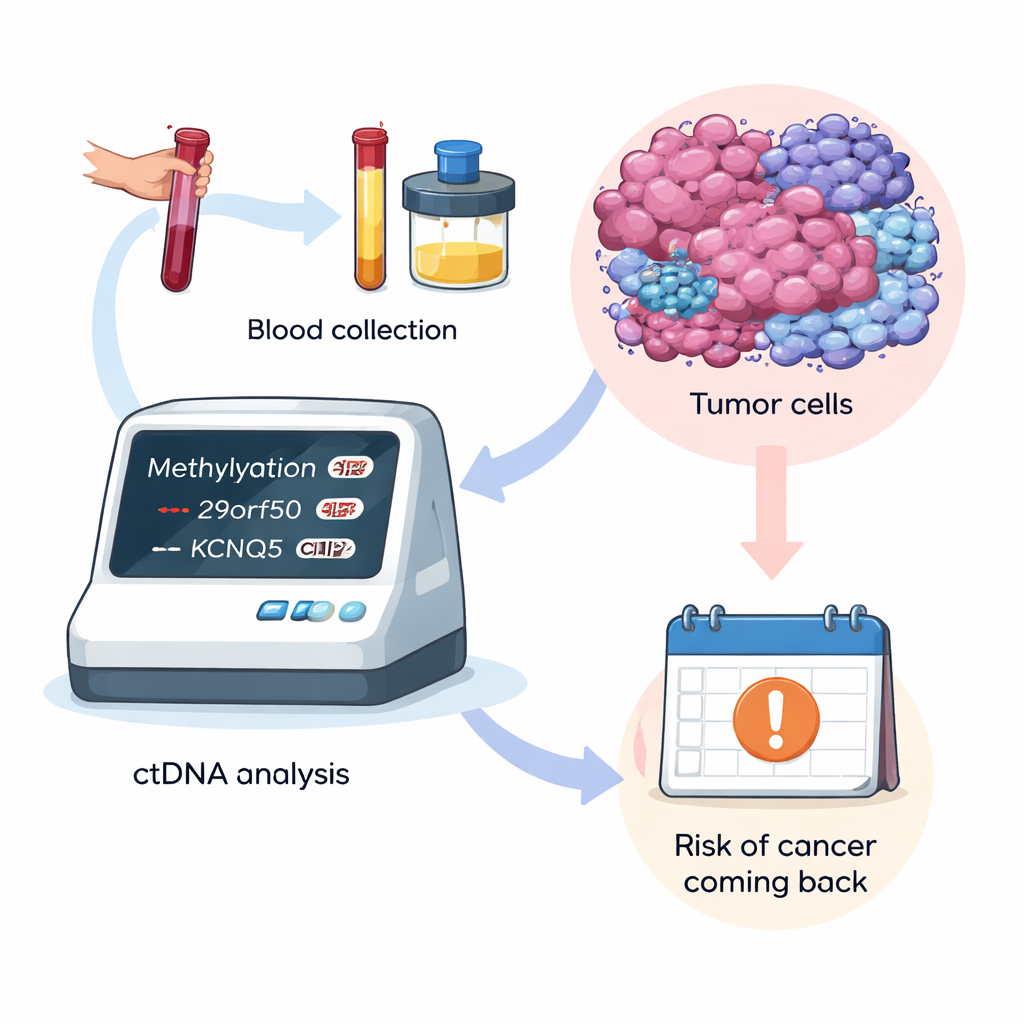
Reading tumor behavior from a blood sample
Alongside the tumor analysis, the team performed a blood test looking for tiny fragments of tumor DNA floating in the bloodstream, called circulating tumor DNA (ctDNA). They used a tumor-agnostic test, called TriMeth, that detects chemical tags on DNA (methylation) at three specific genes, without needing to know the individual patient’s tumor mutations in advance. If at least two of these markers were detected, the test was considered positive. Before surgery, about 73% of patients had a positive ctDNA test. Although ctDNA positivity showed only a trend, and not a statistically firm link, toward higher recurrence, it was strongly tied to gene activity patterns typical of tumors that grow, spread, and divide more aggressively.
Immune defenses inside the tumor
The study also examined how deeply the body’s immune system had penetrated the tumors, focusing on two types of T cells often associated with anti-cancer activity. Tumors were categorized as having either low or high immune infiltration based on digital counts of these cells. Surprisingly, the sheer number of immune cells alone did not clearly predict which patients’ cancer would return. However, tumors with high immune infiltration tended to show stronger activity in gene pathways linked to immune attack and weaker activity in pathways related to metastasis and loss of normal cell features. In other words, the immune-rich tumors looked more defensive and less prone to spreading when viewed at the gene level.
How ctDNA sharpens the risk picture
When the researchers combined ctDNA results with existing clinical risk factors, such as lymph node involvement, mismatch repair status (a common genetic feature in colorectal cancer), and immune infiltration, an important pattern emerged. Among patients who otherwise appeared to be at lower risk—such as those without cancer in nearby lymph nodes or with certain immune-related tumor types—a positive ctDNA test flagged tumors whose gene activity looked more metastatic and less immune-active. In statistical models built to predict recurrence, ctDNA-related measures ranked among the most influential variables. When ctDNA data were removed, the model leaned more heavily on immune cell measures and other clinical factors, suggesting that ctDNA captures unique information about tumor behavior. 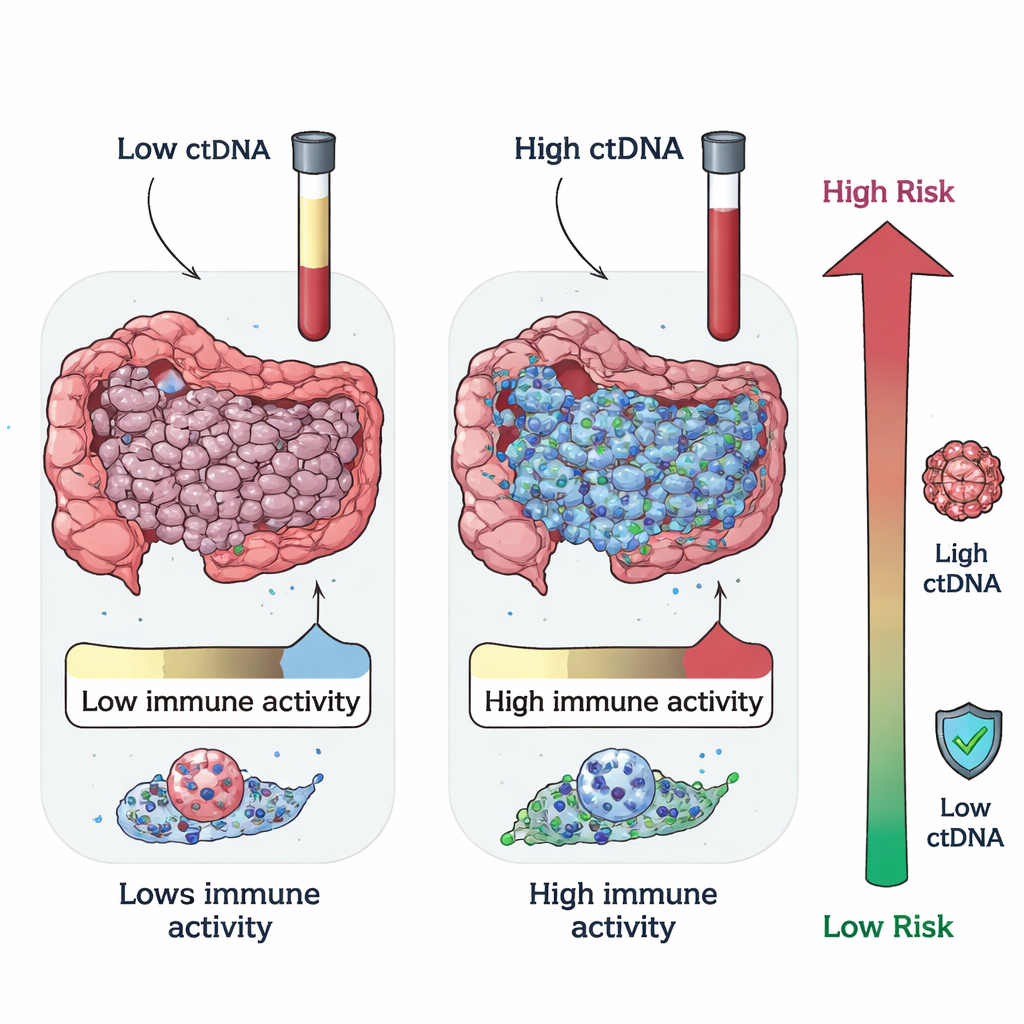
What this means for patients
To a layperson, the bottom line is that a pre-surgery blood test looking for tumor DNA in the bloodstream can do more than just hint at whether cancer cells are present—it can also serve as a snapshot of how dangerous the tumor’s internal neighborhood is. Positive ctDNA before surgery was linked to tumors whose gene patterns favored growth and spread, while negative ctDNA was more often seen in tumors with active immune defenses. Although this study does not yet change standard care, it suggests that such blood tests could one day help tailor treatment, for example by identifying which patients might benefit most from additional therapy before or after surgery to prevent their cancer from returning.
Citation: Gögenur, M., Balsevicius, L., Jensen, S.Ø. et al. Preoperative positive ctDNA analysis is associated with the tumor microenvironment, and the risk of recurrence in non-metastatic colorectal cancer. npj Precis. Onc. 10, 76 (2026). https://doi.org/10.1038/s41698-026-01288-2
Keywords: colorectal cancer, circulating tumor DNA, tumor microenvironment, cancer recurrence, liquid biopsy