Clear Sky Science · en
Liquid biopsies in precision oncology for older adults with cancer
An Easier Window into Cancer for an Aging World
As populations grow older, cancer is becoming an ever more common part of later life. Yet many standard tests, such as surgical tissue biopsies, can be risky, painful, or simply impractical for frail older adults. This article explores “liquid biopsies” – tests that read traces of cancer from blood or other body fluids – and asks how they could make cancer care safer, more precise, and more comfortable for older people. 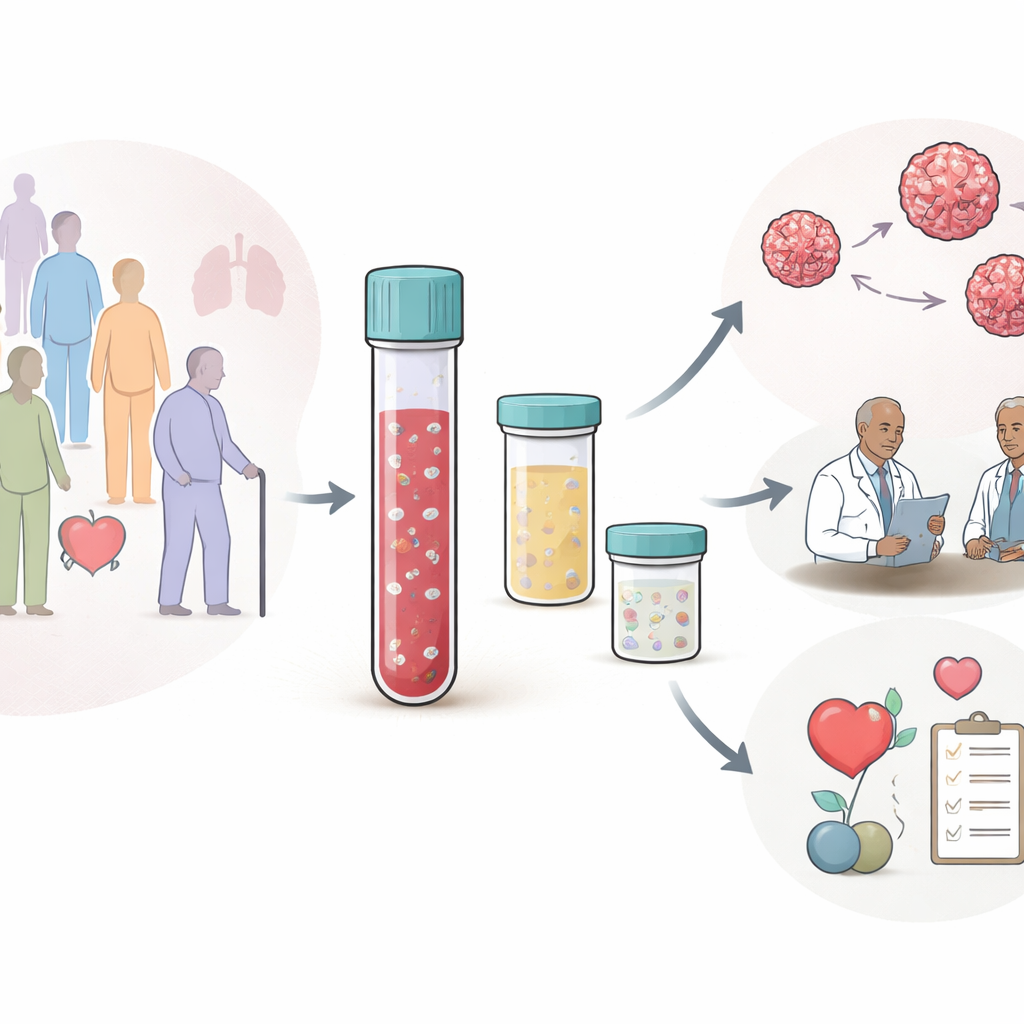
What Liquid Biopsies Are and Why They Matter
Liquid biopsies look for tiny fragments shed by tumors – bits of DNA, whole cancer cells, packets of molecules called vesicles, and even patterns in fats and sugars – that circulate in blood, urine, saliva, and other fluids. Because these tests can be done with a simple blood draw or urine sample, they are far less invasive than traditional biopsies that require needles or surgery. For older adults, who often live with multiple illnesses, take many medications, and may have reduced strength or mobility, avoiding repeated invasive procedures is a major advantage. The review explains that liquid biopsies can help with early detection of cancer, show how far a tumor has spread, guide the choice of treatment, and track whether therapy is working or if the disease is coming back.
Special Challenges in Older Bodies
However, aging itself changes what shows up in these tests. As people grow older, more free-floating DNA appears in the bloodstream because cells turn over more rapidly and inflammation is more common. Some blood-forming cells acquire harmless genetic quirks – a phenomenon known as clonal blood changes – that can mimic the mutations seen in tumors. If these age-related signals are mistaken for cancer, tests may appear falsely positive, risking unnecessary anxiety or treatment. The authors describe how researchers are developing smarter approaches, such as analyzing white blood cells alongside plasma, examining fragment sizes, and using advanced computer models, to distinguish genuine tumor signals from background noise created by aging.
Helping Tailor Treatment, Not Just Find Cancer
The review highlights how liquid biopsies can support truly personalized treatment for older adults. Modern cancer drugs often target specific genetic changes, but obtaining tumor tissue for detailed analysis is not always possible in someone who is frail or cannot safely undergo anesthesia. Liquid biopsies can reveal the same targets from blood, opening access to these treatments. They can also show when traces of tumor DNA vanish after surgery or chemotherapy, hinting that treatment has been effective, or reappear months before a scan would detect a relapse. At the same time, the authors stress that test results must be combined with a thorough geriatric assessment that looks at function, memory, mood, social support, and medication burdens. Only by weighing tumor biology together with the person’s overall health can doctors avoid both over-treatment and under-treatment in later life. 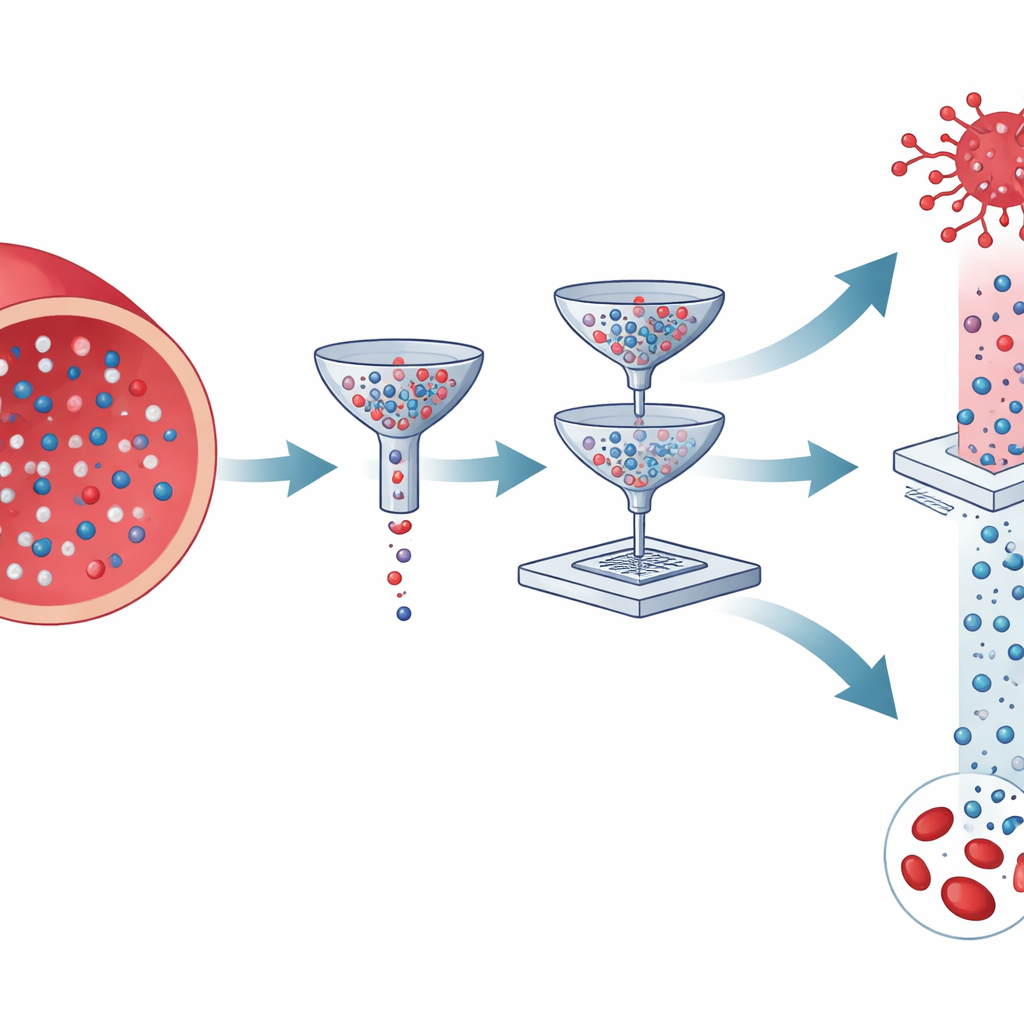
Beyond Blood: Other Samples and Everyday Hurdles
Although blood is the most common source for liquid biopsies, the review also surveys promising work using urine, saliva, stool, and other fluids, especially for cancers of the bladder, kidneys, and digestive tract. For older adults, collecting these samples can present practical issues: dry mouth, urinary problems, infections, or difficulty following complex instructions for home sampling. Bacteria in urine, for example, can overwhelm tumor DNA and distort results, a problem particularly common in older women. The authors argue that collection devices, instructions, and laboratory protocols must be adapted with older users in mind to ensure reliable, equitable testing.
Looking Ahead for Patients and Health Systems
In its conclusion, the article is optimistic but cautious. Strong early evidence shows that liquid biopsies can help identify high-risk patients, fine-tune chemotherapy use, and serve as exploratory markers in clinical trials that already enroll many older people. Yet important gaps remain: test methods are not fully standardized, costs of sophisticated sequencing are high, and few studies are designed specifically around older populations. The authors call for future research that deliberately includes seniors, links liquid biopsy results with comprehensive geriatric assessments, and weighs real-world trade-offs such as overdiagnosis and health-system costs. For patients and families, the core message is hopeful: with further validation, a small tube of blood or a cup of urine could increasingly replace more burdensome procedures, giving older adults with cancer clearer answers and more tailored care with less strain on their bodies.
Citation: Zhao, Y., Herrera-Caceres, J.O., Nobes, J. et al. Liquid biopsies in precision oncology for older adults with cancer. npj Precis. Onc. 10, 123 (2026). https://doi.org/10.1038/s41698-026-01285-5
Keywords: liquid biopsy, older adults, precision oncology, cancer screening, minimal residual disease