Clear Sky Science · en
Mitochondrial complex I subunit NDUFS4 overexpression drives glioma progression by regulating mitochondrial function and COX5B
Why Power-Hungry Brain Tumors Matter
Gliomas are among the most aggressive brain cancers, often returning even after surgery, radiation, and chemotherapy. This study looks under the hood of glioma cells to ask a simple question with big implications: do these tumors depend on a particular part of their internal "power plants" to grow and spread? By tracking a small mitochondrial protein called NDUFS4, the researchers uncover a metabolic weak point that seems to fuel tumor progression while leaving healthy brain cells far less affected.
A Hidden Switch in Brain Tumor Power Plants
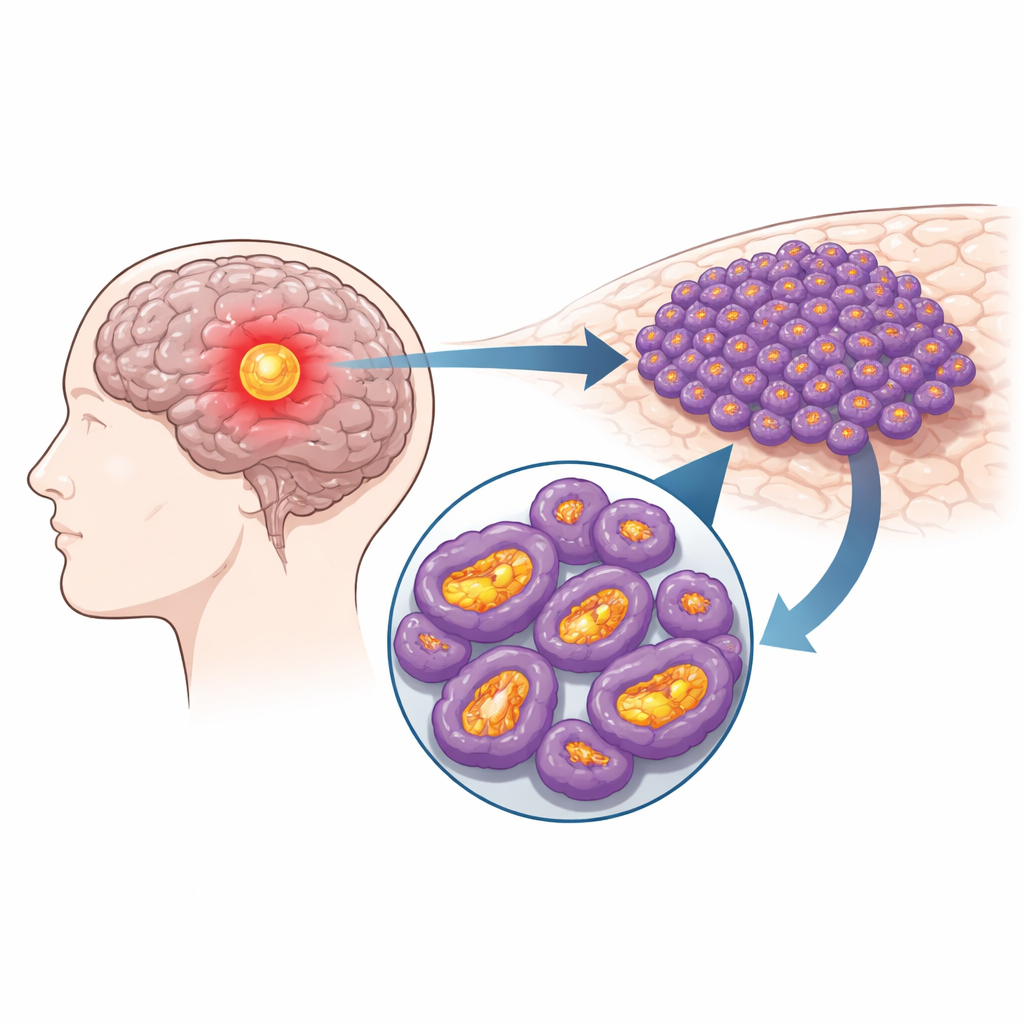
Inside every cell, mitochondria act like tiny generators, turning nutrients into usable energy. In glioma cells, these generators are pushed into overdrive. The team analyzed large public cancer datasets and single-cell sequencing data and found that the protein NDUFS4, a component of one of the main energy-producing complexes in mitochondria, is consistently raised in glioma tissue compared with normal brain. Higher NDUFS4 levels tracked with more advanced tumor grade and with patients who died sooner from their disease. Zooming in at single-cell resolution showed that this extra NDUFS4 is concentrated specifically in tumor cells rather than in surrounding noncancerous cells in the brain.
Turning Down the Energy Dial to Slow Cancer
To test whether NDUFS4 is just a marker or a true driver, the researchers deliberately reduced or eliminated it in patient-derived glioma cells grown in the lab. When NDUFS4 was silenced or knocked out, the cells’ mitochondria faltered: oxygen use dropped, a key energy-making step slowed, and the amount of cellular fuel (ATP) fell. At the same time, damaging by-products known as reactive oxygen species rose, and the cells’ internal membranes showed signs of stress and oxidation. Functionally, these energy-starved tumor cells divided less, formed fewer colonies, moved and invaded less effectively, and showed more signs of programmed cell death. Strikingly, the same genetic hit in noncancerous astrocytes—support cells from normal brain tissue—caused little or no harm, suggesting tumor cells are unusually dependent on this mitochondrial switch.
Cranking Up the Power Makes Tumors More Aggressive
The flip side of the experiment painted an equally clear picture. When the scientists forced glioma cells to make extra NDUFS4, their mitochondria became more active: energy output rose and the key respiratory complex worked harder. These souped-up cells grew faster, migrated more readily, and invaded through barriers more aggressively, in both primary patient cells and standard lab cell lines. In mice, glioma cells engineered to keep NDUFS4 levels high formed larger intracranial tumors, whereas cells with NDUFS4 turned down grew much more slowly in the brain, showed weaker mitochondrial performance, more oxidative damage, fewer dividing cells, and more dying cells. Together, these experiments establish NDUFS4 not just as a passenger but as a driver of glioma progression.
A Partner Protein Links Energy Control to Tumor Behavior
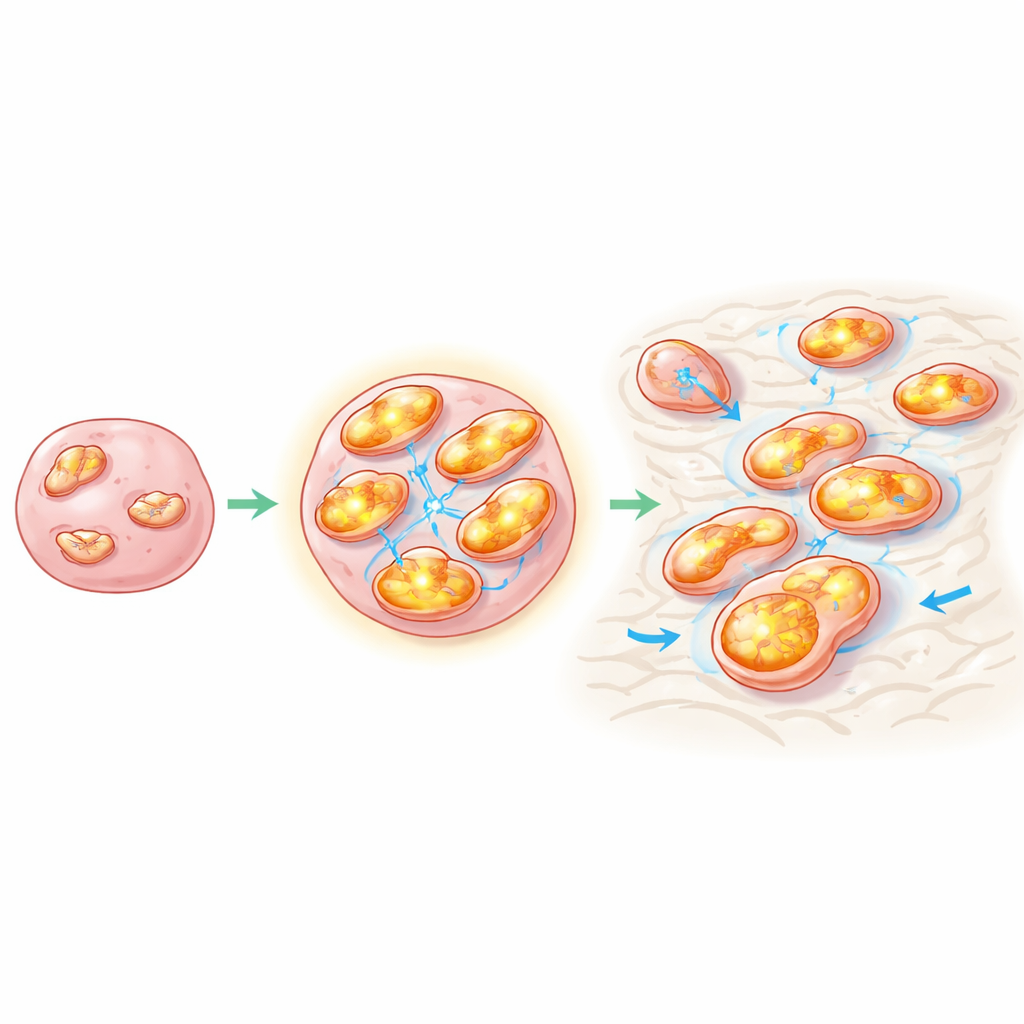
Digging deeper, the team asked how NDUFS4 exerts such broad effects. By cross-referencing gene expression data from bulk tumors, single cells, and cancer cell protein maps, they homed in on another mitochondrial protein, COX5B, as a key partner. COX5B helps run the final step of the cell’s main energy chain. It was tightly correlated with NDUFS4 levels in gliomas and is already known to be elevated in other cancers. When the researchers reduced COX5B in glioma cells, they saw the same pattern as with NDUFS4 loss: weakened mitochondrial performance, more oxidative stress, slower growth and movement, and more cell death. Crucially, when they restored COX5B in NDUFS4-depleted cells, much of the mitochondrial damage and anti-tumor effect reversed. They also found that NDUFS4 influences how strongly a transcription factor (Sp1) binds to the COX5B gene’s control region, helping tune how much COX5B the cell produces.
What This Means for Future Brain Cancer Treatments
To a non-specialist, the central message is that many gliomas appear to rely on a supercharged energy system centered on NDUFS4 and its downstream partner COX5B. Turning this system down robs tumor cells of the fuel and balance they need to grow and invade, while leaving normal brain support cells comparatively unscathed. Because this vulnerability shows up consistently in patient samples, isolated cells, and mouse brain tumors, NDUFS4—and its control over COX5B—emerges as a promising target for new drugs. Therapies that selectively disrupt this mitochondrial “power circuit” could complement existing treatments, potentially slowing tumor growth and prolonging survival without crippling healthy brain tissue.
Citation: Wu, J., Li, J., Xu, L. et al. Mitochondrial complex I subunit NDUFS4 overexpression drives glioma progression by regulating mitochondrial function and COX5B. npj Precis. Onc. 10, 99 (2026). https://doi.org/10.1038/s41698-026-01281-9
Keywords: glioma, mitochondria, NDUFS4, COX5B, brain cancer metabolism