Clear Sky Science · en
Evaluation of immuno-oncologic biomarkers and β-catenin expression in response of hepatocellular carcinomas to immunotherapy
Why this liver cancer study matters
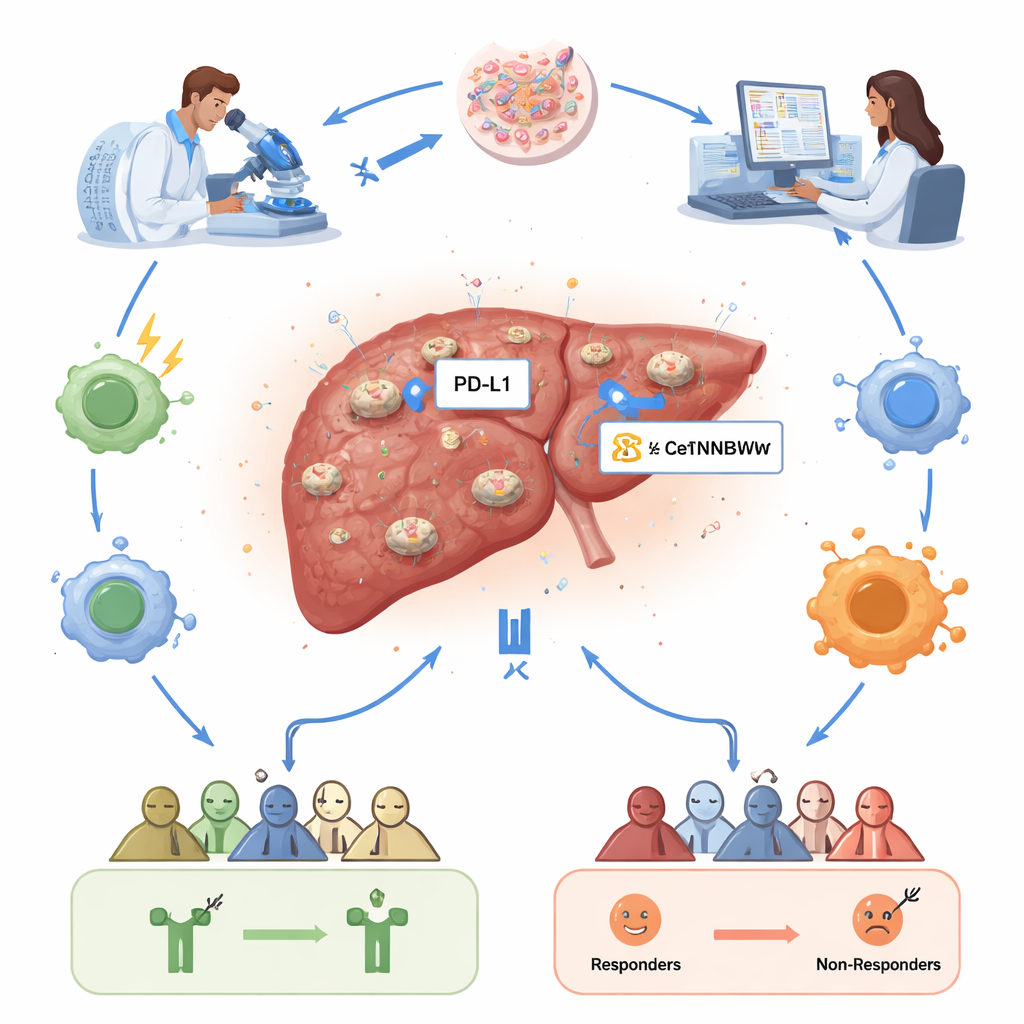
Immunotherapy drugs have transformed treatment for several cancers, but for liver cancer—specifically hepatocellular carcinoma (HCC)—they help only a fraction of patients, and doctors still lack reliable tests to predict who will benefit. This study analyzes tumor samples from more than 1,300 people with HCC to see whether popular laboratory markers, already used to guide immunotherapy in other cancers, can finally offer that kind of guidance for liver cancer.
Searching for useful warning lights
The researchers focused on a group of signals found on or inside cancer cells that can influence how the immune system reacts. One key signal is PD-L1, a protein on tumor cells that can act like a brake on attacking immune cells; high PD-L1 levels in lung and stomach cancers often predict better responses to certain immunotherapy drugs. They also examined tumor mutation burden (how many DNA changes a tumor carries), a form of DNA repair failure called mismatch repair deficiency, and activity in a growth pathway centered on the β-catenin protein, encoded by a gene called CTNNB1. Using comprehensive DNA and RNA profiling on stored tumor samples, they asked whether any of these features lined up with how long patients stayed on immune checkpoint inhibitor drugs or how long they lived.
Common tests, uncommon guidance
The first surprise was how few liver tumors carried the same immunotherapy markers seen in other cancers. Only about 6 percent of patients had tumors with high PD-L1 levels, and another 12 percent had low levels; more than four out of five tumors were PD-L1–negative. Tumors with extremely high mutation counts or mismatch repair problems—features that often predict strong responses to immunotherapy in other cancers—were also rare, each found in roughly 5 percent or fewer of cases. When the team compared these markers with how long patients remained on immunotherapy and with their overall survival, PD-L1 levels, mutation burden, and mismatch repair status did not meaningfully separate good responders from poor responders.
A busy immune neighborhood that still falls short
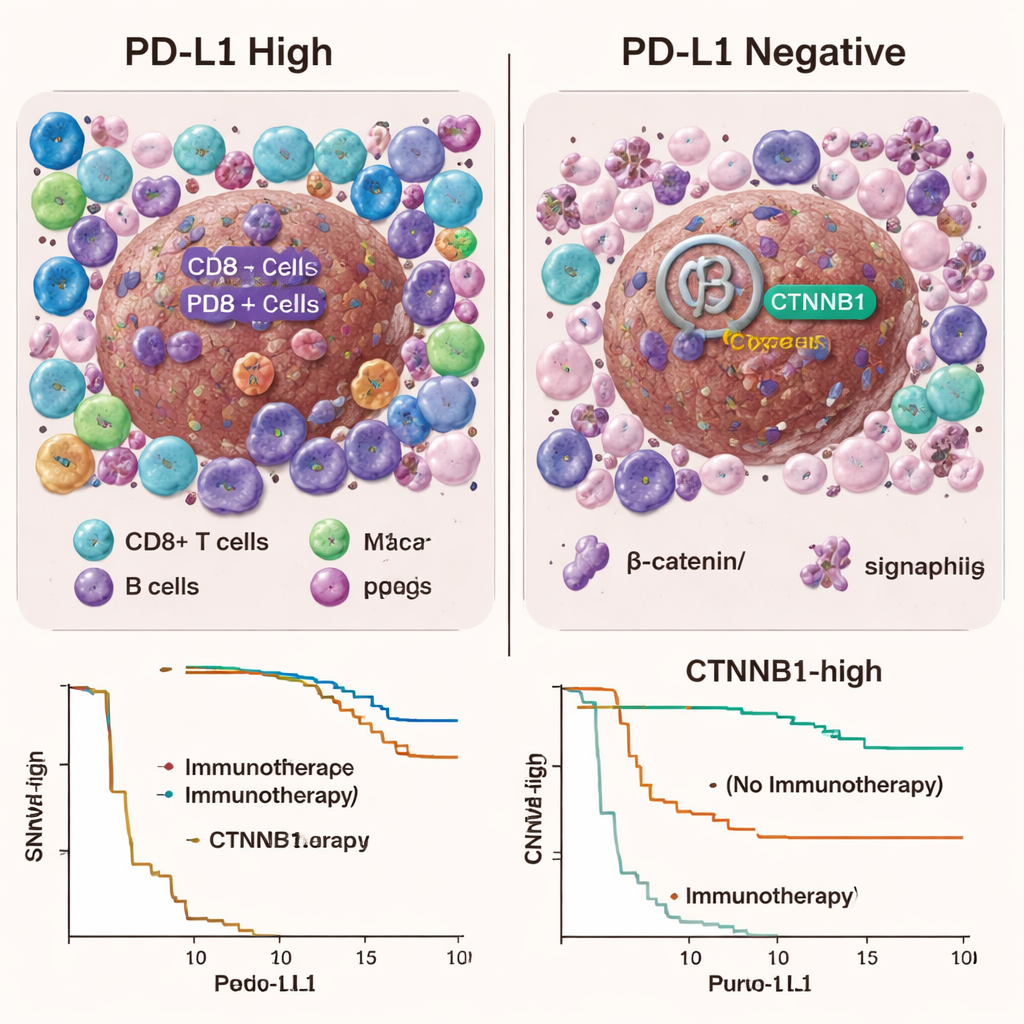
Even though PD-L1 itself was not useful as a yes-or-no test, it did track with a more inflamed tumor environment. Tumors with higher PD-L1 tended to be surrounded by more immune cells such as killer T cells, regulatory T cells, B cells, and certain macrophages, and showed stronger activity in inflammation-related gene pathways. In other words, PD-L1–high tumors looked more like classic “hot” tumors that the immune system recognizes. Yet, in this liver cancer cohort, that immune bustle did not translate into clearly better outcomes on immunotherapy, suggesting that other barriers in the liver’s unique environment may still blunt the drugs’ effects.
The β-catenin puzzle
The study also probed the Wnt/β-catenin pathway, which is thought to help tumors hide from immune attack. Mutations in CTNNB1, the gene at the core of this pathway, were more common in PD-L1–negative tumors than in PD-L1–high ones. When the researchers looked at patients treated with immunotherapy, high CTNNB1 activity did not clearly predict who did better or worse. Unexpectedly, among patients who never received immunotherapy, those whose tumors had higher CTNNB1 expression actually showed somewhat better overall survival, although this finding needs confirmation. Other genetic changes—such as alterations in TP53 and several signaling genes—also differed between PD-L1 groups, but none emerged as a simple, clinic-ready test for immunotherapy success.
What this means for patients and doctors
For people with liver cancer and their clinicians, the message is both sobering and clarifying. Tests that are now standard tools for matching immunotherapy to patients in lung or stomach cancer—PD-L1 staining, mutation burden, and mismatch repair status—do not reliably forecast immunotherapy benefit in hepatocellular carcinoma. Liver tumors often sit in a complex, immunologically special environment, and this study shows that familiar markers only capture part of that story. The findings argue that care for HCC cannot simply borrow biomarker rules from other cancers; instead, new, liver-specific immune signatures and combination treatment strategies will be needed to better predict—and improve—who truly benefits from immunotherapy.
Citation: Sharma, G., Baca, Y., Goel, S. et al. Evaluation of immuno-oncologic biomarkers and β-catenin expression in response of hepatocellular carcinomas to immunotherapy. npj Precis. Onc. 10, 86 (2026). https://doi.org/10.1038/s41698-026-01275-7
Keywords: hepatocellular carcinoma, immunotherapy biomarkers, PD-L1, beta-catenin, tumor microenvironment