Clear Sky Science · en
Flash flourishing of Northern Hemisphere vegetation and its drivers
Sudden Green Surges in a Warming World
Across the northern half of our planet, satellite sensors are spotting something surprising: brief but powerful bursts of plant growth that erupt and fade within a few weeks. These "flash flourishing" events are like green firework displays in forests, shrublands, and grasslands. They matter because they can temporarily pull large amounts of carbon from the air, reshape water use, and shift the timing of spring and autumn—all of which influence how fast climate change unfolds and how resilient our ecosystems remain.
What Flash Flourishing Really Is
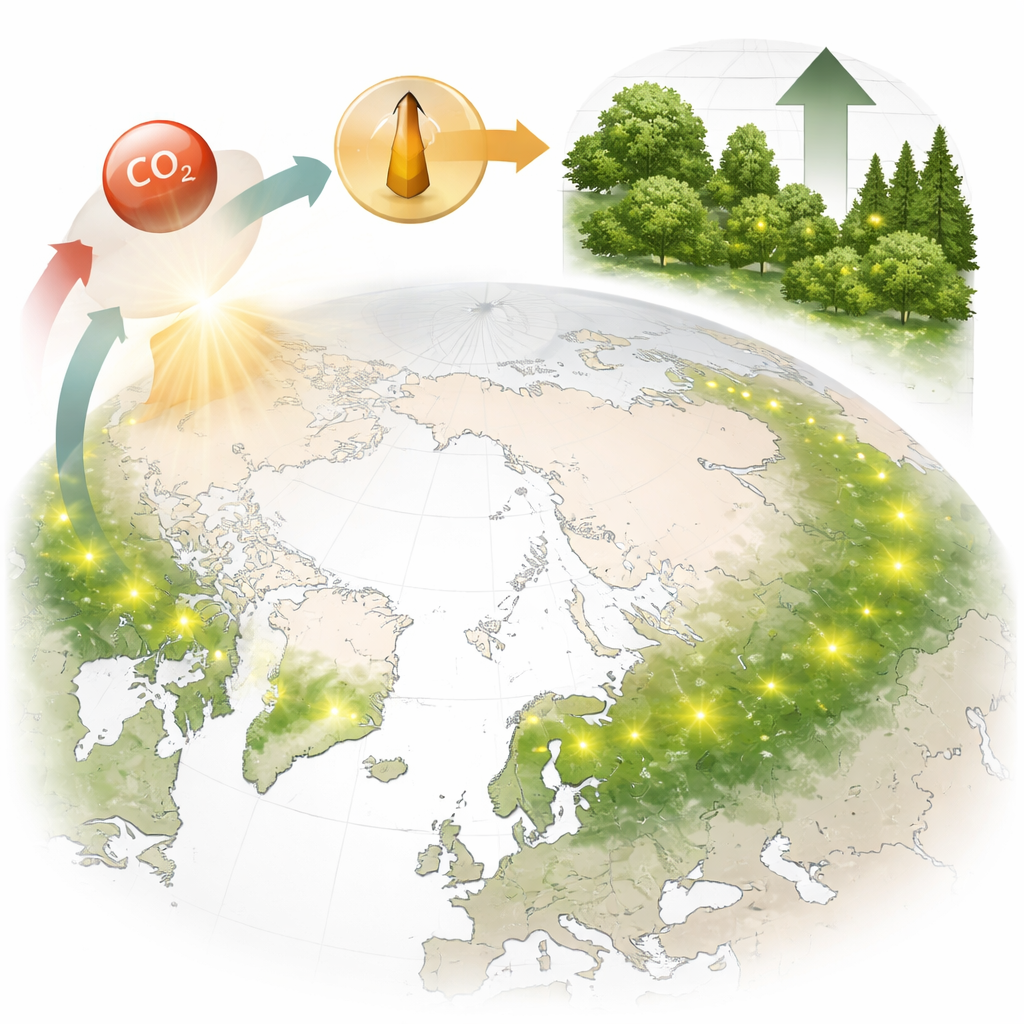
Most studies of vegetation watch for slow, predictable milestones: when spring starts, when greenness peaks, and when leaves fall. Flash flourishing focuses instead on speed. The authors define these events as short, intense surges in canopy greenness and photosynthetic activity that ride on top of the normal seasonal cycle. Using satellite records of leafiness and plant fluorescence from 2003 to 2022, they flagged episodes when vegetation jumped from below its usual mid-range to well above it within just a few weeks and stayed elevated for at least about fifteen days. This rate-based view reveals how quickly plants can shift from ordinary to unusually vigorous growth when conditions line up just right.
Where the Bursts Are Happening
The team mapped these events across all non-cropland areas north of 30° latitude, from the American West to Siberian forests. They found that flash flourishing is common rather than rare: on average, more than half of the years at a given location show at least one such burst, and the odds rise sharply at higher latitudes. Forests experience the most frequent, longest, and strongest events, followed by shrublands and grasslands. Regions such as eastern Asia and eastern North America stand out for their especially high levels of rapid greening. In many places with frequent events, those bursts also last longer and reach higher intensities, meaning ecosystems are spending more time than before in unusually productive states.
Getting Stronger Over Time
Over the past two decades, flash flourishing across the northern lands has intensified on multiple fronts. The number of events, their duration, and their strength have all trended upward over roughly three-quarters of the region. During these episodes, canopies are becoming denser and more photosynthetically active relative to their own past behavior. Simulations from a suite of ecosystem models suggest that rising carbon dioxide in the atmosphere is the main long-term driver of these changes, boosting plant growth and water-use efficiency. At the same time, temperature and sunlight patterns shape where and when events occur: warmer conditions tend to kick off rapid growth, while very strong radiation at high latitudes can actually limit how long peak vigor is sustained. Not everywhere is greening; about 30% of the land, especially in central-western Asia and the southwestern United States, shows weakening surges, likely where heat and dryness are tightening their grip.
Early Season Signals and Seasonal Timing
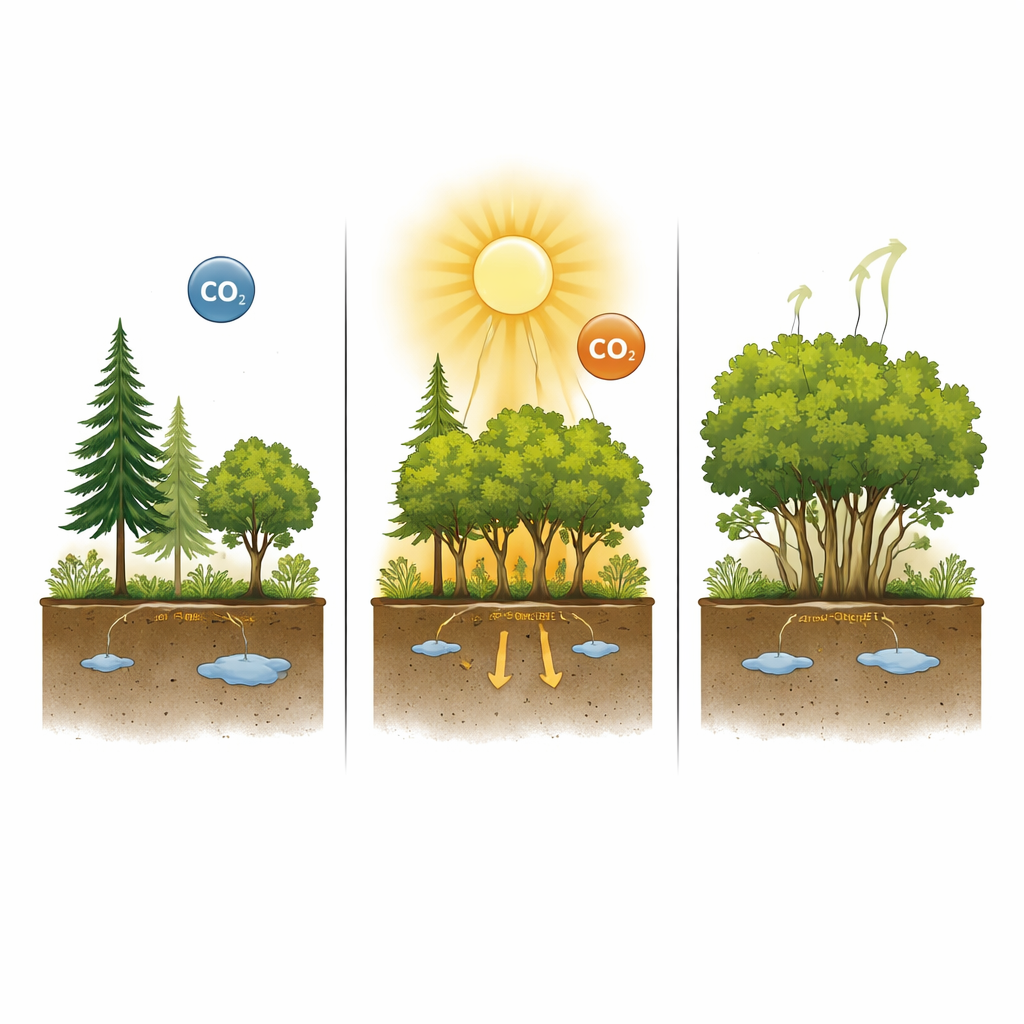
Almost all flash flourishing happens between the start and end of the growing season, typically beginning during spring green-up and tapering off as plants move toward autumn slowdown. The authors show that the details of the onset phase—how early it starts, how fast it ramps up, and how strong it is—offer a powerful preview of what the rest of the season will look like. Using only onset characteristics, they could predict how green the canopy would become at its peak, as well as the calendar dates of peak greenness and leaf fall, months in advance. Locations that experience frequent flash flourishing also tend to have more predictable autumn timing, suggesting that a quick, vigorous spring often locks in the trajectory for the entire growing season.
Why These Green Flashes Matter
Seen through everyday eyes, flash flourishing means that northern ecosystems are not just slowly getting greener—they are pulsing. These pulses reflect plants taking advantage of brief windows of favorable warmth, moisture, and light, supercharged by higher carbon dioxide. In the short term, that can mean more carbon stored in wood and leaves and more shade on the ground. But it can also mean faster drawdown of soil water and nutrients, leaving plants more vulnerable later in the season or in drought years. By identifying where and why these rapid surges occur, and by showing that their early-season behavior helps forecast the rest of the year, this study offers a new tool for anticipating ecological shifts and improving climate and vegetation models that inform forest management and climate policy.
Citation: Kong, X., Mao, J., Chen, H. et al. Flash flourishing of Northern Hemisphere vegetation and its drivers. npj Clim Atmos Sci 9, 72 (2026). https://doi.org/10.1038/s41612-026-01346-3
Keywords: vegetation phenology, flash flourishing, northern ecosystems, carbon cycle, climate change