Clear Sky Science · en
MiR-362-3p inhibits the proliferation, migration and EMT of gastric cancer cells by regulating the DEP-1/ERK signaling pathway
Why this research matters for stomach cancer
Stomach cancer remains one of the world’s deadliest cancers largely because it is often discovered late and still spreads despite surgery and chemotherapy. This study explores a tiny natural molecule inside our cells that behaves a bit like a master switch for stomach cancer cells. By understanding how this switch slows tumor growth and movement, researchers hope to open up new paths for earlier diagnosis and more precise, less toxic treatments.
A tiny RNA with a big impact
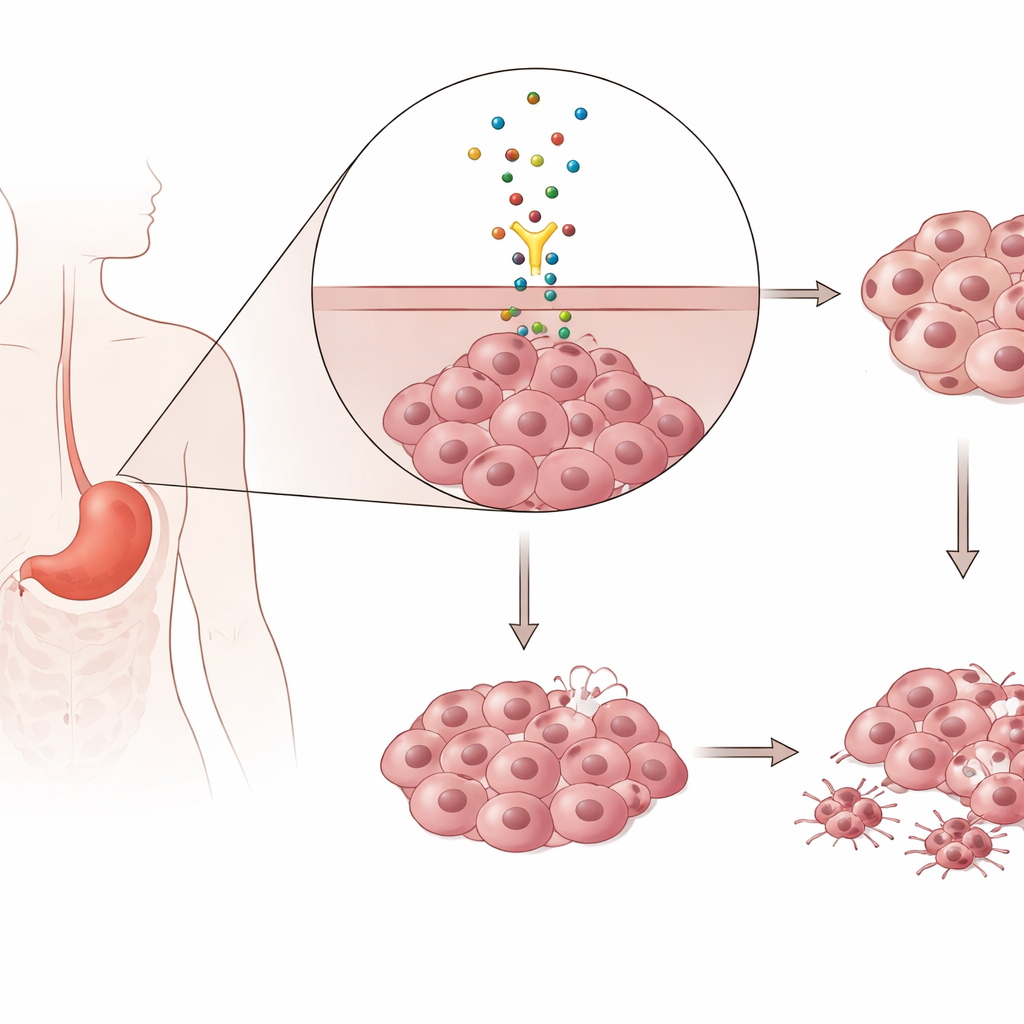
Our cells use short strands of genetic material called microRNAs as fine-tuning knobs for gene activity. The microRNA examined here, called miR-362-3p, had already shown mixed behavior in other cancers, sometimes acting as a brake and sometimes as an accelerator. The authors wanted to know what it does in gastric (stomach) cancer. Working with two human stomach cancer cell lines grown in the lab, they artificially raised or lowered miR-362-3p levels and then watched how the cells behaved in terms of growth, movement, and their ability to change shape and become more invasive.
Slowing growth and movement of cancer cells
When the researchers boosted miR-362-3p in stomach cancer cells, the cells divided more slowly and formed fewer colonies over time, showing that this microRNA puts the brakes on cell proliferation. The cells also became less mobile in wound-healing and migration tests, suggesting they were less able to spread. On a molecular level, adding miR-362-3p shifted key markers of cell identity: levels of E-cadherin, a protein that helps cells stick together in an orderly sheet, went up, while vimentin, which is associated with a more mobile, invasive state, went down. When the team instead blocked miR-362-3p, all of these effects reversed, with faster growth, more movement, and a shift toward a more aggressive, metastasis-prone profile.
Finding the molecular target: DEP-1
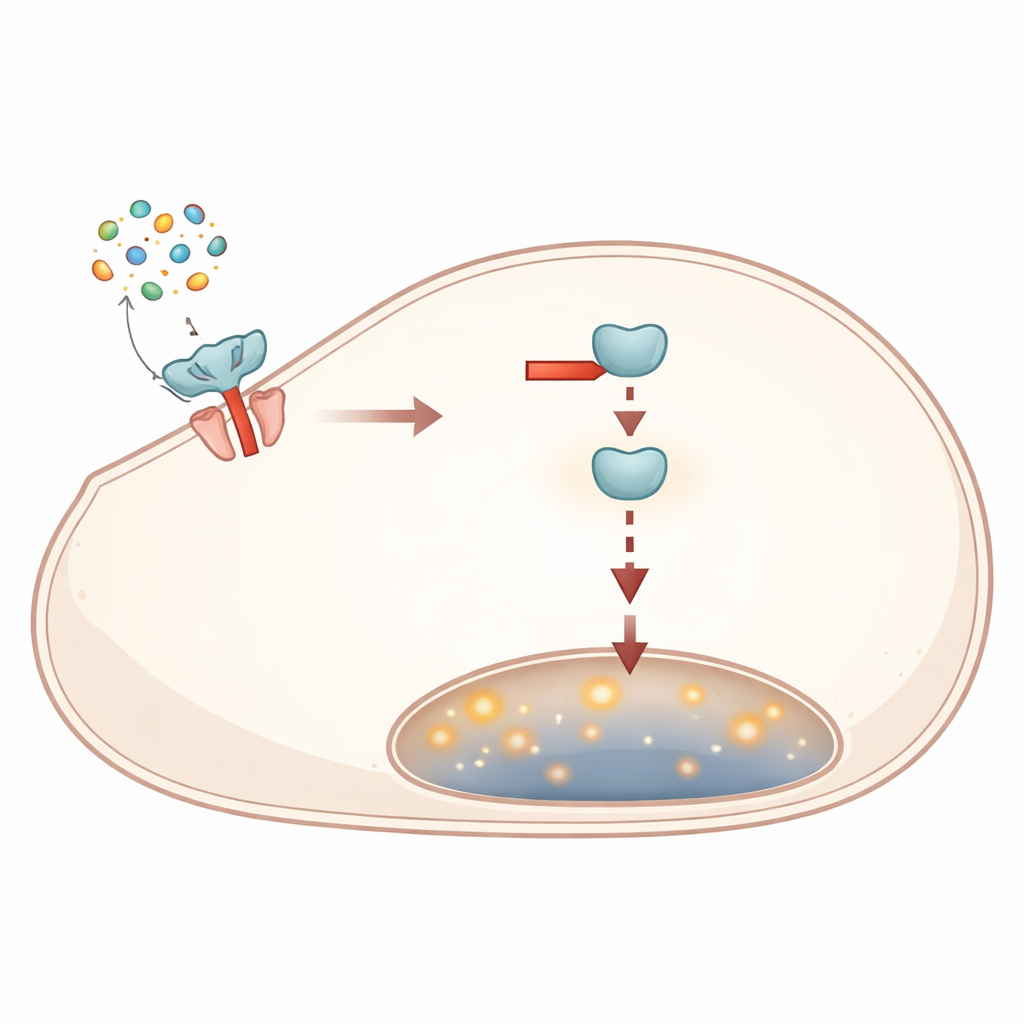
To explain how a short RNA strand could have such sweeping effects, the scientists searched computational databases for genes that miR-362-3p might latch onto and silence. They narrowed the list to a protein called DEP-1, which sits at the cell surface and relays growth signals inward. Experiments using a reporter system showed that miR-362-3p directly binds the tail end of DEP-1’s genetic message, reducing its production. When DEP-1 was deliberately reduced with genetic tools, stomach cancer cells slowed their growth and migration and showed the same pattern of E-cadherin increase and vimentin decrease seen with high miR-362-3p. Conversely, forcing cells to make extra DEP-1 pushed them to grow and move more aggressively, again mirroring what happened when miR-362-3p was blocked.
Disrupting a key growth signaling pathway
DEP-1 is connected to an internal signaling chain known as the ERK pathway, which many cancers use to drive cell division and spread. The researchers measured the activated form of ERK in their stomach cancer cells and found that raising miR-362-3p or lowering DEP-1 dampened ERK activity, while lowering miR-362-3p or boosting DEP-1 turned ERK back on. Downstream, the levels of Cyclin D1 and c-Myc—well-known drivers that push cells through the division cycle—also dropped when miR-362-3p was high. Together, these results outline a simple logic: miR-362-3p reduces DEP-1, which weakens ERK signaling and its growth-promoting programs, leaving cancer cells less able to multiply and less prone to break away and migrate.
Implications and future possibilities
For non-specialists, the main takeaway is that this work identifies a natural cellular brake system—the miR-362-3p/DEP-1/ERK axis—that can restrain stomach cancer cells in the lab. While the study was limited to cell cultures and did not yet test the approach in animals or patients, it suggests two complementary strategies: restoring miR-362-3p levels or blocking DEP-1 activity might help keep stomach tumors from growing and spreading. With further research and validation, this microscopic RNA switch could become part of a new generation of targeted tools to detect and treat gastric cancer earlier and more effectively.
Citation: Tu, F., Li, Z., Yao, L. et al. MiR-362-3p inhibits the proliferation, migration and EMT of gastric cancer cells by regulating the DEP-1/ERK signaling pathway. Sci Rep 16, 10667 (2026). https://doi.org/10.1038/s41598-026-46696-3
Keywords: gastric cancer, microRNA, cell signaling, tumor migration, ERK pathway