Clear Sky Science · en
Interactive effects of diurnal temperature range and air pollution on myocardial infarction incidence: an individual-level case-crossover study
Why Weather Swings and Dirty Air Matter to Your Heart
Many people know that smoggy days are bad for breathing, but few realize that rapid temperature swings from day to night can also strain the heart. This study from central China followed nearly 400,000 patients with heart attacks to ask a pressing question for a warming, more unstable climate: how do daily temperature swings and air pollution work together to influence the risk of a heart attack, and who is most at risk?
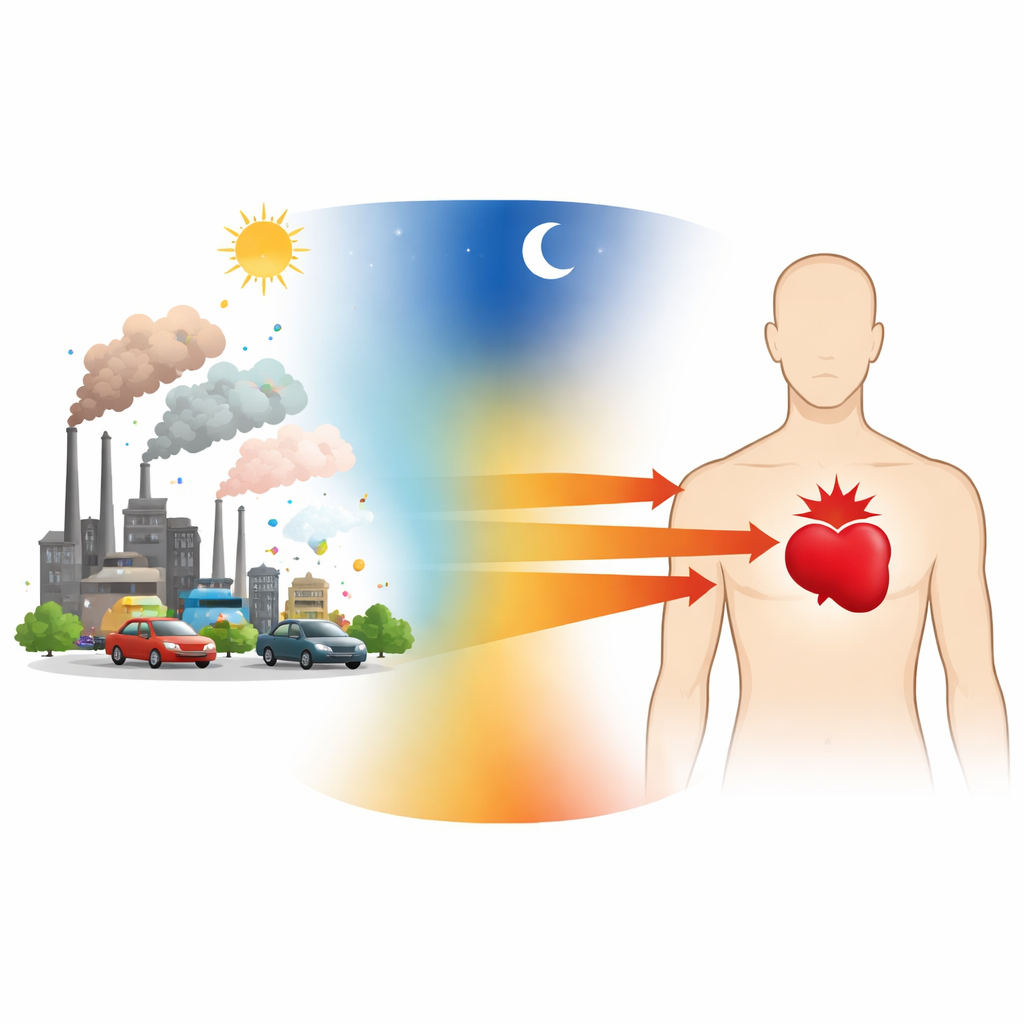
Big Swings Between Day and Night
The researchers focused on “diurnal temperature range,” the gap between the day’s highest and lowest temperatures. A small gap means steady, comfortable conditions; a large gap means big jumps from chilly nights to hot days or vice versa. Using weather records matched to each patient’s home address and the exact day their heart attack began, the team found that large temperature swings were linked to a higher chance of heart attack. In contrast, days with unusually small swings—when temperatures stayed relatively steady—seemed to offer a slight protective effect. Older adults and women were especially sensitive to big swings, suggesting that their bodies may have more difficulty adjusting to sudden changes.
Six Common Pollutants and the Heart
The study also tracked six widespread air pollutants: two kinds of particles (fine and coarse dust), and four gases (sulfur dioxide, nitrogen dioxide, carbon monoxide, and ozone). For each, the scientists looked at short-term exposure in the days just before a heart attack. All six pollutants were tied to a higher risk of heart attack, particularly when levels rose above certain thresholds. For several pollutants, there was little effect at lower levels, but once the air became dirtier, the risk climbed quickly. Ozone showed a more complex picture: at relatively low concentrations it was linked to a small reduction in risk, but above a critical level it, too, was associated with more heart attacks.
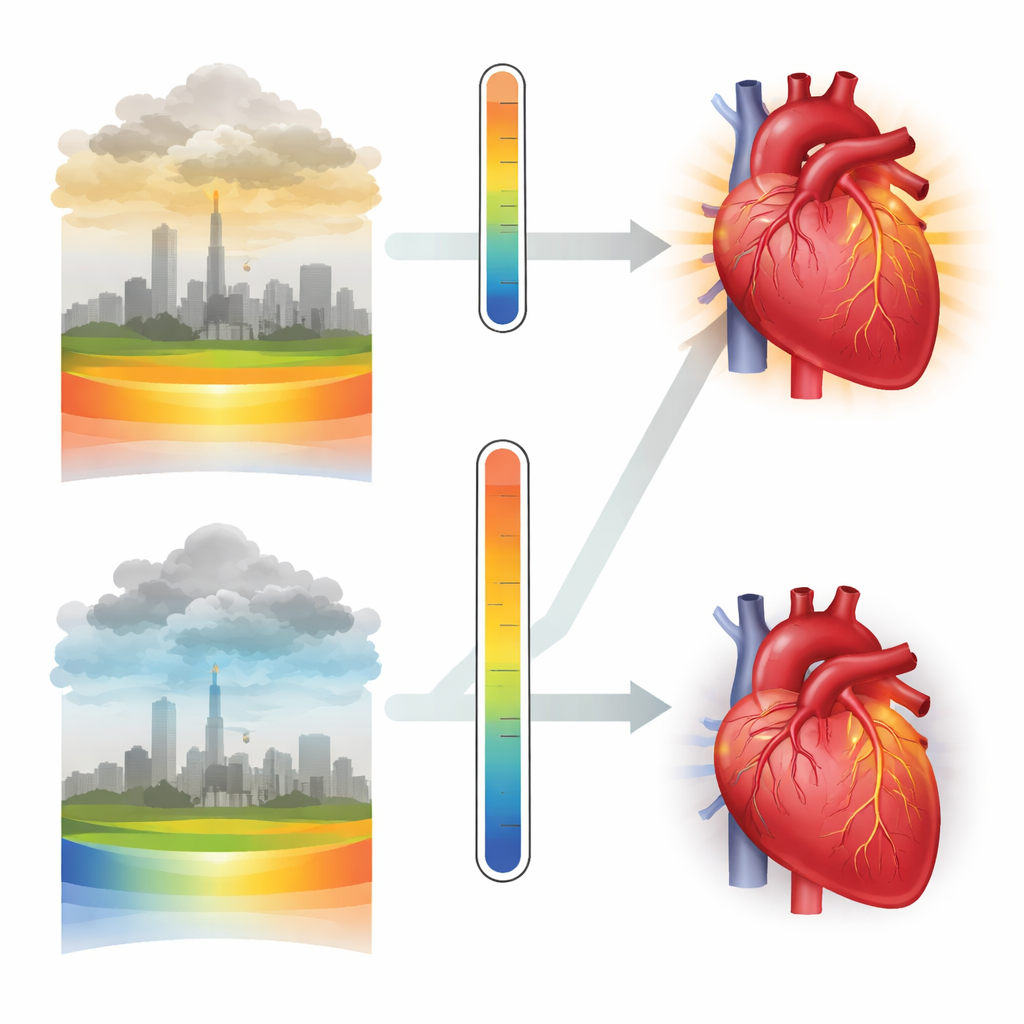
When Weather and Pollution Collide
The most surprising finding was what happened when both high pollution and big temperature swings occurred together. One might expect the dangers simply to add up, but the data suggested an “antagonistic” interaction: high day–night temperature swings appeared to blunt some of the harmful impact of polluted air on heart attack risk. The authors suggest a behavioral explanation. When people face both obvious pollution and dramatic weather shifts, they may be more likely to stay indoors, adjust clothing, or otherwise protect themselves. In contrast, on days with only one stressor—either dirty air or a large temperature swing—people might be less cautious and more exposed, leading to higher overall risk from that single factor.
Who Faces the Greatest Risk
By dividing patients into subgroups, the study showed that not everyone is affected in the same way. Women and adults aged 65 and older were more strongly affected by sulfur dioxide and nitrogen dioxide. Large day–night temperature swings also hit older adults hardest, and women again appeared more vulnerable than men. Seasonal patterns emerged as well: particle pollution had stronger effects in the warm half of the year, while carbon monoxide was more problematic in the cold months. Even after repeating the analyses without repeat heart attacks and excluding years affected by COVID-19 disruptions, the main patterns held up, suggesting the results are robust.
What This Means for Everyday Life
For the general public, the take-home message is not that sharp temperature swings are good for you—far from it. Both air pollution and large day–night changes in temperature independently raise the risk of heart attack, particularly for older adults and women. The apparent dampening of pollution’s effects on very volatile days likely reflects how people change their behavior under obvious bad conditions, not a true protective force in the weather itself. The authors argue that health warnings should consider both air quality and rapid temperature changes together. By improving air quality and alerting people to upcoming days with big temperature swings, communities may help individuals, especially those with heart disease, take timely steps—such as limiting outdoor activity or adjusting medications in consultation with their doctors—to better protect their hearts.
Citation: Gong, Xy., Dong, Zc., Sha, Tt. et al. Interactive effects of diurnal temperature range and air pollution on myocardial infarction incidence: an individual-level case-crossover study. Sci Rep 16, 10688 (2026). https://doi.org/10.1038/s41598-026-46261-y
Keywords: heart attack, air pollution, temperature swings, climate and health, cardiovascular risk