Clear Sky Science · en
Serum lipid alterations in oral squamous cell carcinoma and oral potentially malignant disorders: A systematic review and meta-analysis
Why blood fats matter for mouth health
Most of us hear about cholesterol and other blood fats in the context of heart disease. This study suggests they may also be quietly linked to cancers in the mouth. By pooling results from dozens of clinical studies, the authors asked a simple but important question: do people with early warning lesions or full-blown oral cancer show different patterns of blood fats compared with healthy individuals, and could these changes help doctors spot problems sooner?
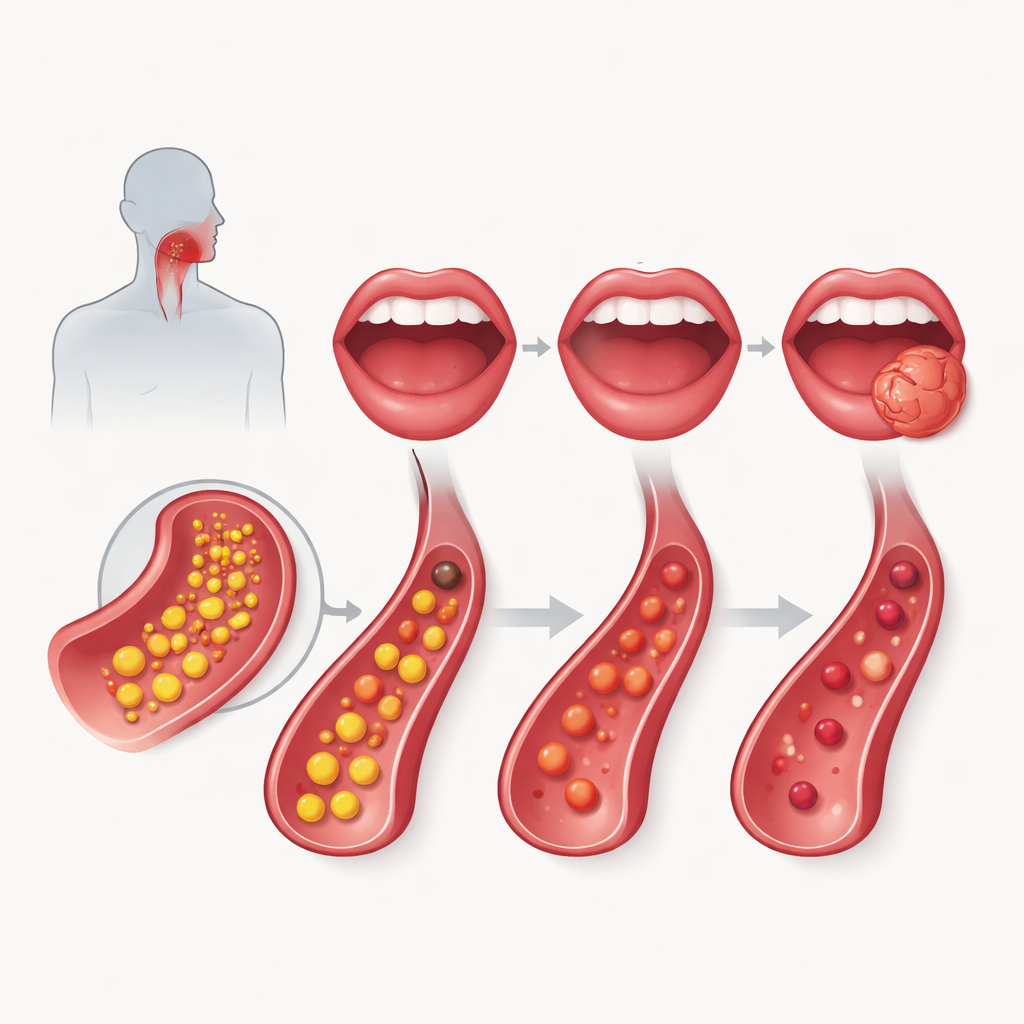
What the researchers set out to explore
The team focused on oral squamous cell carcinoma, the most common form of mouth cancer, and on a group of long-lasting mouth conditions known as oral potentially malignant disorders. These include white or red patches and stiff, scar-like changes in the lining of the mouth that sometimes develop into cancer. In everyday health care, doctors already measure blood fats such as total cholesterol, "good" and "bad" lipoproteins, and triglycerides. The authors wanted to know whether these familiar numbers show a clear pattern across healthy people, those with potentially malignant disorders, and those with confirmed oral cancer.
How they gathered and combined the evidence
Following strict guidelines for systematic reviews, the researchers searched major medical databases up to late 2025 and identified 52 suitable case–control studies from several countries, mostly India. Every included study compared blood fat levels in people with oral cancer or potentially malignant disorders against healthy control groups, using standard laboratory methods. The authors extracted average levels and variability for total cholesterol, high-density lipoprotein, low-density lipoprotein, very-low-density lipoprotein, and triglycerides. They then used statistical techniques that account for differences between studies to combine the results and estimate overall trends.
What they discovered about blood fats and disease stages
Across the pooled data, people with either potentially malignant mouth disorders or established oral cancer consistently had lower levels of all measured blood fats than healthy controls. The drops were not subtle: for many measures, the differences were large enough to be unlikely due to chance alone. Moreover, the reductions tended to be greater in patients with cancer than in those with earlier-stage disorders. When the researchers directly compared cancer cases with patients who had potentially malignant lesions, they found that total cholesterol and low-density lipoprotein were significantly lower in the cancer group, while high-density lipoprotein and very-low-density lipoprotein did not differ as clearly. This stepwise decline supports the idea that blood fat changes track, in some fashion, with how advanced the mouth disease has become.

Possible reasons for falling fat levels
The study cannot prove cause and effect, but it highlights several biological explanations. Growing tumor cells need a constant supply of building blocks for new membranes and energy, and they are known to rewire their metabolism to take up and manufacture more fats. This heightened demand may draw cholesterol and triglycerides out of the bloodstream. Long-lasting inflammation and oxidative stress in diseased mouth tissues may also break down fats more quickly and alter the protective functions of high-density lipoprotein. On top of that, many patients with advanced oral cancer suffer from poor nutrition, weight loss, and treatment side effects, all of which can lower blood fat levels independently of the tumor itself.
Limits of the current evidence
Although the overall pattern was clear, the individual studies varied widely in their findings. They differed in how they classified mouth lesions, which patients they recruited, and how closely they accounted for smoking, alcohol use, diabetes, diet, and medications such as statins. Most studies were relatively small, took place in single hospitals, and measured patients at only one point in time. As a result, it is hard to say whether altered blood fats appear before mouth disease develops, change as lesions worsen, or mostly reflect underlying illness and lifestyle. Some signs of publication bias also emerged, suggesting that studies with striking results may have been more likely to appear in the literature.
What this means for patients and screening
For a layperson, the main takeaway is that unusually low cholesterol and related blood fats in people with chronic mouth lesions are not necessarily good news. In this context, they may signal that the body and the diseased tissue are using fats in abnormal ways. The findings raise the possibility that, together with careful examination of the mouth and known risk factors like tobacco and betel nut use, simple blood tests could one day help identify which patients need closer monitoring. However, the authors stress that far better-designed, long-term studies in diverse populations are required before blood fat patterns can be relied on as a tool for predicting or diagnosing oral cancer.
Citation: Kishor, S., Rankovic, M.J., Otto, S. et al. Serum lipid alterations in oral squamous cell carcinoma and oral potentially malignant disorders: A systematic review and meta-analysis. Sci Rep 16, 10998 (2026). https://doi.org/10.1038/s41598-026-46163-z
Keywords: oral cancer, cholesterol, blood lipids, precancerous mouth lesions, cancer metabolism