Clear Sky Science · en
Interaction between oxygen saturation and renal function on 30-day mortality in emergency department patients
Why this matters for patients in the emergency room
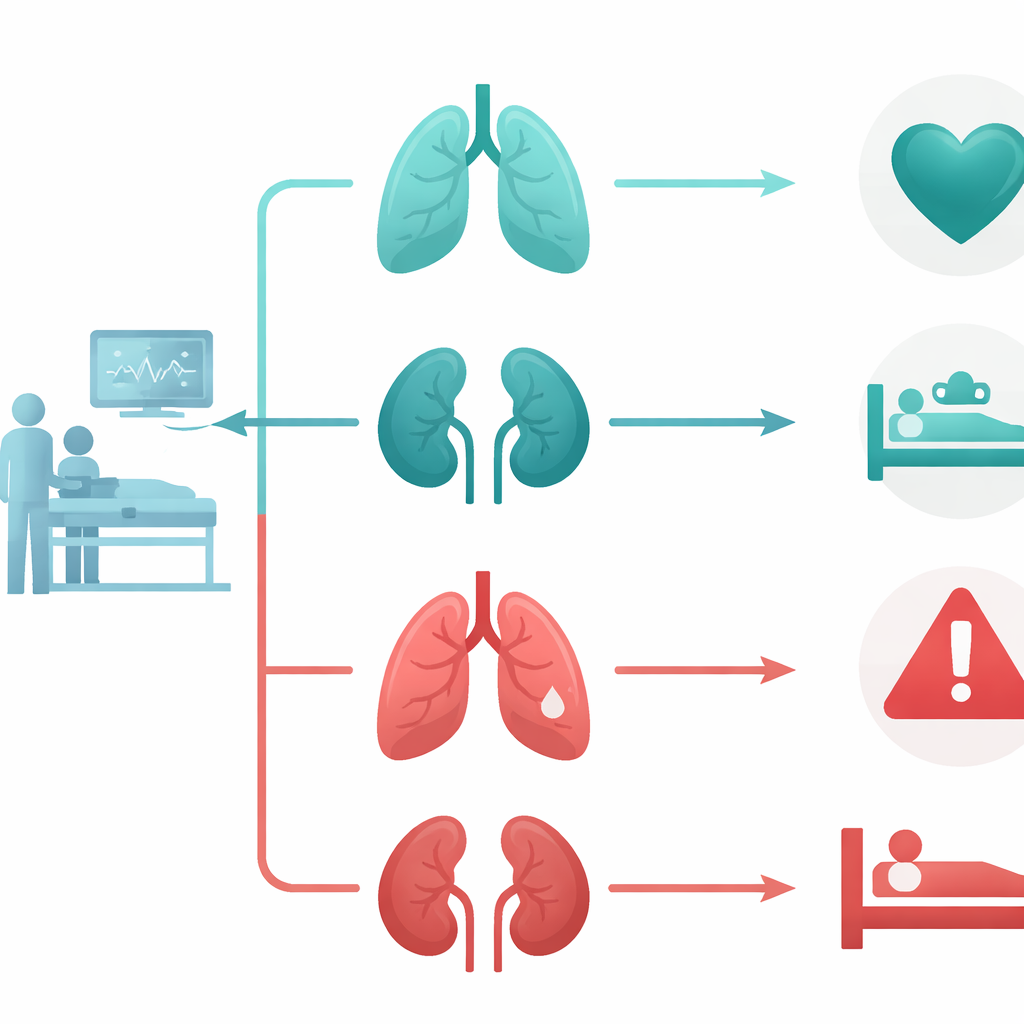
When someone rushes into an emergency department, doctors quickly measure how well they are breathing and how well their kidneys are working. This study asks a simple but important question: do low blood oxygen levels and poor kidney function merely add their risks together, or do they interact in a way that especially endangers patients in the first month after their visit?
Two vital signs from two vital organs
The researchers focused on two routine measurements that almost every emergency patient receives. One is oxygen saturation, taken with a fingertip clip that shows how much oxygen the blood is carrying. The other is an estimate of kidney filtering ability, calculated from a blood test for creatinine. Both are inexpensive, fast, and already part of everyday care. By looking at these two readings together in thousands of adults treated in eight emergency departments in southern Sweden during 2017–2018, the team explored how lungs and kidneys may act together to shape survival over the next 30 days.
What the study did and who was included
From more than half a million emergency visits, the investigators selected 12,651 adults who had complete data on oxygen saturation, kidney function, and several other standard tests at arrival. They then tracked who died within 30 days. Using statistical models that adjusted for age, sex, triage urgency, and markers of infection and poor circulation, they examined how changes in oxygen levels and kidney function related to the chance of death. In a smaller subgroup of about 3,000 patients who had a more detailed blood-gas test, they repeated the analyses using a more precise measure of oxygen in the blood.
How lungs and kidneys moved together
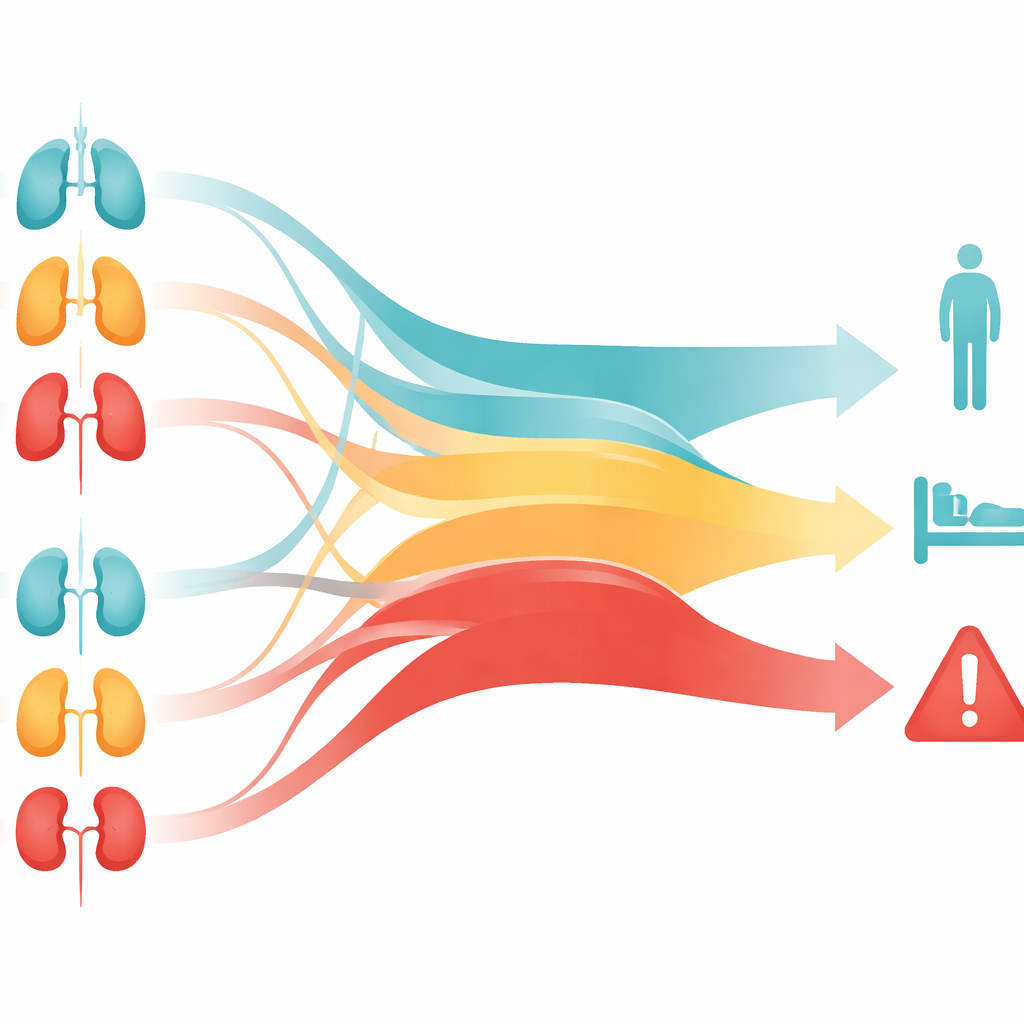
People who died within 30 days were generally older and sicker: they had higher levels of inflammation and poorer readings for both breathing and kidney function. Across the entire group, lower oxygen saturation was linked to lower kidney filtering, suggesting that trouble in one organ often accompanies trouble in the other. When the researchers looked at the risk of death, each drop in oxygen or kidney function independently increased the odds that a patient would die within a month. Moreover, the combination mattered: having both low oxygen and poor kidney function was more harmful than would be expected from simply adding their separate effects.
Does the interaction meaningfully improve prediction?
Although the lungs and kidneys clearly interacted biologically, a practical question for emergency care is whether building this interaction into prediction tools actually improves doctors’ ability to sort patients by risk. Here the findings were more modest. Adding a term that captured the joint effect of oxygen saturation and kidney function did make the statistical model fit the data slightly better, but it barely changed how accurately the model separated survivors from non-survivors. Kidney function on its own turned out to be a stronger predictor of 30-day death than oxygen measures, particularly in people coming in with chest pain, where heart–kidney connections are especially important.
What this means for real-world care
For patients and clinicians, the message is reassuringly practical. Simple, widely available tests of oxygen levels and kidney filtering at the time of emergency admission both carry important information about short-term risk. When both are in good shape, they appear to reinforce each other’s protective effect; when both are poor, risk rises sharply. Yet, for everyday decision-making in a busy emergency department, it is probably not necessary to use complex formulas that explicitly encode the interaction between the two. Instead, doctors can continue to interpret these routine measures side by side, paying particular attention when either one is severely impaired—especially kidney function—while recognizing that serious breathing problems may overshadow more subtle warnings from the kidneys.
Citation: Zwawi, A., Swärd, P., Forsberg, F. et al. Interaction between oxygen saturation and renal function on 30-day mortality in emergency department patients. Sci Rep 16, 10518 (2026). https://doi.org/10.1038/s41598-026-45757-x
Keywords: emergency department, oxygen saturation, kidney function, short-term mortality, risk prediction