Clear Sky Science · en
Multi-omics and network pharmacology reveal the mechanisms of Scutellaria barbata D.Don and Scleromitrion diffusum (Willd.) R.J.Wang against pancreatic cancer
Herbal Help for a Deadly Cancer
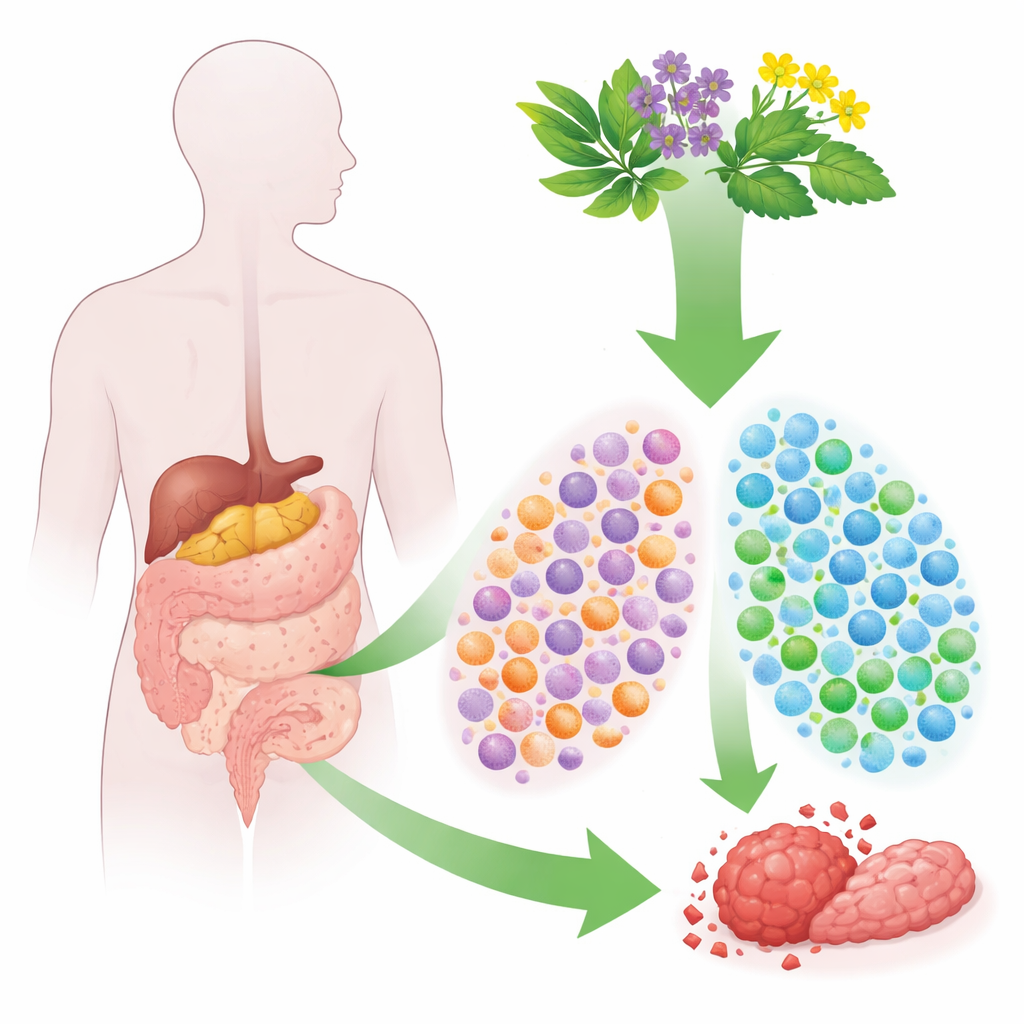
Pancreatic cancer is one of the deadliest cancers, often discovered too late and stubbornly resistant to standard chemotherapy. This study explores whether a long-used pair of traditional Chinese herbs—Scutellaria barbata and Scleromitrion diffusum, referred to together as SB-SD—can slow pancreatic cancer and how they might do it, not only by acting on tumor cells directly but also by reshaping gut bacteria and blood chemistry.
Old Remedies, New Questions
Doctors in East Asia have used SB-SD for many years to support cancer treatment, but its inner workings remained unclear. Here, researchers tested SB-SD on human pancreatic cancer cells in the lab and in mice carrying human tumor grafts. They asked three basic questions: Does SB-SD kill cancer cells or stop them from multiplying? Does it make standard chemotherapy work better? And can modern “multi-omics” tools—broad surveys of genes, proteins, and small molecules—reveal how this herbal pair interacts with the body and its resident microbes?
Stopping Cancer Cells in Their Tracks
In dishes of human pancreatic cancer cells, SB-SD sharply reduced cell growth while sparing normal pancreatic cells. Treated cancer cells showed telltale signs of programmed cell death and were far less able to form colonies or migrate, behaviors linked to tumor spread. Detailed cell-cycle tests showed that SB-SD stalled cells in the stages just before division, preventing them from moving into active multiplication. At the molecular level, the treatment dialed down proteins that normally push cells through the cycle and upregulated proteins that act as brakes, pointing to a coordinated shutdown of cancer cell division.
Sharper Tumor Control in Mice
The team then implanted human pancreatic cancer cells into immune-deficient mice, allowing tumors to grow before beginning treatment. SB-SD given by mouth shrank tumors in a clear dose-dependent fashion, rivaling the chemotherapy drug gemcitabine and performing even better when the two were combined. Tumors from treated mice contained many more dying cells and showed disrupted, condensed nuclei under the microscope—visual signs of effective tumor attack. At the same time, body weight and the appearance of major organs remained largely normal, and spleen enlargement hinted that SB-SD might stimulate or modulate immune activity without obvious toxicity.
Microbes, Metabolites, and Tumor Proteins
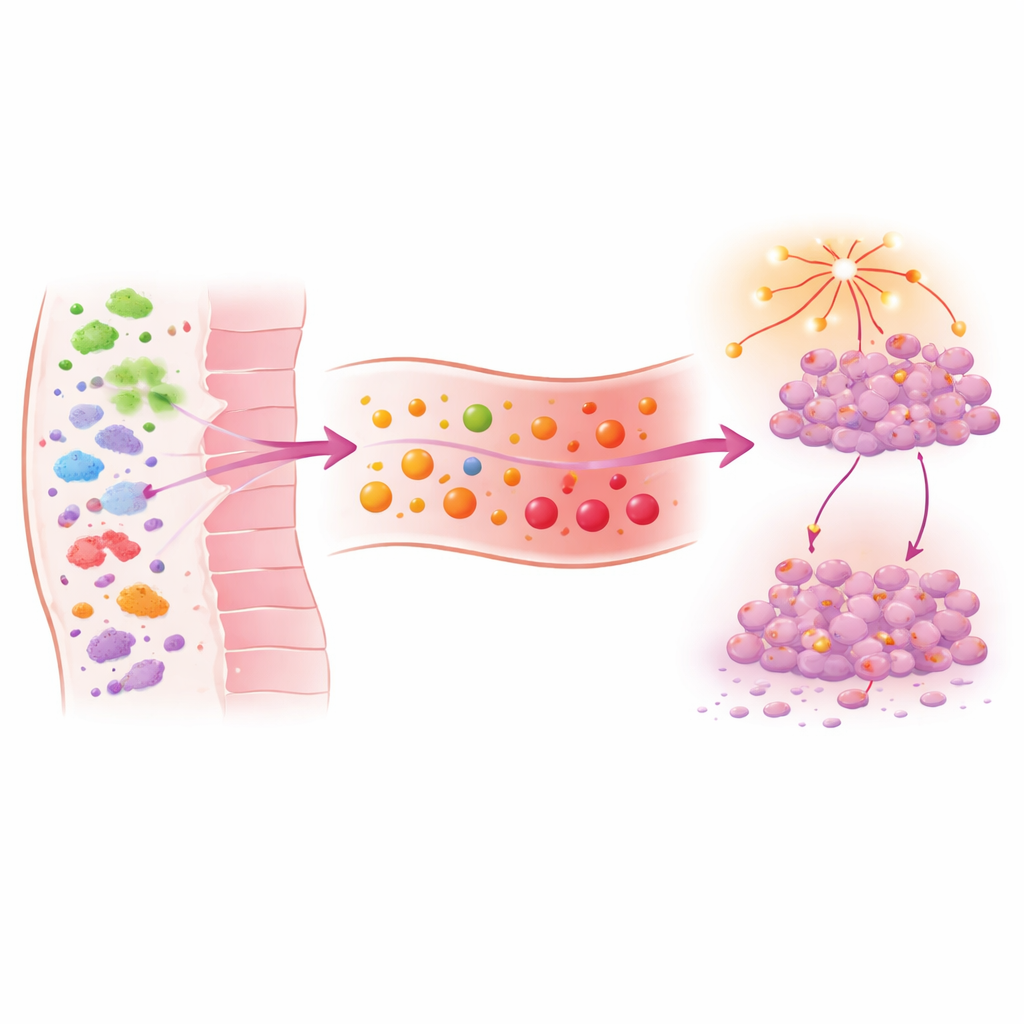
Because pancreatic cancer is closely linked to gut health, the researchers analyzed stool, blood, and tumor tissue to see how SB-SD ripples through the body’s internal networks. In the gut, SB-SD increased overall microbial diversity and boosted bacteria such as Bacteroides caccae and Lactobacillus, groups often associated with healthy metabolism and immune balance. Gene-level analysis suggested that these microbes were more engaged in breaking down and building amino acids and other key nutrients. In the blood, untargeted metabolite profiling showed that SB-SD shifted many small molecules, notably those involved in choline handling—a nutrient tied to cell membranes and cancer metabolism. Within tumors, protein surveys revealed changes in pathways that govern the cell cycle, the cell skeleton, and growth-control circuits, and highlighted several key proteins whose levels moved in opposite directions with treatment.
A Connected Web of Causes and Effects
To knit these pieces together, the investigators built a “microbiota–metabolite–protein” network. They found that certain gut bacteria correlated strongly with specific choline-related molecules in the blood and with tumor proteins that regulate cell division and survival. For example, SB-SD lowered levels of a protein previously linked to aggressive growth while increasing another tied to better outcomes in pancreatic cancer. This pattern supports a picture in which the herbal pair not only attacks tumors directly but also improves the surrounding metabolic and microbial environment in ways that make life harder for cancer cells.
What This Could Mean for Patients
To a non-specialist, the main message is that an old herbal combination appears to weaken pancreatic tumors through a double strategy: it slows cancer cells and nudges the gut and blood chemistry toward a state less favorable to cancer. While this work was done in cell cultures and mice—not yet in patients—it uses state-of-the-art tools to map how herbs, microbes, metabolites, and tumor proteins interact. The findings suggest that carefully prepared SB-SD, especially alongside standard chemotherapy, may one day become part of a more holistic treatment approach for pancreatic cancer, provided that future clinical trials confirm its safety and effectiveness in humans.
Citation: Zhao, Z., Yang, Y., Zhang, L. et al. Multi-omics and network pharmacology reveal the mechanisms of Scutellaria barbata D.Don and Scleromitrion diffusum (Willd.) R.J.Wang against pancreatic cancer. Sci Rep 16, 10866 (2026). https://doi.org/10.1038/s41598-026-45676-x
Keywords: pancreatic cancer, traditional Chinese medicine, gut microbiome, multi-omics, herbal therapy