Clear Sky Science · en
Effect of app-based mindfulness on extinction recall – a 7T-fMRI study
Why calming the mind matters for fear and anxiety
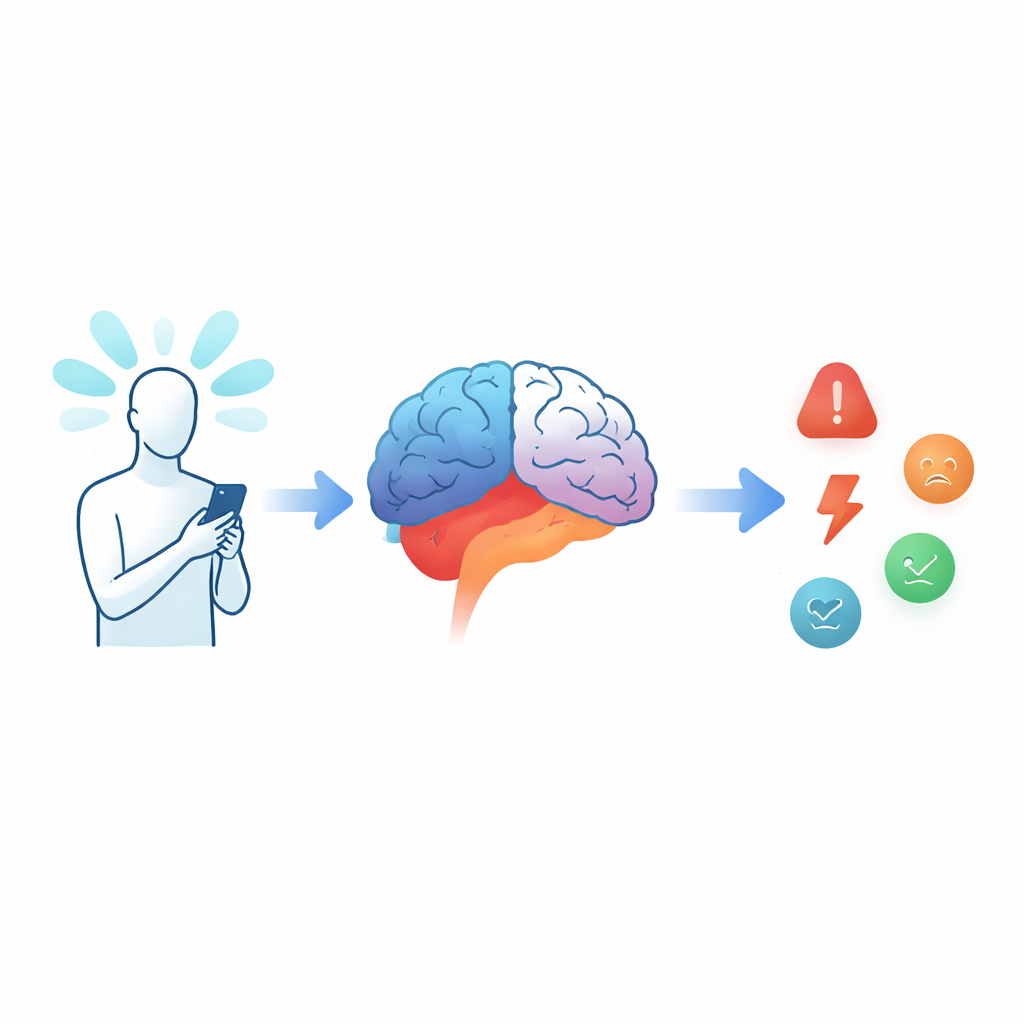
Many people turn to mindfulness apps to ease stress, anxiety, or lingering effects of difficult experiences. But can a few minutes of guided meditation a day actually change how the brain handles fear? This study asked whether app-based mindfulness training can help the brain better "remember" safety after something scary has been unlearned—a process closely tied to recovery from anxiety and trauma-related problems.
From phone-based practice to the brain’s fear system
The researchers recruited healthy adults with little prior meditation experience and randomly assigned them to two groups. One group practiced guided mindfulness using a commercial smartphone app for about four weeks, averaging around 14 minutes per day. The other group waited without training but knew they would get access to the app later. Before and after this period, everyone filled out questionnaires on everyday mindfulness, anxiety, and depression, and then completed a carefully controlled fear-learning experiment inside a powerful 7‑Tesla MRI scanner.
Teaching the brain what is dangerous—and what is safe
In the experiment, volunteers viewed three simple shapes on a screen. Two shapes were sometimes followed by a brief but uncomfortable electric shock to the leg, teaching the brain to treat them as danger signals. A third shape was never paired with a shock and came to signal safety. After this learning phase, one of the "danger" shapes was shown repeatedly without any shock so that its threat value faded—an effect known as extinction. A day later, participants returned to the scanner so the researchers could test how well their brains recalled this new safety learning, a process called extinction recall. Throughout, the team measured both sweaty-palm responses (skin conductance) and brain activity.
Mindfulness strengthens the memory of safety
The key question was whether people who had practiced mindfulness would show better recall of safety compared with those who had not. On the second day, the mindfulness group showed weaker physical fear responses to the shape that had been "unlearned"—but not to the shape that had stayed dangerous. This pattern suggests that mindfulness did not simply blunt all emotional reactions; instead, it selectively improved the brain’s ability to treat a once-threatening cue as safe when appropriate. Self-report data pointed in the same direction: after four weeks, the mindfulness group reported higher everyday mindfulness and lower anxiety and depression, while the control group remained essentially unchanged.
What changed inside the brain
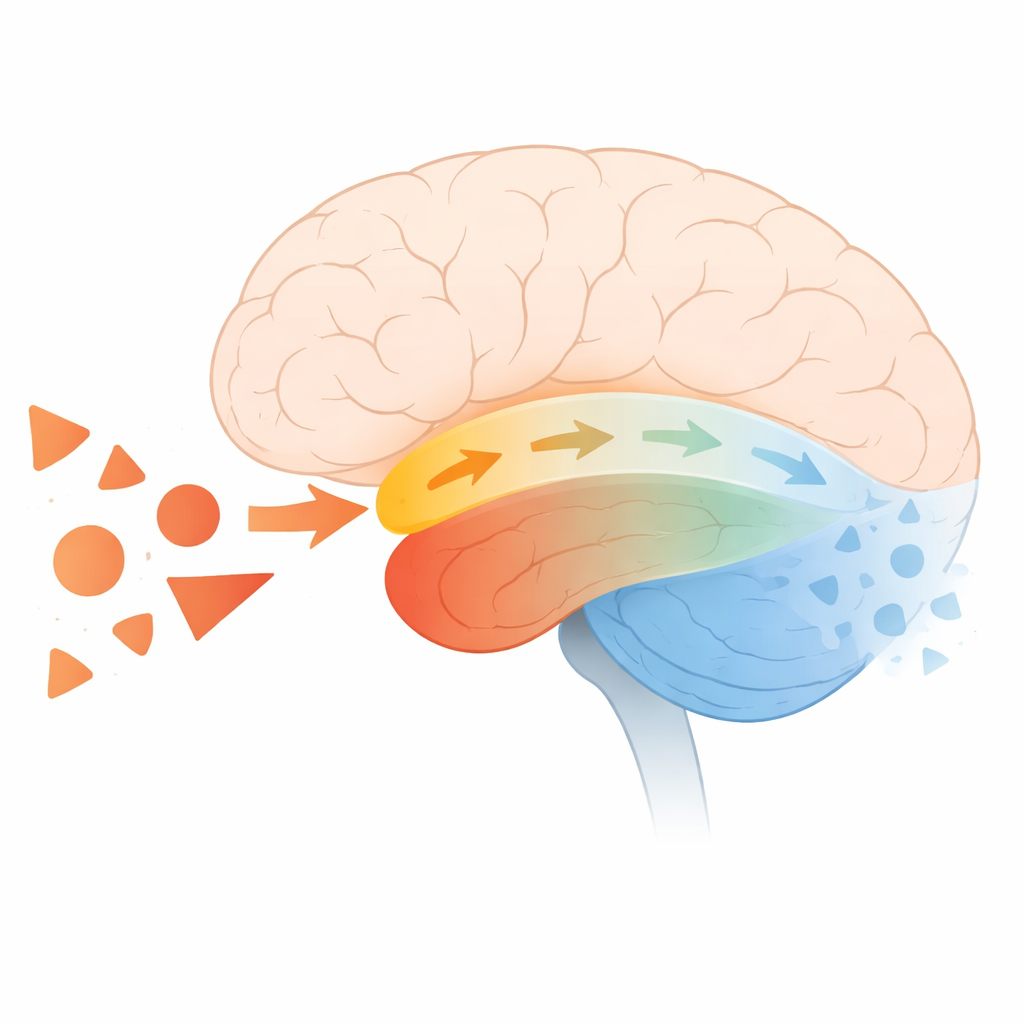
Brain scans revealed what was happening under the hood. When people viewed the extinguished threat cue during the safety-recall test, both groups activated classic fear-related regions such as the insula and midbrain. However, those who had not trained in mindfulness showed stronger activity in deeper threat-processing hubs including the amygdala, striatum, and a movement-related area called the supplementary motor area. In the mindfulness group, these regions were quieter, and in some cases even less active than during safe cues. Importantly, the study did not find evidence that mindfulness worked mainly by ramping up higher-level control regions in the front of the brain. Instead, activity in a key control area (the ventromedial prefrontal cortex) was linked to lower fear responses in both groups, but was not especially boosted by mindfulness.
What this means for everyday life and treatment
Taken together, the findings suggest that brief, app-based mindfulness training can help the brain more precisely retrieve memories of safety, dialing down deep fear circuits rather than simply forcing them to stop from the top down. For people struggling with anxiety or trauma, this kind of change could make it easier to hold on to the gains from exposure-based therapies, which rely on the same extinction and recall processes studied here. While the research was done in a modest-sized, non-clinical sample and needs replication in patients, it offers early biological support for using mindfulness—before or alongside therapy—to help the brain relearn what is truly dangerous and what can safely be let go.
Citation: Björkstrand, J., Olsson, E., Clancy, O.H. et al. Effect of app-based mindfulness on extinction recall – a 7T-fMRI study. Sci Rep 16, 9957 (2026). https://doi.org/10.1038/s41598-026-45569-z
Keywords: mindfulness, fear extinction, anxiety, exposure therapy, fMRI