Clear Sky Science · en
Phyto-mediated synthesis of M-ZT/bentonite nanocomposite using Hagenia abyssinica for synergistic photocatalytic and antimicrobial efficacy
Cleaning Water and Fighting Germs at the Same Time
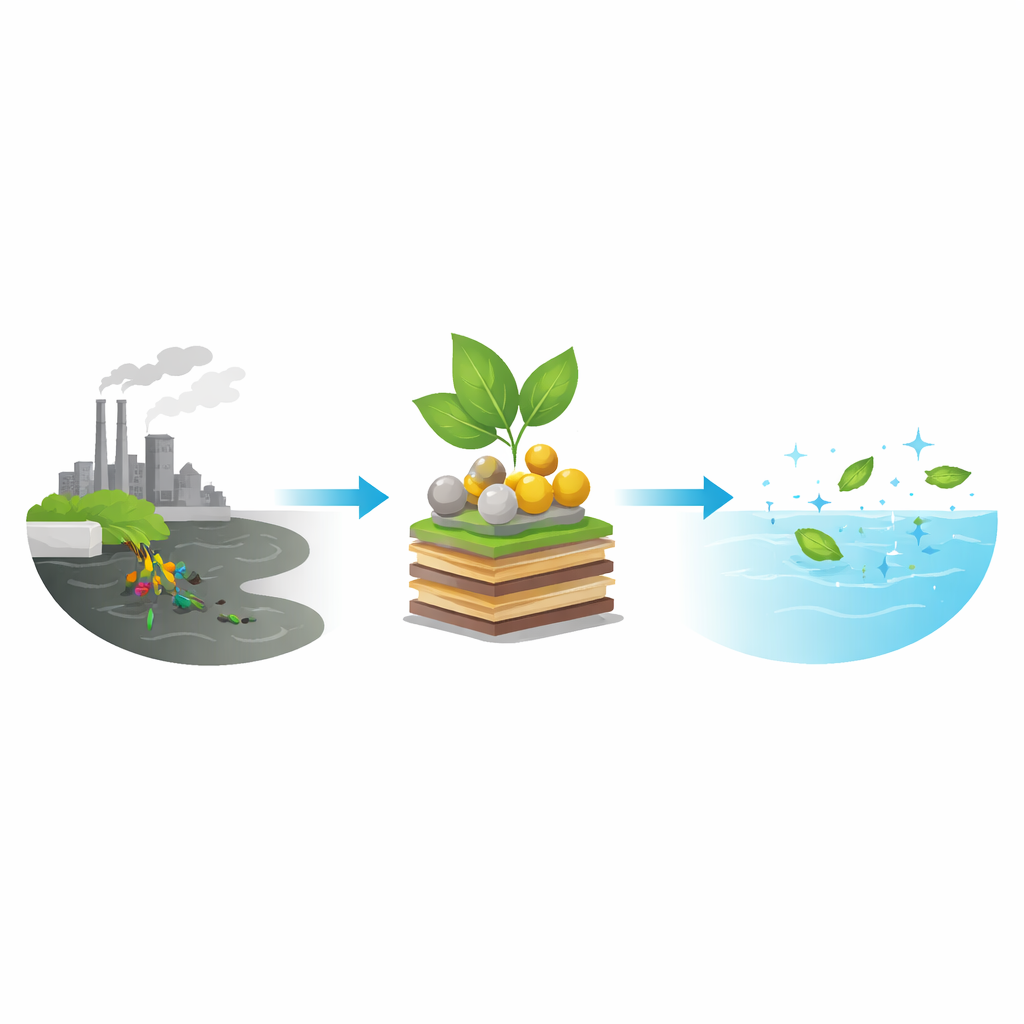
Industrial dyes and drug-resistant germs are two of today’s most stubborn threats to health and the environment. Factories release brightly colored, long‑lasting dyes into rivers, while common bacteria are evolving to withstand many antibiotics. This study describes a new, plant‑based nanomaterial that can both break down a common dye in water and strongly inhibit harmful bacteria, offering a glimpse of future filters and coatings that make our surroundings cleaner and safer in a single step.
Why Dirty Dyes and Tough Bacteria Are a Growing Problem
Modern industries use tens of thousands of synthetic dyes, and a noticeable fraction ends up in wastewater. These dyes do not just color rivers; they can be toxic, long‑lived, and hard to remove with standard treatment. At the same time, antibiotic‑resistant bacteria are responsible for millions of deaths worldwide each year, and new drugs are slow to keep up. Materials that can both clean water and reduce microbial threats, especially if they are cheap and environmentally friendly, are therefore highly attractive for use in treatment plants, hospitals, and household devices.
Building a Tiny Three‑in‑One Cleaner
The researchers created a new nanocomposite—an ultra‑small, mixed material—using three main ingredients: zinc oxide and titanium dioxide (well‑known light‑responsive minerals), and bentonite, a natural clay with a layered structure. They added magnesium to slightly alter zinc oxide’s behavior and used an extract from the leaves of the Ethiopian tree Hagenia abyssinica as a natural helper to assemble and stabilize the particles. This “green” route avoids harsh chemicals, as plant compounds guide metal ions into forming tiny, well‑dispersed crystals on the clay surface. The result is a ternary (three‑part) material called M‑ZTB with very small crystal size and an optical “gap” tuned so that it responds efficiently to visible light instead of just ultraviolet.
How the New Material Cleans Dye from Water
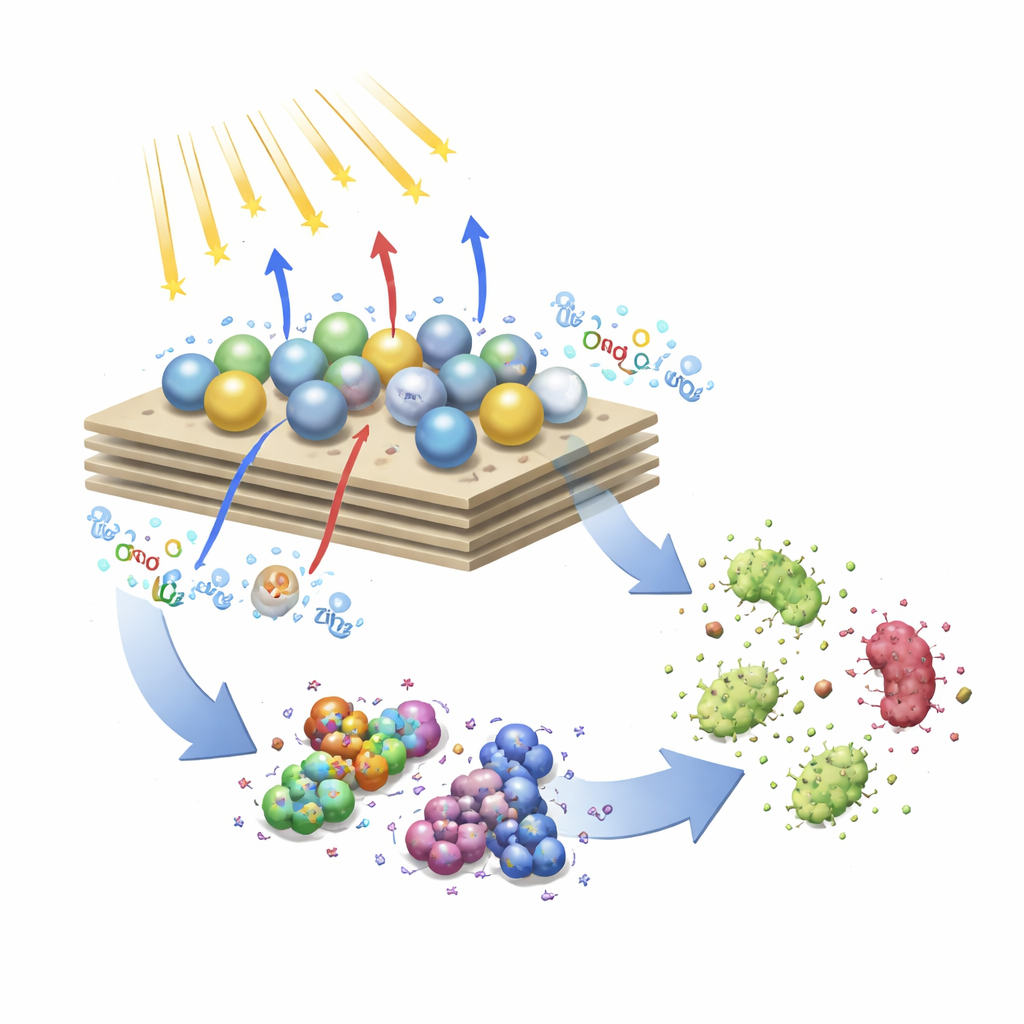
To test its cleaning power, the team used methylene blue, a vivid blue dye often found in laboratory and industrial waste. When a small amount of the nanocomposite was mixed with dye solution and illuminated with a visible‑light lamp, the blue color faded rapidly. Under the best conditions—slightly basic water, a moderate catalyst amount, and a typical dye level—the material broke down about 96% of the dye within 100 minutes and followed predictable reaction rates. Repeated use over four cycles showed almost no drop in performance, and structural tests confirmed that the material remained stable. Studies of light emission and particle structure indicate that the intimate contact between zinc oxide, titanium dioxide, and clay helps charges separate and move instead of canceling each other out, which in turn boosts the formation of highly reactive species that attack the dye molecules.
Stopping Germs Without Extra Light
The same nanocomposite was also tested against two common and clinically important bacteria: Escherichia coli, which has an outer protective membrane, and Staphylococcus aureus, which is a frequent cause of skin and wound infections. Even in the dark, discs containing the material produced wide clear zones where bacteria could not grow, and very low doses were enough to halt growth completely and then kill the cells outright. Compared with simpler particles, the three‑part material showed the strongest and most consistent effect. The authors suggest that the enhanced surface area, better distribution of particles on the clay, and increased release of metal ions work together to damage the bacterial cell wall and disturb vital processes inside the microbes.
What This Could Mean for Everyday Life
In plain terms, the study presents a tiny, plant‑crafted “workhorse” that can both scrub stubborn dyes from water under ordinary light and act as a powerful antibacterial agent, even without light. Because it is made from abundant minerals and a renewable leaf extract, and can be reused many times, it offers a promising route toward low‑cost filters, coatings, and surfaces that tackle pollution and germs together. While more testing is needed in real‑world conditions, this nanocomposite points toward future technologies where one environmentally friendly material helps keep both our water and our health better protected.
Citation: Ganta, D.D., Bekele, S.G., Edossa, G.D. et al. Phyto-mediated synthesis of M-ZT/bentonite nanocomposite using Hagenia abyssinica for synergistic photocatalytic and antimicrobial efficacy. Sci Rep 16, 10843 (2026). https://doi.org/10.1038/s41598-026-45345-z
Keywords: water purification, nanocomposites, green synthesis, antibacterial materials, photocatalysis