Clear Sky Science · en
Optimising hybrid renewable energy systems for remote tribal villages: A techno-economic case study from central and Eastern India
Power for Villages Off the Beaten Path
Millions of people in rural India live far from reliable power lines, yet they still need electricity for lights, phones, clinics, and schools. This study asks a simple question with big consequences: can a smart mix of sun, wind, and batteries give remote tribal villages dependable electricity at a fair price, while cutting pollution from diesel fuel? Focusing on two villages in central and eastern India, the researchers show how carefully planned hybrid renewable power systems can turn scattered natural energy into round-the-clock electricity and long‑term community benefits.
Why Remote Villages Struggle with Electricity
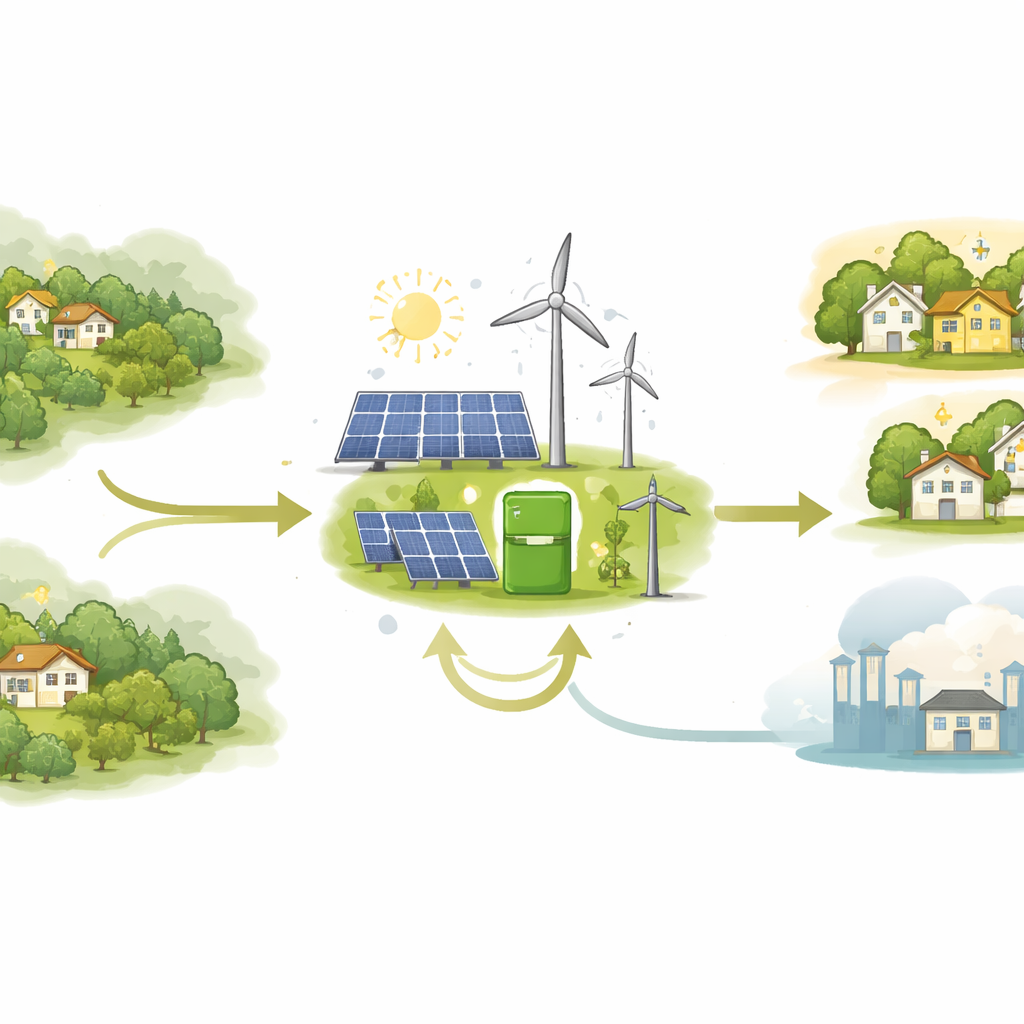
In many developing regions, electricity still comes mainly from coal or diesel plants fed by long, expensive power lines. For forested tribal areas with rough terrain and low population density, extending the main grid is often too costly, and the service that does arrive can be unreliable. Villagers then fall back on smoky diesel generators and kerosene lamps, which are expensive to run and harmful to health and climate. At the same time, these regions often enjoy plentiful sunshine and usable winds, meaning clean energy is available but untapped. The challenge is to harness these shifting natural sources in a way that keeps the lights on at all hours, not just when the sun is shining or the wind is blowing.
How a Mixed Energy System Was Designed
The authors focused on two off‑grid or poorly served villages: Koopgarh in Madhya Pradesh and Kurkheta in Jharkhand. They first built a detailed picture of how much power local households use, based on common appliances like lights, fans, refrigerators, pumps, and small devices, and on how many hours per day each is typically used in summer and winter. They then combined this with weather data from satellite-based sources to understand the local sun and wind conditions over a full year. Using a specialized planning tool, they tested many different combinations of solar panels, wind turbines, batteries, diesel generators, and grid connections, and compared their lifetime costs and pollution levels. The goal was to find the setup that could reliably meet current and future needs at the lowest long‑term cost, while slashing emissions.
The Best Mix of Sun, Wind, and Storage
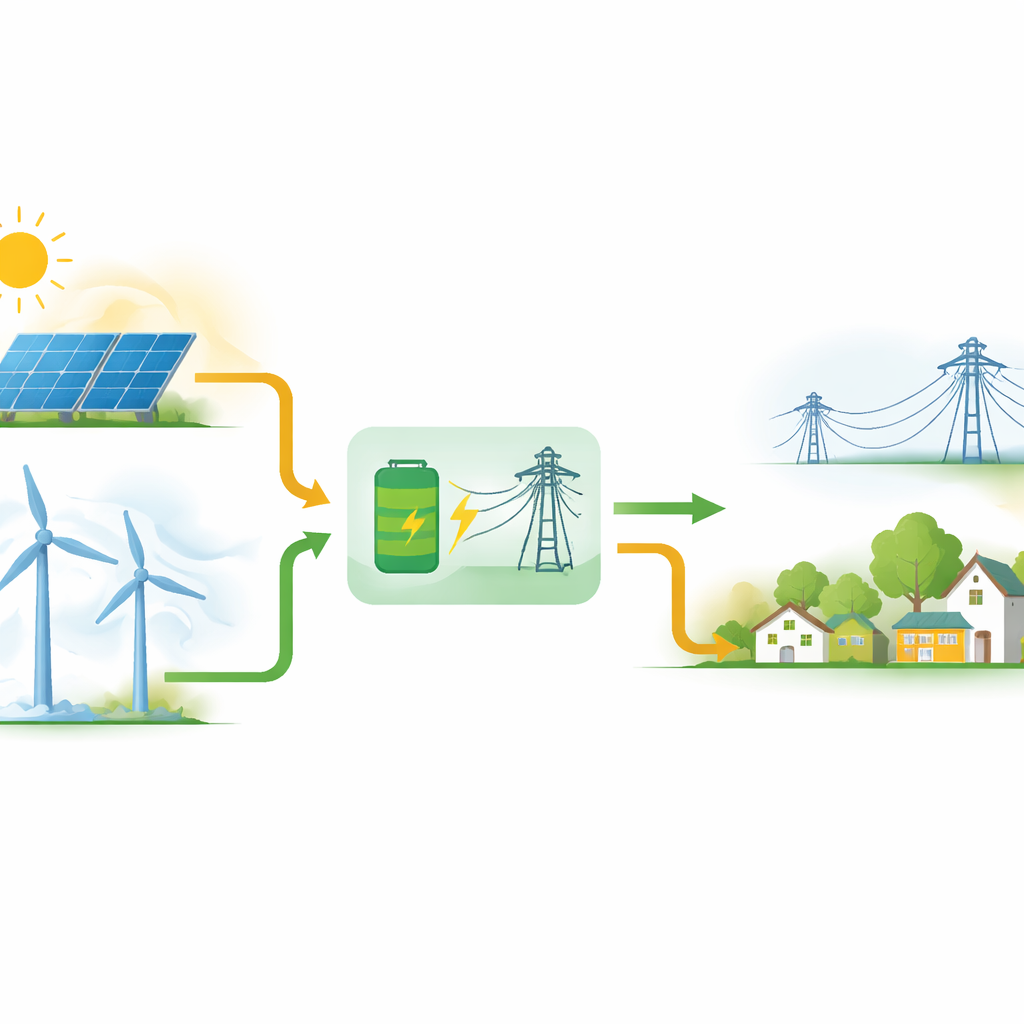
For both villages, the most promising solution turned out to be a hybrid system built mostly from solar panels and wind turbines, backed by battery storage. In Koopgarh, which is not practically connectable to the main grid, the optimal design uses a large solar array and a smaller wind installation, with batteries smoothing out the ups and downs and keeping power available through the night. In Kurkheta, where a weak grid already exists, the best setup also couples solar, wind, and batteries but allows surplus electricity to flow back to the grid, lowering overall system costs. These designs achieve very competitive energy prices: about 0.19 US dollars per kilowatt‑hour for Koopgarh and about 0.033 dollars for Kurkheta, while driving net carbon emissions close to zero compared with diesel‑heavy options.
Money, Risk, and Community Benefits
The study looked beyond simple installation costs to consider fuel savings, upkeep, replacement of worn‑out parts, and changing economic conditions over a 20‑year period. Even when the researchers stressed the systems with less favorable assumptions—such as higher borrowing costs or changes in resource availability—the hybrid setups remained attractive, with payback times on the order of a decade. Because they avoid imported fuel and make use of free local resources, the systems protect villagers from swings in diesel prices. They also open the door to new services: steady power for water pumps, vaccine fridges, internet‑enabled classrooms, and small village businesses like grain milling or cold storage, helping to support jobs, health, and education.
What This Means for Clean Energy Futures
In simple terms, the paper shows that remote forest villages do not have to choose between darkness and dirty diesel. With a thoughtful blend of solar panels, wind turbines, and batteries, tailored to local weather and demand, they can enjoy dependable, affordable electricity that produces almost no ongoing pollution. While the study notes real‑world limits—such as the need for better local weather data, trained technicians, and careful land use—it offers a practical blueprint. For policymakers and planners, these results suggest that hybrid renewable systems are not just a green ideal but a realistic path toward cleaner air, climate protection, and energy fairness for some of the hardest‑to‑reach communities.
Citation: Sekhar, Y.R., Chiranjeevi, C., Ravindra et al. Optimising hybrid renewable energy systems for remote tribal villages: A techno-economic case study from central and Eastern India. Sci Rep 16, 11113 (2026). https://doi.org/10.1038/s41598-026-45306-6
Keywords: rural electrification, solar and wind power, energy storage, microgrids, tribal villages India