Clear Sky Science · en
Aspartate aminotransferase and model for end-stage liver disease reliably predict mortality in drug-induced liver injury
When Medicines Turn Against the Liver
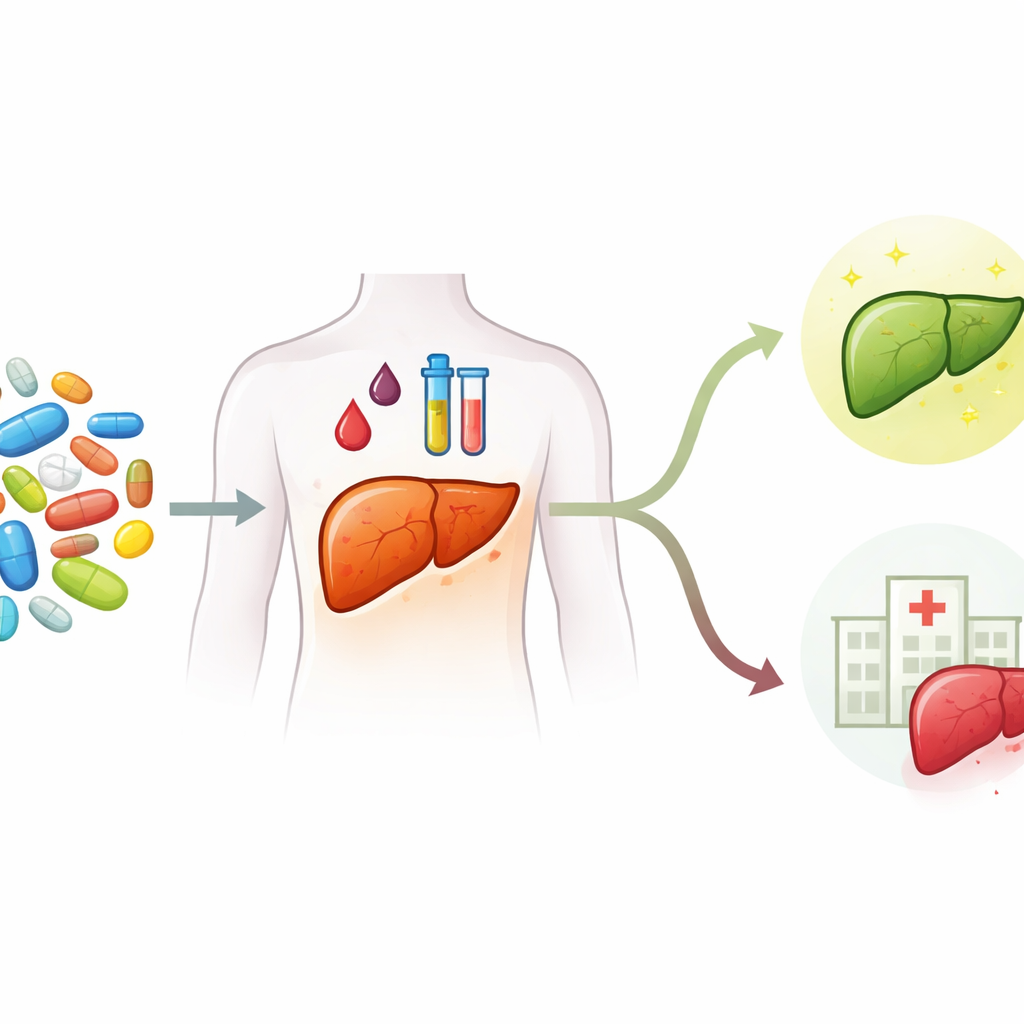
Most of us take medicines assuming they are both safe and helpful. Yet in rare cases, common drugs can unexpectedly damage the liver so badly that patients may die or need an urgent transplant. Doctors can see when the liver is injured, but they have struggled to predict early on which patients will recover and which are in real danger. This study set out to find simple blood test measures that can flag those highest-risk patients in time to save lives.
A Closer Look at Rare but Dangerous Liver Damage
The researchers followed 268 adults treated at a university hospital in Munich who developed liver injury linked to everyday medicines, such as painkillers, antibiotics and immune-modulating drugs. All had a sudden, unpredictable type of damage rather than slow, long-term disease. Although this problem is uncommon, it is one of the leading causes of sudden, life-threatening liver failure. In this group, about one in ten patients either died or required an emergency liver transplant, usually within just under two weeks after the problem was first recognized.
Searching for Warning Signs in Routine Blood Tests
To find reliable red flags, the team compared many standard measurements taken at the first sign of liver trouble. These included liver enzymes that leak into the blood when liver cells are harmed, yellow pigment (bilirubin) that rises when the liver cannot process waste properly, a clotting test that reflects how well the liver makes key proteins, and a widely used severity rating called the MELD score that combines several of these values. They also tested existing rule-of-thumb tools, such as "Hy’s law," which doctors have long used to guess who might fare poorly after drug-related liver damage.
Two Numbers That Tell a Powerful Story
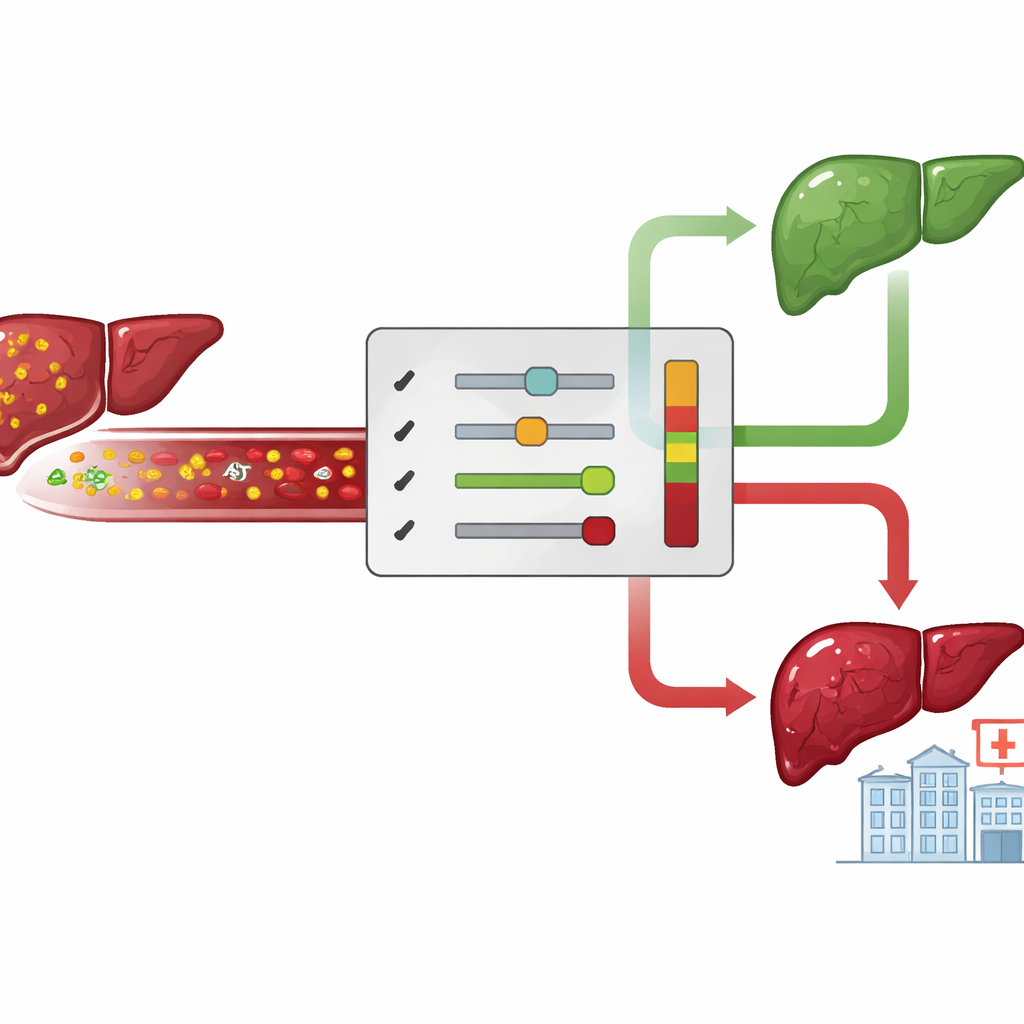
When the researchers applied statistical methods that account for many factors at once, only two baseline measures stood out as truly independent predictors of death or transplant: the MELD score and the enzyme aspartate aminotransferase (AST). A higher MELD score, especially 20 or above, was strongly linked to poor outcome and was better at prediction than older rules. At that threshold it correctly identified most patients who would later die or need a transplant and, just as important, almost never misclassified patients who would survive. Adding very high AST levels on top of a high MELD score sharpened the picture even more, markedly increasing the chance that a patient flagged as high-risk really was in danger.
What These Findings Mean for Patients and Clinicians
The power of this approach lies in its simplicity. MELD and AST are based on ordinary blood tests that hospitals already perform, and the cut-off values identified are easy to apply at the bedside. A patient with suspected drug-related liver injury whose MELD score is below 20 and whose AST is not extremely raised is very unlikely to die or need a transplant in the near term. In contrast, someone whose MELD score is 20 or higher and whose AST is dramatically elevated faces a much greater risk and may benefit from rapid transfer to a transplant center and close monitoring.
A Clear Take-Home Message
For patients and families, the study’s conclusion is straightforward: two routine blood test measures—an overall severity score (MELD) and one liver enzyme (AST)—can together provide an early, reliable sense of how serious drug-induced liver injury is likely to be. While the work comes from a single hospital and needs confirmation elsewhere, it suggests that doctors can use information they already have to decide more quickly who needs urgent, specialized care, and who can be managed safely with careful observation.
Citation: Weber, S., Mircheva, I., Balakumar, R. et al. Aspartate aminotransferase and model for end-stage liver disease reliably predict mortality in drug-induced liver injury. Sci Rep 16, 11236 (2026). https://doi.org/10.1038/s41598-026-44893-8
Keywords: drug-induced liver injury, liver failure, MELD score, AST enzyme, risk prediction