Clear Sky Science · en
Sub-microscopic schistosomiasis and soil-transmitted helminths in school children: molecular diagnostic evidence and implications for disease elimination
Why Hidden Infections Matter
Across much of the world, children grow up carrying tiny parasitic worms that sap their energy, stunt their growth, and dull their ability to learn. Health workers usually look for these worms by checking urine and stool under a microscope. But what if many infections are too light to be seen this way? This study, carried out among schoolchildren in central Nigeria, asked how many “invisible” infections are being missed, and what that means for efforts to wipe these diseases out.
Everyday Life, Lasting Harm
Schistosomiasis and soil‑transmitted worms thrive where safe water and toilets are scarce. Children are infected when they play, bathe, or fetch water in ponds and streams, or when human waste contaminates soil and water. Even low‑level infections can cause anaemia, poor growth, and learning difficulties that follow children into adulthood. Nigeria, and Plateau State in particular, is one of the places where these parasites are common, and school‑age children carry much of the burden.
How the Children Were Tested
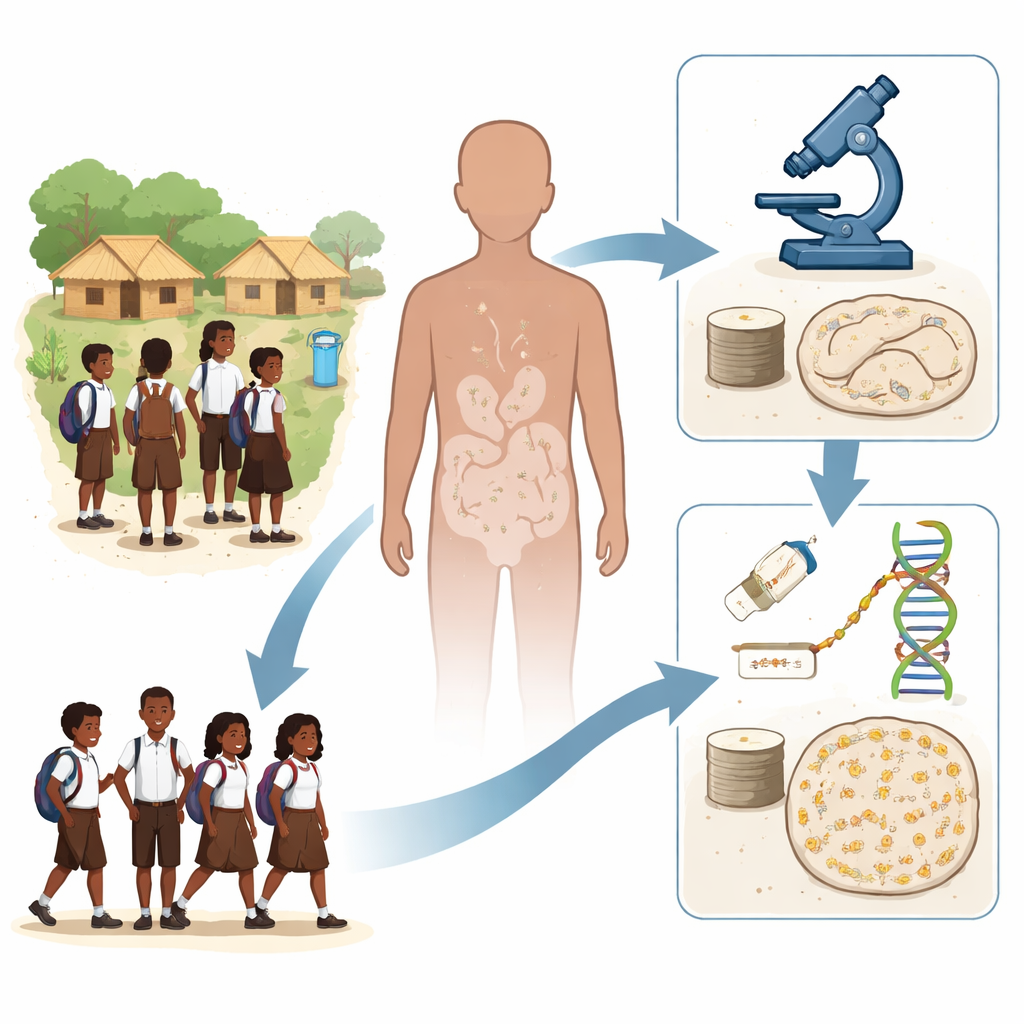
The researchers worked in six districts of Plateau State, enrolling 1,368 pupils aged 5 to 19 years. Each child provided a urine and a stool sample, which were first checked using standard microscope‑based methods recommended by the World Health Organization. These methods look for parasite eggs and are inexpensive and widely used. In a carefully chosen subset of 585 children, the same samples were also examined using more sensitive DNA‑based tests that can detect tiny traces of parasite genetic material, even when few or no eggs are visible.
What the Invisible Worms Revealed
When the team relied only on the microscope, about one in five children appeared to be infected. But when they added the DNA tests, the number of detected infections jumped by nearly 45 percent. Among the 585 children who had both types of tests, molecular methods found 178 infections, compared with 123 seen by microscopy. Importantly, every infection spotted under the microscope was also picked up by the DNA tests, and an extra 9 percent of children who seemed clear by standard methods turned out to be infected after all. This pattern held true for both major groups of parasites studied: schistosomes, which live in blood vessels, and common intestinal worms such as hookworm and roundworm.
Who Is Most at Risk and Why
Most infections detected by microscopy were light rather than heavy, meaning children carried relatively few worms—exactly the kind of situation where standard tests are most likely to miss cases. Boys were somewhat more likely to have one form of schistosomiasis, likely reflecting greater time spent swimming or working in natural water. Younger children had higher levels of intestinal worms than older teens. The study also examined daily living conditions. Children from households that practiced open defecation had about twice the odds of infection compared with those using flush toilets, highlighting how poor sanitation continues to feed the cycle. Frequent contact with rivers and streams also increased risk.
Rethinking Progress Toward Elimination
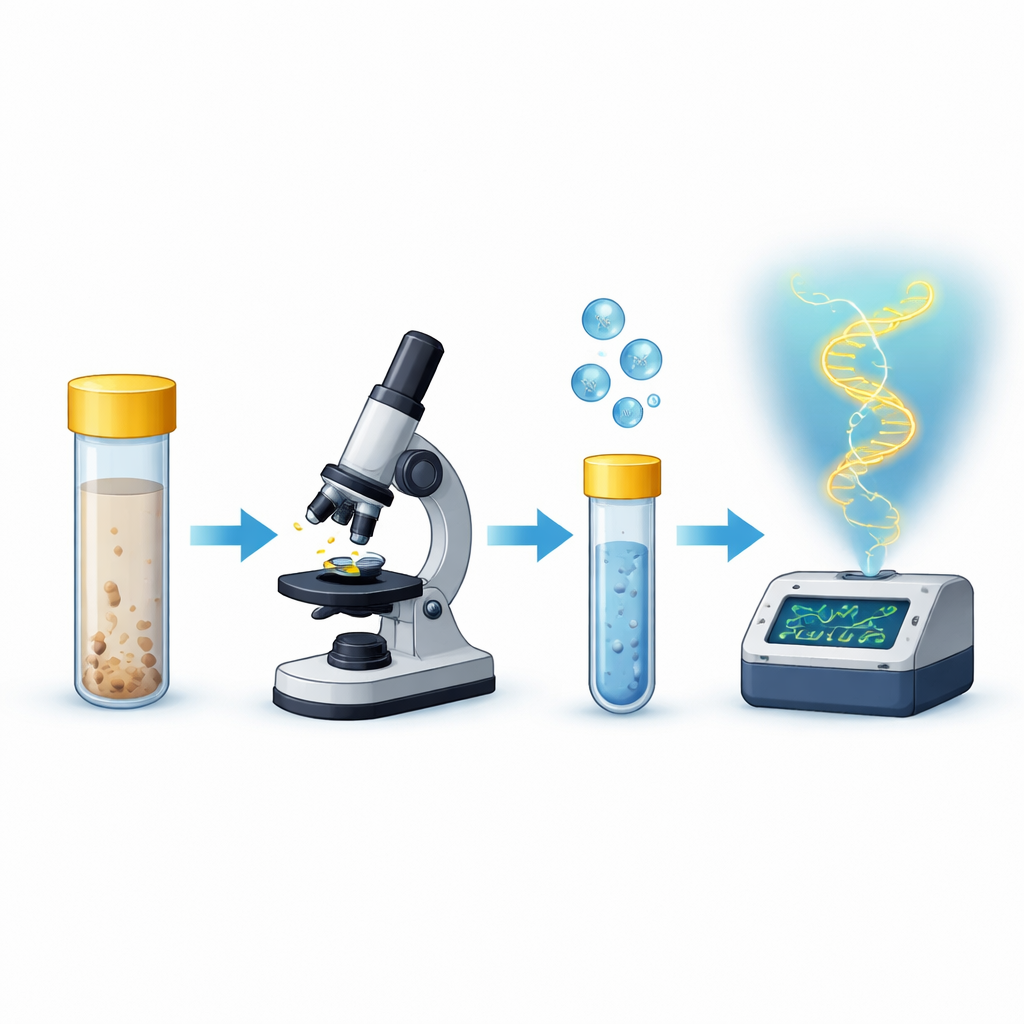
Public health programs in Nigeria and elsewhere have made strides by giving deworming medicines to large numbers of children. As countries shift from simply reducing disease to aiming for full elimination, they rely heavily on microscope‑based surveys to judge whether they are close to success. This study shows that in a setting where many infections are mild, those surveys may paint too rosy a picture: a sizeable share of infected children are effectively invisible to the usual tests. While the DNA‑based methods are more complex and costly, adding them—at least in selected surveys—could give a truer sense of how much infection remains. The work also reinforces a basic message: to break the cycle of these neglected tropical diseases, better toilets, cleaner water, and reduced contact with contaminated environments are just as crucial as pills and better tests.
Citation: Mac, P.A., Anderson, K.D. & Dakul, D.A. Sub-microscopic schistosomiasis and soil-transmitted helminths in school children: molecular diagnostic evidence and implications for disease elimination. Sci Rep 16, 9236 (2026). https://doi.org/10.1038/s41598-026-44877-8
Keywords: schistosomiasis, soil-transmitted helminths, molecular diagnostics, Nigeria, submicroscopic infection