Clear Sky Science · en
Association between pre-operative mental health and recovery outcomes following total knee arthroplasty
Why your mindset before surgery can matter later
Total knee replacement is often sold as a ticket back to walking without pain. Yet up to one in five patients remain unhappy a year or more after surgery. This study asked a simple but important question: does your mental health before surgery influence how well you feel and function long after the new joint is in place? By carefully tracking both mood and recovery over a year, the researchers show that what is going on in your head beforehand can shape how your knee – and your daily life – feel later on.
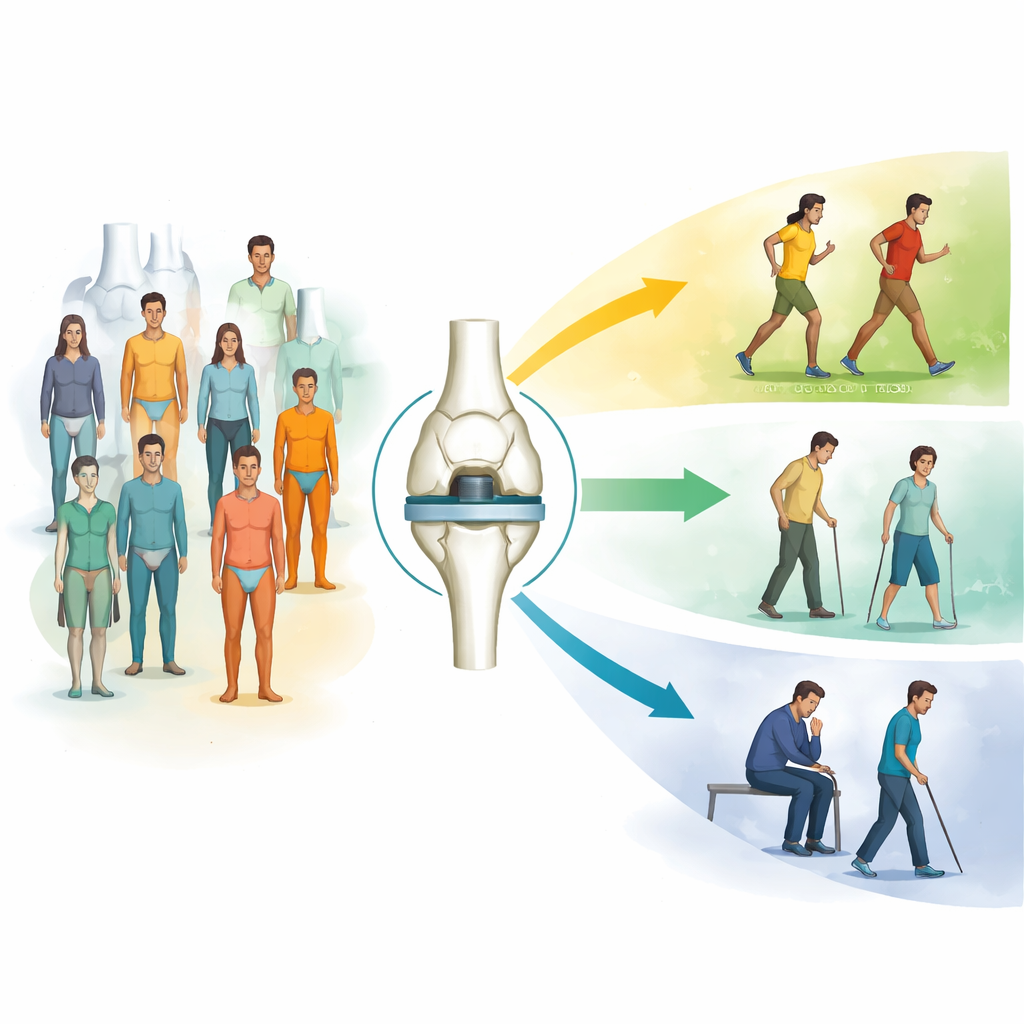
Looking at people before and after a new knee
The research team followed 123 people scheduled for a first-time total knee replacement due to advanced arthritis. Before surgery, and again three months and 12 months afterward, patients filled out questionnaires about anxiety and depression, as well as standard forms about knee pain, walking ability, and overall quality of life. These “patient-reported outcome measures” captured how people themselves judged their recovery, not just what an X‑ray or a doctor’s exam might show.
How common are low mood and worry in knee patients?
Contrary to some earlier reports, most of the patients in this German clinic did not show strong symptoms of anxiety or depression before surgery, and these proportions stayed fairly stable over the year. On average, anxiety scores improved after the operation, suggesting that getting through surgery and feeling less day‑to‑day pain eased people’s worries. Depression scores, however, did not change much overall, hinting that low mood may be more stubborn than short‑term nervousness.
Early recovery looks similar, later differences emerge
When the team compared mental health before surgery with recovery at three months, they found no meaningful links: people with worse mood beforehand did about as well as others in terms of early pain relief and function. By one year, the picture had changed. Higher levels of depression and, to a lesser degree, anxiety before surgery were now tied to more pain, worse knee function, and lower quality of life. When patients were grouped by how depressed they had been before surgery, those with clear symptoms reported less improvement and poorer scores on nearly every recovery measure at 12 months than those who had started out mentally well.
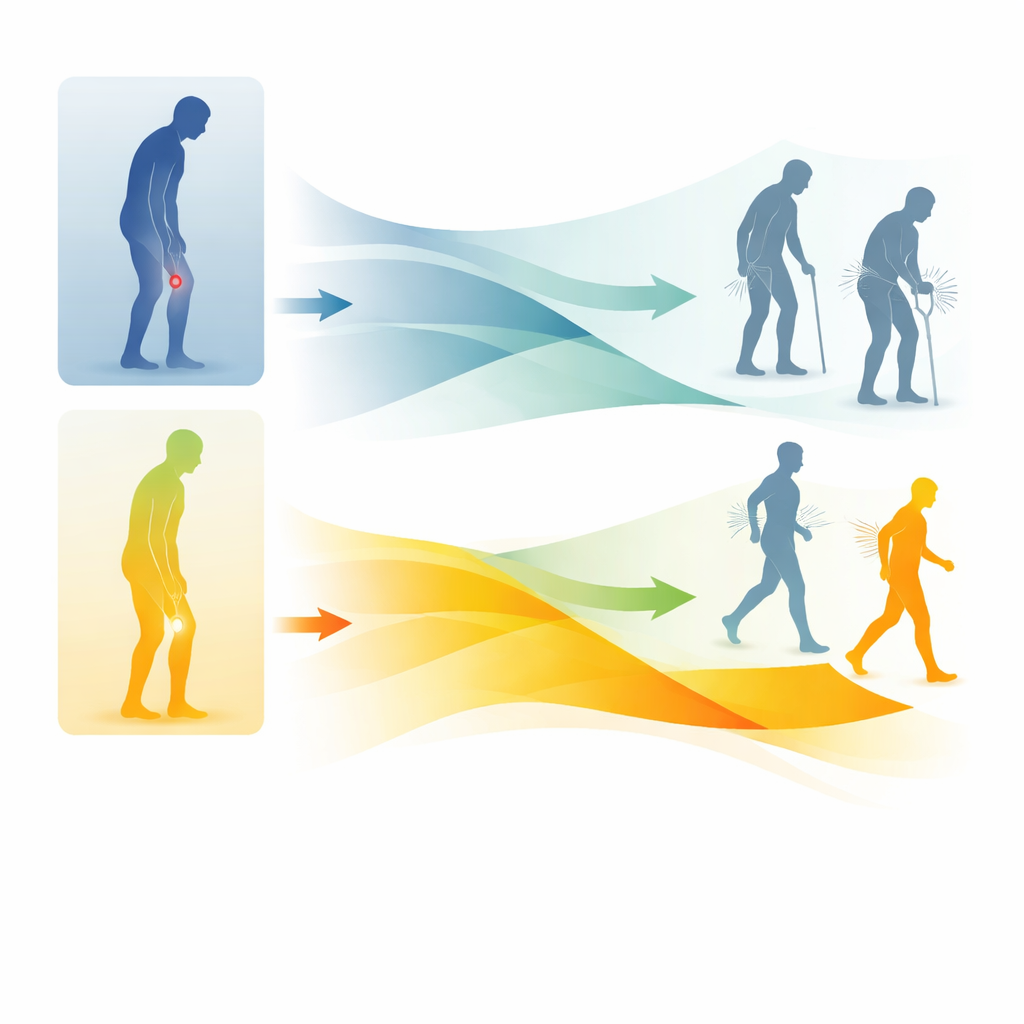
Recovery of body and mind move together
The study also showed that mental health and physical recovery are intertwined over time. At the 12‑month mark, people who still had higher depression or anxiety scores also tended to report more pain, worse walking ability, and poorer overall health. Patients whose mood improved between surgery and the one‑year checkup generally described better outcomes, while those whose mental health worsened often reported more pain and limitations. This suggests a two‑way relationship: feeling better physically can lift mood, and a healthier state of mind may help people use their new joint more confidently and consistently.
What this means for patients and care teams
For someone considering knee replacement, these findings offer both caution and hope. The operation usually brings clear benefits in pain and function, but people who are depressed beforehand are at higher risk of still hurting and feeling limited a year later. Because physical and mental recovery travel together, the authors argue that screening for anxiety and depression before surgery, and offering timely psychological support when needed, could help more patients get the full benefit of their artificial knee. In short, tending to mood and mind may be just as important as choosing the right implant when it comes to walking comfortably into life after knee replacement.
Citation: Osmanski-Zenk, K., Brandt, C., Mittelmeier, W. et al. Association between pre-operative mental health and recovery outcomes following total knee arthroplasty. Sci Rep 16, 9541 (2026). https://doi.org/10.1038/s41598-026-44799-5
Keywords: total knee replacement, mental health, depression, recovery outcomes, joint pain