Clear Sky Science · en
Integrated metabolomic, network pharmacological, and molecular docking analyses comparing the therapeutic effects of Strobilanthes sarcorrhiza from different origins
Healing Power Hidden in Mountain Roots
In the hills of southern China, a little-known herb called Strobilanthes sarcorrhiza has long been simmered into broths and remedies for ailments like kidney trouble and toothache. Yet until now, no one really knew which ingredients in its thick roots were doing the healing, or whether all plants of this species were equally effective. This study peels back that mystery by comparing plants from two nearby regions and tracking how their chemistry links to specific health benefits, from protecting the kidneys to easing dental pain.
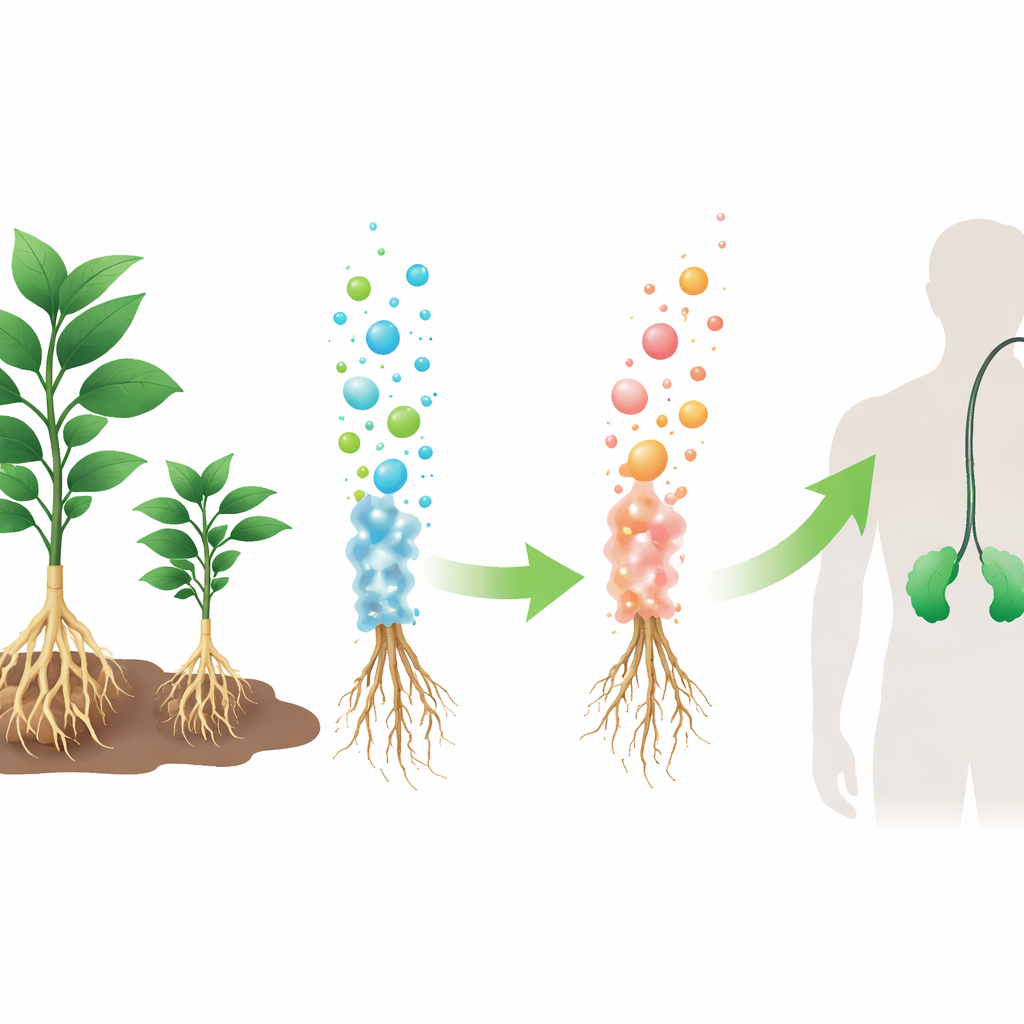
Two Local Varieties, Two Very Different Plants
The researchers focused on two cultivated sources of this herb in Zhejiang province: one from Yongjia (YJ) and one from Gaolou (GL). Although they belong to the same species, they look quite different. YJ plants grow much taller, with longer leaves and far heavier fleshy roots, making them more impressive from a farmer’s point of view. GL plants are shorter and lighter, but when scientists measured the overall levels of key plant chemicals called flavonoids and phenolics in the roots, GL actually packed more of these compounds—especially phenolics, which were more than doubled compared with YJ. This set the stage for a deeper question: do these hidden chemical differences translate into different kinds of medicine?
Peeking Inside with Chemical Fingerprinting
To answer that, the team used high‑resolution mass spectrometry, a technique that can scan thousands of small molecules at once, to build a "chemical fingerprint" for each origin. They detected more than twenty thousand distinct metabolites and confidently identified several hundred, including dozens of flavonoids, phenolics, and alkaloids often tied to health effects. When they compared the two groups, the roots separated cleanly into two clusters, meaning each origin had its own characteristic chemical profile. YJ roots were richer in compounds such as apigenin and vindoline, while GL roots were enriched in sinensetin, tangeretin, vitexin, phlorizin, and dopamine, among others. These patterns suggest that the same species can specialize in different chemical “toolkits,” shaped by genetics and local growing conditions.
From Molecules to Organs: Kidney and Tooth Targets
The next challenge was to connect these plant molecules to human health. The researchers used a computational approach called network pharmacology, which links known drug-like molecules to the human proteins they are likely to influence, and then to diseases where those proteins matter. For the YJ origin, they focused on its high‑content compounds and cross‑matched them with genes involved in nephritis, a form of kidney inflammation. This analysis highlighted two star molecules—apigenin and vindoline—and a key protein called EGFR, a signaling switch on cell surfaces that helps control inflammation and tissue responses. Computer docking simulations showed that both plant compounds can fit snugly into EGFR’s active site, suggesting a plausible molecular route by which YJ roots might help protect the kidneys.
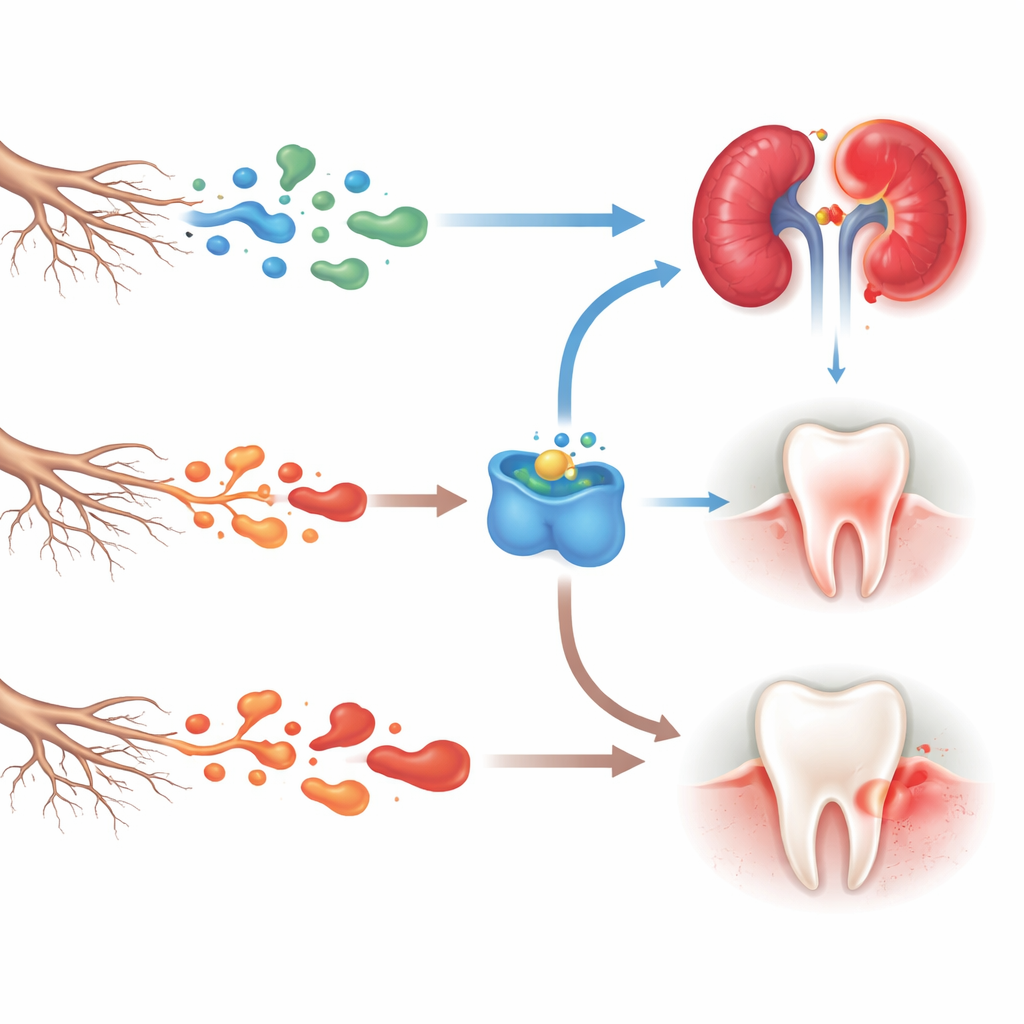
A Different Chemical Toolkit for Toothache Relief
For GL roots, the team asked a different question: which of their abundant compounds are most relevant to dental pain? Using the same network approach, they linked GL’s standout flavonoids—especially tangeretin and sinensetin—to a central protein called SRC, an enzyme involved in many pain and inflammation pathways in oral tissues. GL compounds showed favorable docking with SRC, supporting the idea that this origin is naturally tuned toward analgesic, anti‑inflammatory effects in the mouth and jaw. Together, these analyses sketch a picture of two regional varieties of the same herb that have evolved—and can be cultivated—for distinct therapeutic strengths: one more suited for chronic kidney problems, the other for conditions like toothache and gum inflammation.
What This Means for Herbal Medicine and Future Treatments
For everyday readers, the key message is that not all “roots” of a traditional remedy are created equal. The study shows that plants from different places can look similar but behave very differently as medicine because their internal chemistry diverges. By tying specific natural compounds to concrete molecular targets in the kidney and teeth, this work helps move Strobilanthes sarcorrhiza from folk remedy toward evidence‑guided use. It also offers a roadmap for farmers and breeders: YJ‑type plants could be developed as raw material for kidney‑supporting products, while GL‑type plants might be better for oral‑health formulas. Although these computer‑based findings still need to be confirmed in animal and clinical studies, they mark an important step toward more precise, reliable plant‑derived therapies for inflammatory diseases.
Citation: Xie, W., Gao, H., Zhu, Z. et al. Integrated metabolomic, network pharmacological, and molecular docking analyses comparing the therapeutic effects of Strobilanthes sarcorrhiza from different origins. Sci Rep 16, 10915 (2026). https://doi.org/10.1038/s41598-026-44698-9
Keywords: medicinal plants, kidney inflammation, toothache relief, plant metabolomics, traditional Chinese medicine