Clear Sky Science · en
Peripheral blood mononuclear cell gene expression signatures predict long-term survivorship in canine DLBCL
Why this matters for dogs and people
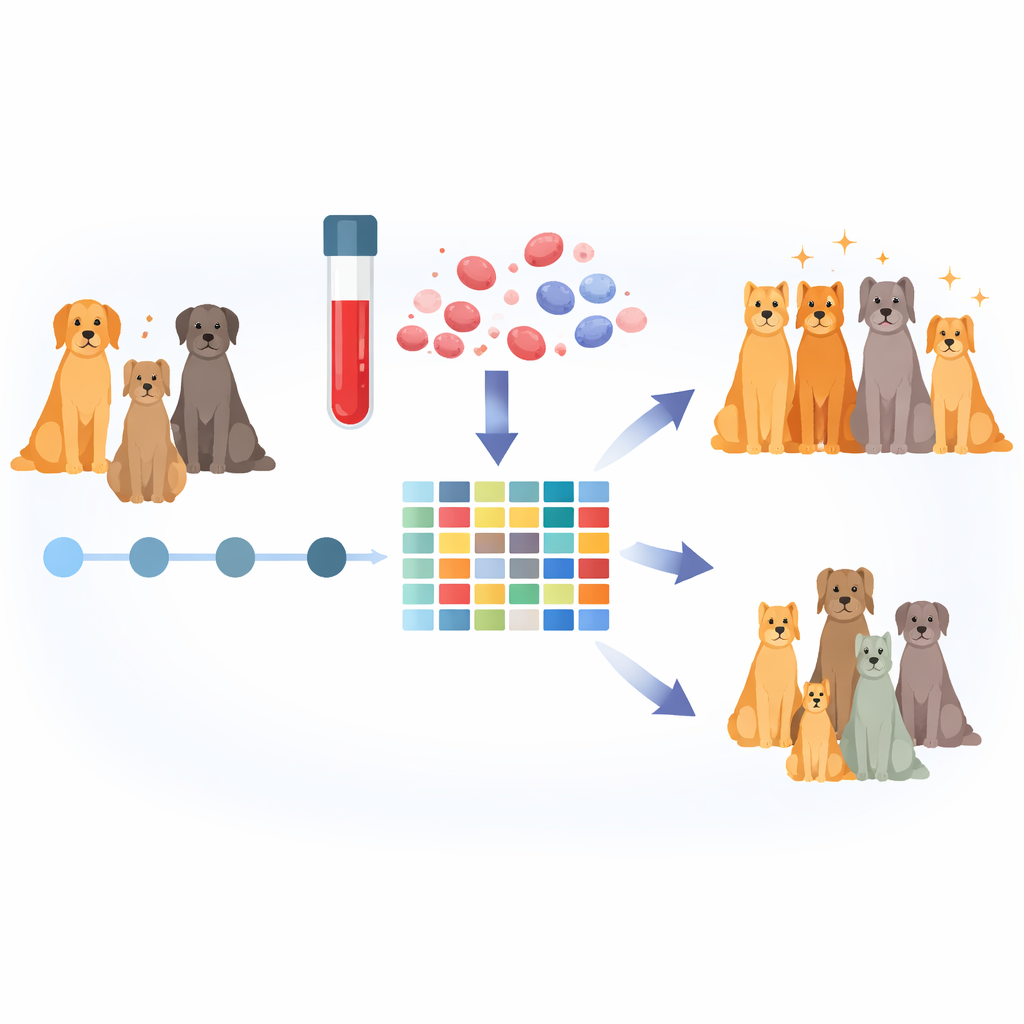
Many pet owners face a difficult decision when their dog is diagnosed with lymphoma, a common and aggressive blood cancer. Some dogs do very well on modern treatments and live for years, while others relapse quickly despite similar care. This study asked a simple but powerful question: can an ordinary blood sample reveal, early on, which dogs are likely to be long-term survivors and which may need a different strategy—information that could ultimately guide treatment not only for dogs, but also for people with similar cancers.
Using pet dogs as real-world cancer partners
The researchers worked with pet dogs that naturally developed diffuse large B cell lymphoma, a close biological cousin of a hard-to-treat form of human non-Hodgkin lymphoma. All dogs received a chemo‑immunotherapy backbone: a canine version of an anti‑CD20 antibody to remove cancerous B cells, plus a low dose of the chemotherapy drug doxorubicin. Each dog then went on to one of three targeted immune‑modulating drugs that influence how immune cells behave. This design mirrored the search in human medicine for gentler alternatives to intensive multi‑drug chemotherapy, especially for older or more fragile patients.
Turning blood into a window on the immune system
At several key moments—from before treatment, through early and later therapy, and at relapse—the team collected blood and isolated immune cells called peripheral blood mononuclear cells. Instead of looking directly at tumor tissue, they measured which genes were switched on or off in these circulating cells using a high‑throughput platform and follow‑up PCR tests. First they confirmed that the antibody treatment was doing its job: gene signals typical of B cells dropped sharply after therapy and rose again when the cancer returned. This showed that simple blood readouts could track major treatment effects over time in a minimally invasive way.
Gene patterns that signal who does well—and who does not
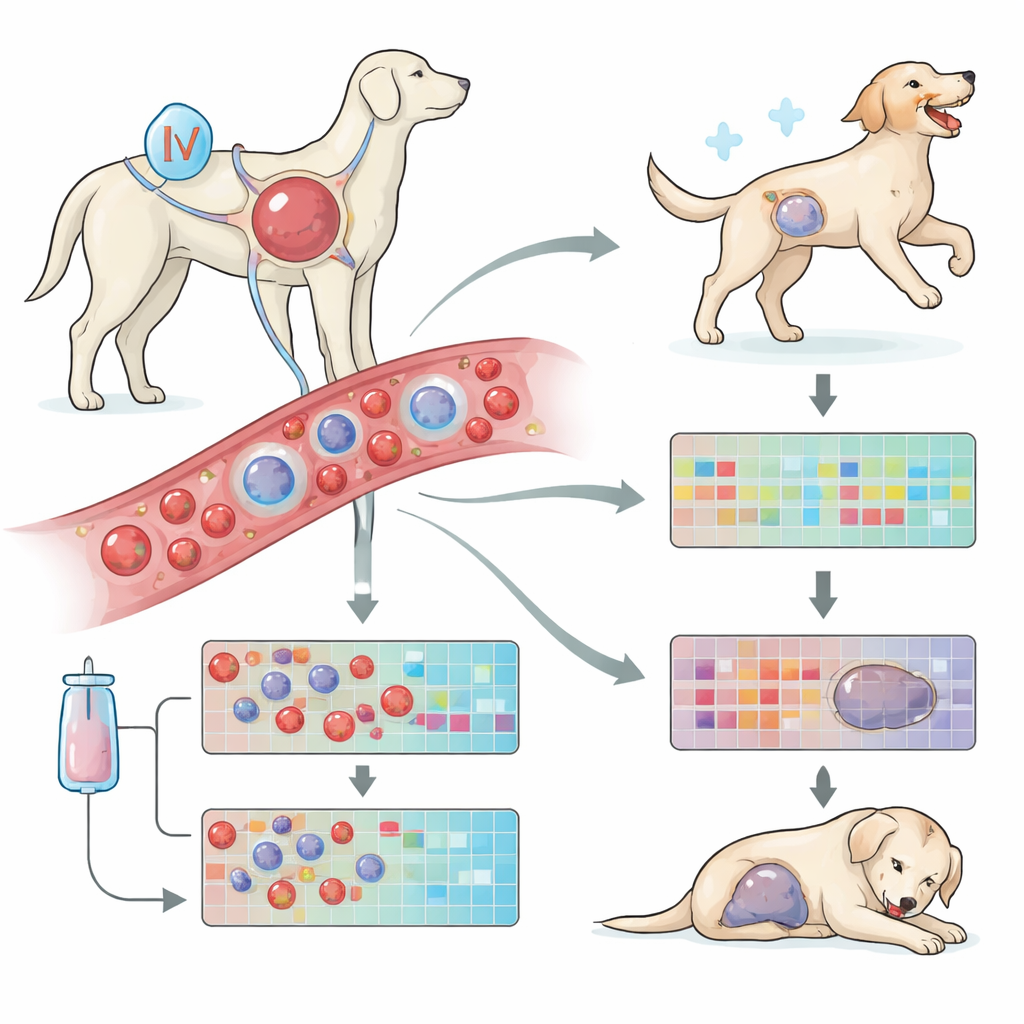
Next, the scientists compared dogs that lived more than about 400 days after starting therapy with those that relapsed early. They discovered that certain immune‑related genes were consistently higher in long‑term survivors, including CD1E and CCL14, which are involved in presenting fat‑like molecules to T cells and in attracting helpful immune cells into tissues. In contrast, dogs with shorter survival showed increased activity in genes linked to a skewed or less effective immune response, as well as a group of interferon‑stimulated genes that, in this setting, appeared to go hand‑in‑hand with worse outcomes. These patterns held across the different drug regimens, suggesting they reflect common biology rather than a single drug’s effect.
Early warning signs in the first days of treatment
Crucially, some signals of trouble appeared just one week into therapy, well before any obvious clinical relapse. Three genes—THBD, NPNT, and ISG20—stood out as early markers of poor outcome. When these genes were more active in immune cells soon after B cells were depleted, the dogs were more likely to have shorter survival. The team then built simpler PCR‑based assays for these genes, the kind of test that could realistically be run in a clinical lab or eventually even as a point‑of‑care tool. This raises the possibility of flagging high‑risk dogs within days of starting treatment and adjusting their care plan while there is still time to intervene.
What this could mean for future cancer care
In plain terms, this study shows that a routine blood draw can carry hidden clues about how a dog with lymphoma will fare on modern chemo‑immunotherapy. By reading patterns of gene activity in circulating immune cells, veterinarians may one day identify which patients are on a good trajectory and which need closer monitoring or more aggressive treatment before the cancer has a chance to roar back. Because canine lymphoma closely mirrors its human counterpart, these findings also support the broader idea that blood‑based “liquid biopsies” can help personalize cancer therapy across species, making treatments both kinder and smarter.
Citation: Rao, K., Rao, Z., Huang, A. et al. Peripheral blood mononuclear cell gene expression signatures predict long-term survivorship in canine DLBCL. Sci Rep 16, 9929 (2026). https://doi.org/10.1038/s41598-026-44677-0
Keywords: canine lymphoma, blood biomarkers, chemo-immunotherapy, gene expression, liquid biopsy