Clear Sky Science · en
Genomic identification and complete mitochondrial recovery of a Late Holocene porcupine (Erethizon dorsatum) mummy from Yukon permafrost
A Frozen Mystery in the Far North
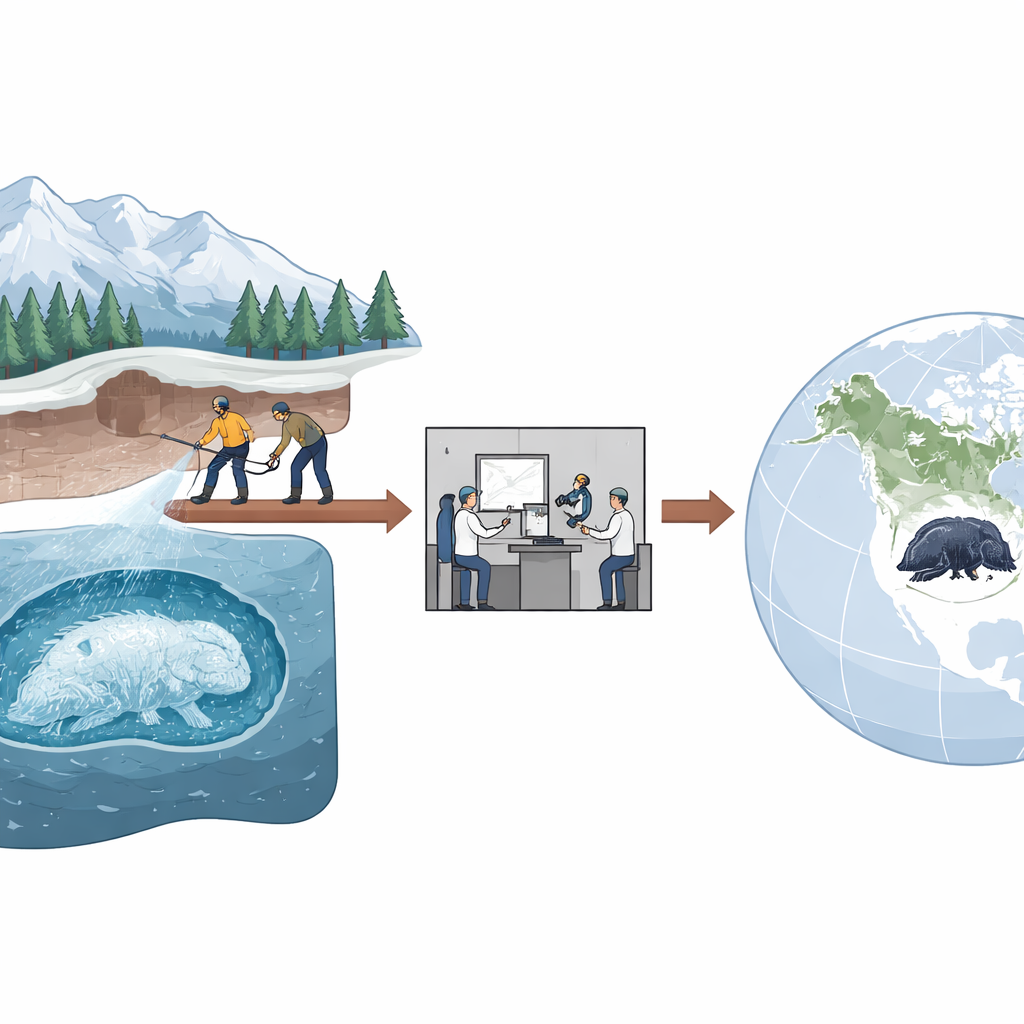
High in Canada’s Yukon, miners working old goldfields uncovered a strange lump of dried skin and hair from the frozen ground. It had no clear bones or features to reveal what animal it once was, yet it was preserved well enough to suggest great age. This paper tells the story of how scientists used cutting‑edge genetic tools to show that the mystery bundle is a 3,000‑year‑old North American porcupine, and what that discovery reveals about changing climates, animal migrations, and Indigenous history in the North.
Treasure in the Ice
Permafrost—the permanently frozen ground of the Arctic—acts like a natural deep freezer. Over the past two centuries it has yielded a parade of spectacular animal mummies, from woolly mammoths to cave lions and ancient wolves. Most of these remains date to the Ice Age and still carry skin, fur, and sometimes even guts, offering a level of preservation rarely seen in ordinary fossils. But compared with these celebrity carcasses, small scraps of mummified tissue are often overlooked, even though they can quietly store a wealth of genetic information about lesser‑known species and more recent time periods.
Turning Skin into a Story
The Yukon specimen, catalogued as YG 77.11, was a ragged piece of skin and flesh about the size of a sheet of paper, discovered in 1998 at Homestake Gulch in the Klondike goldfields. Because the site also produces bones of long‑vanished Ice Age giants, researchers first suspected the fragment might be tens of thousands of years old. They began by radiocarbon dating small samples of the tissue, which showed instead that the animal lived roughly 2,800 to 3,000 years ago—well into the current warm period known as the Holocene, long after mammoths disappeared. That alone made the specimen unusual, because natural mummies from this relatively mild era are rare in northern permafrost.
Reading Ancient Genes
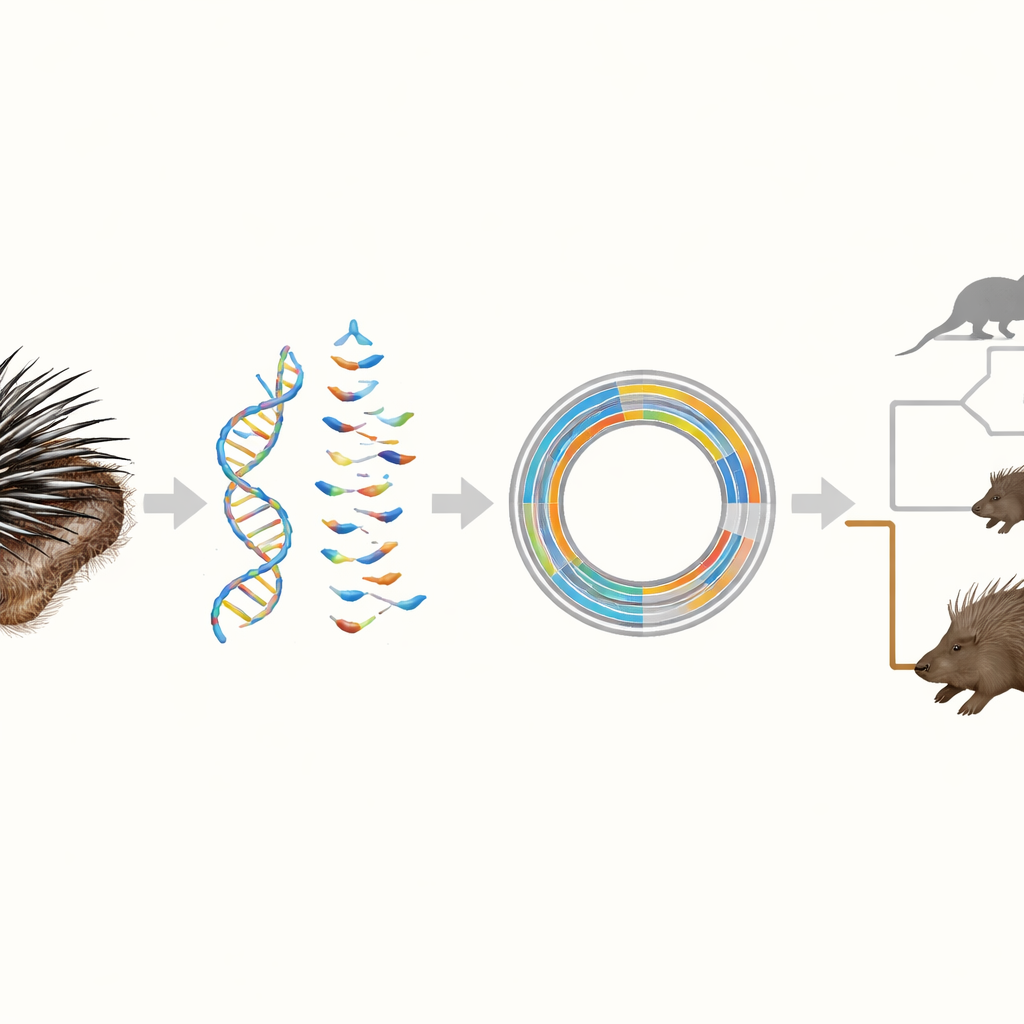
To identify the animal, the team extracted tiny, damaged strands of DNA from the skin and built them into libraries that could be read by high‑throughput sequencing machines. They then tried matching the resulting genetic snippets against a panel of mitochondrial genomes from 18 possible mammal species known in the region or wider Americas. The closest hit, by far, was the North American porcupine, a large, slow‑moving rodent covered in hollow defensive quills and called “Ts’ey” in the Hän language of the local Tr’ondëk Hwëch’in people. A second, more distant match came from a South American porcupine, reinforcing the identification. A broader scan that compared the DNA to hundreds of complete mammal genomes again pointed overwhelmingly to porcupine, ruling out contamination or mis‑identification.
A New Branch on the Porcupine Family Tree
By assembling the ancient mitochondrial DNA, the scientists reconstructed almost the entire energy‑producing genome of this long‑dead animal—the first complete ancient mitochondrial genome ever reported for the species and only the second full example overall. When they placed it on a genetic family tree alongside other rodents and the one modern reference porcupine genome, the Yukon mummy clustered securely within the New World porcupines. Yet it also showed about 2.6 percent difference from the modern reference, more than is typical within a single rodent species. This suggests that porcupines across North America may be split into deeply separated regional lineages, and that the Yukon animal could represent a western branch that has so far gone unsampled.
Tracing a Journey Through Time and Forest
Fossil evidence indicates that porcupines originally moved northward from South America a few million years ago, spreading across much of North America but never crossing into Asia. In the far northwest, however, their remains are extremely scarce, leaving open the question of when they first reached the spruce forests of Yukon and Alaska. The new 3,000‑year‑old mummy, together with porcupine droppings dated to 4,000–5,000 years ago in nearby caves, fits a picture in which porcupines only colonized the region after dense boreal forest became established following the last Ice Age. Their arrival would have coincided with major environmental upheaval and with long‑standing human communities, who later wove porcupine quills into clothing, art, and symbols of identity.
Why This Ancient Porcupine Matters
For non‑specialists, the study shows how a nondescript scrap of frozen skin can unlock a surprisingly rich story. Through careful dating and genetic analysis, scientists transformed YG 77.11 into proof that porcupines were present in Yukon at least 3,000 years ago, supporting the idea that they are relatively recent arrivals to the far north as forests expanded. The work also hints at hidden genetic diversity within the species and underscores how permafrost, even in warmer periods, can occasionally preserve soft tissues well enough to recover whole genomes. In short, this single porcupine mummy links climate shifts, animal movements, and Indigenous cultural traditions into one continuous narrative stretching from the Pliocene to the present.
Citation: Selvatici, S., Jin, C., Zazula, G. et al. Genomic identification and complete mitochondrial recovery of a Late Holocene porcupine (Erethizon dorsatum) mummy from Yukon permafrost. Sci Rep 16, 9194 (2026). https://doi.org/10.1038/s41598-026-44540-2
Keywords: ancient DNA, permafrost mummies, North American porcupine, Holocene Yukon, boreal forest colonization