Clear Sky Science · en
Acute physical activity supports inhibitory control in primary school children: a randomised cross-over trial
Why Playtime Matters for Young Minds
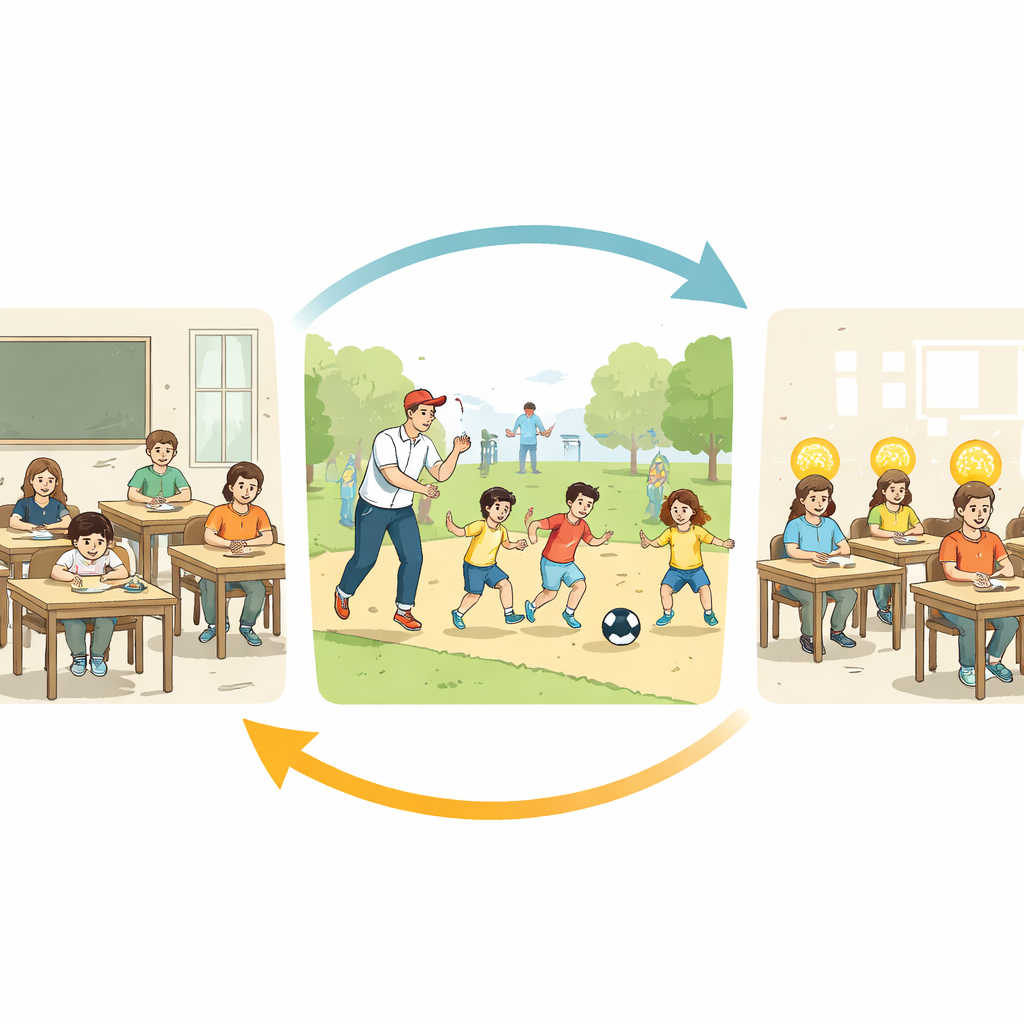
Parents and teachers often notice that children seem sharper and more settled after running around in the playground. This study asks a simple but important question: does a single, ordinary sports session at school actually help children manage their impulses and stay in control of their actions? By testing real primary school pupils during their usual after-school clubs, the researchers show how everyday movement—not special equipment or training—can give children’s self-control a measurable boost.
A Closer Look at Self-Control
The research focuses on “inhibitory control,” the mental brake that helps children stop themselves from blurting out answers, acting without thinking, or getting distracted. Strong inhibitory control supports good classroom behavior, learning, and even later life outcomes, such as staying out of trouble and doing well at work. Because modern children spend long hours sitting at school and many are not active enough, finding simple ways to support this mental brake during the school day could have far-reaching benefits.
What the Children Actually Did
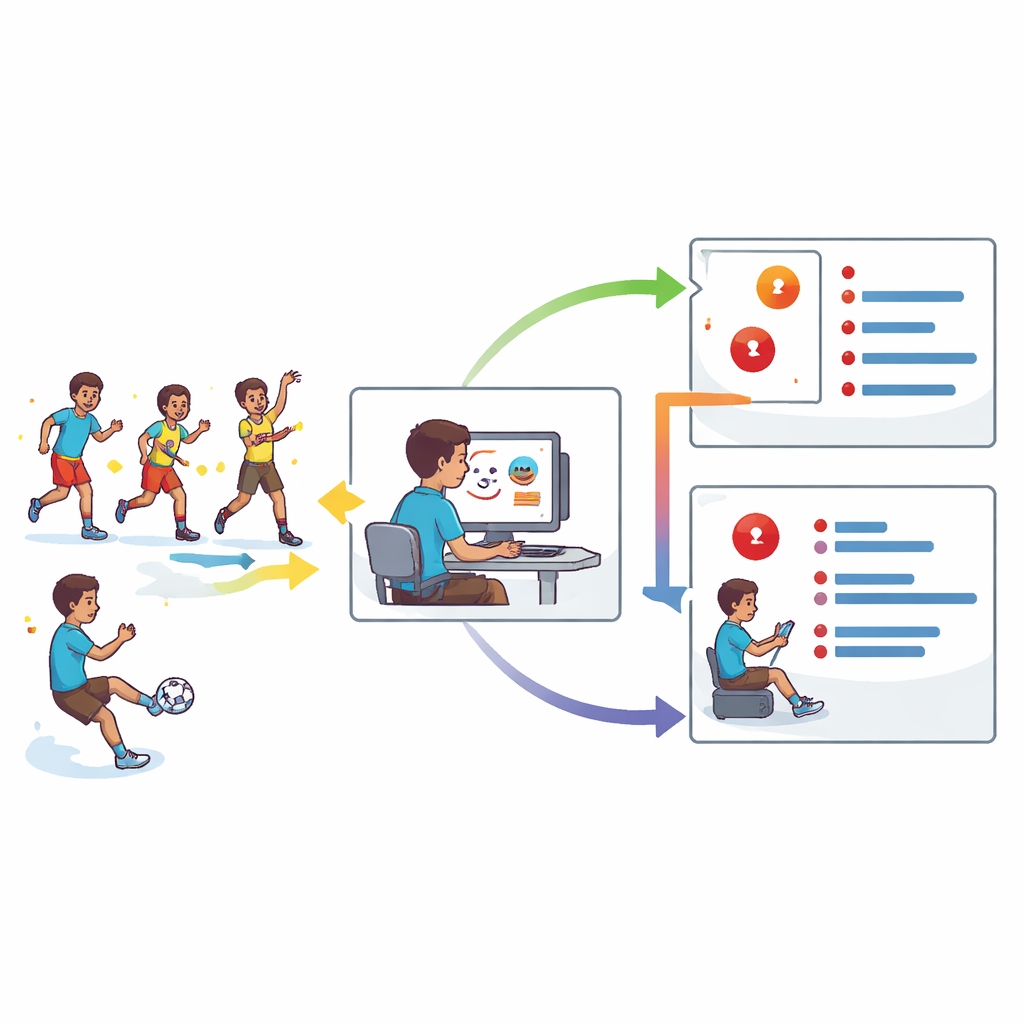
Fifty-five children aged around nine from London primary schools took part. Each child experienced two different 30-minute sessions on separate days in random order. In the active session, they joined a normal extra-curricular club such as football, basketball, or dodgeball run by a sports coach, with the focus on fun and participation rather than competition. In the quiet session, they sat together making posters about their favourite sports stars. Before and after each session, the children completed short computer games that tested how quickly and accurately they could respond, and how well they could stop themselves from pressing a key at the wrong time. Small motion sensors at the waist objectively recorded how much time each child spent moving at moderate-to-vigorous intensity.
What the Tests Revealed
On average, children moved much more in the sports session than in the poster-making session, confirming that the two conditions really differed in activity level. After the active session, children were quicker on a simple reaction game, though they also made a few more impulsive taps. Crucially, in a more demanding game that required them to hold back a response when a certain face appeared, they made fewer mistakes after playing sports than after sitting still. In a stricter follow-up analysis that only included children whose monitors confirmed clear differences between active and quiet days, the pattern strengthened: the active session led to faster responses and fewer errors in the tougher inhibition game, while the calm session did not.
Why Intensity and Real-Life Settings Matter
The sports sessions were not laboratory-perfect drills but real group activities in school halls and playgrounds, run by charity-funded coaches in disadvantaged communities. Children chatted, played team games, and engaged at their own pace. This makes the findings especially relevant for everyday schools. The data suggest that it is not enough simply to schedule a “sport time”—children need to reach a decent level of intensity, spending a meaningful share of the session moving energetically, for their self-control to improve. At the same time, the social and mentally engaging nature of team games may add extra benefits beyond just raising heart rate.
What This Means for Schools and Families
Overall, the study supports the idea that a single, normal bout of group physical activity can sharpen children’s ability to pause and choose their actions more carefully, at least for a short period afterward. For a layperson, this means that an energetic, well-run sports club before or after lessons could help children listen better, follow instructions, and resist distractions in class. The work also highlights that opportunity alone is not enough: schools and communities need to encourage children to join in wholeheartedly and move vigorously. Understanding how to spark that engagement—and how to sustain it—will be key to turning brief bursts of play into long-term gains for both health and learning.
Citation: Watson, E., Burgess, P.W., Metcalf, I. et al. Acute physical activity supports inhibitory control in primary school children: a randomised cross-over trial. Sci Rep 16, 10647 (2026). https://doi.org/10.1038/s41598-026-44375-x
Keywords: physical activity, children, self-control, school sports, cognitive performance