Clear Sky Science · en
Eco-friendly managing of root rot and wilt diseases in marjoram plants by chitosan-copper nanoparticles: enhancing plant immunity and stimulation of resistance genes
Why protecting herbs matters for everyone
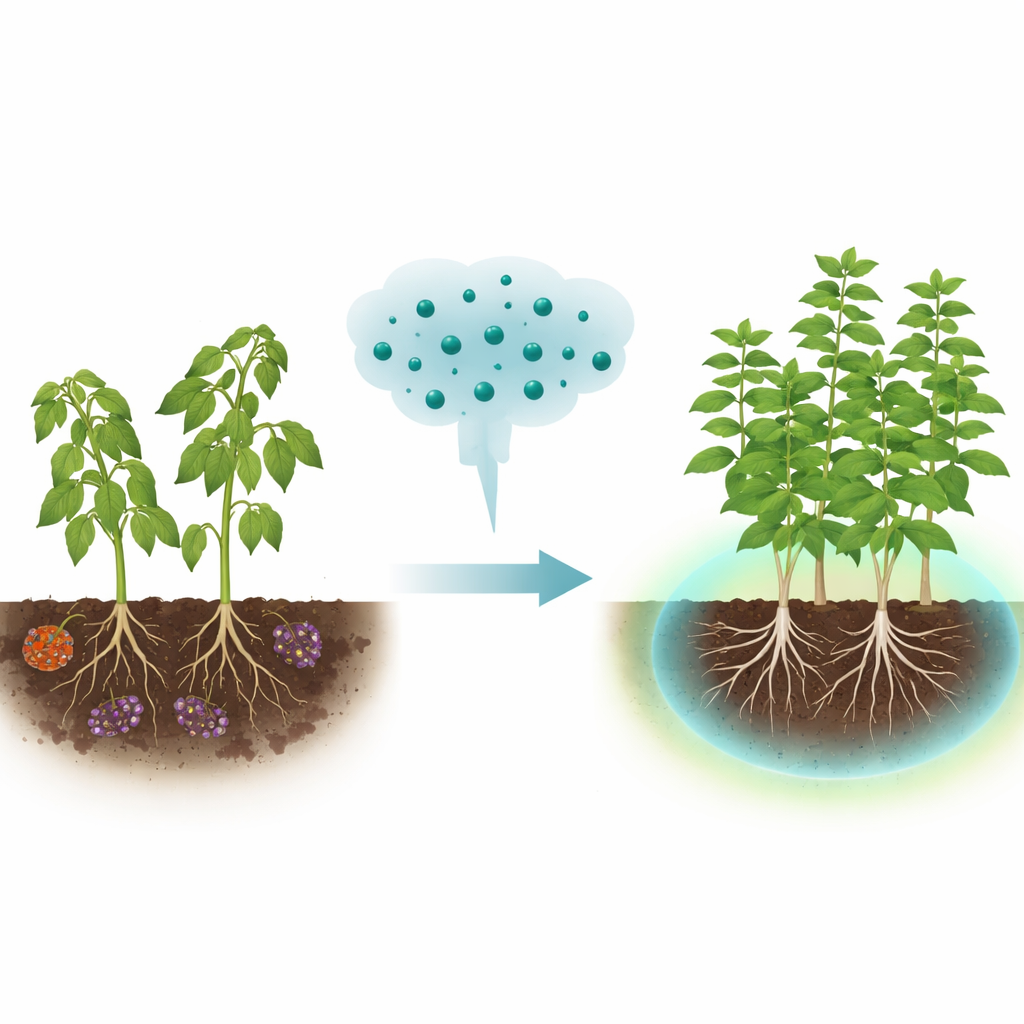
Marjoram is more than a fragrant herb in your kitchen; it is an important crop for farmers who rely on its leaves and essential oils. Like many plants, marjoram is under constant attack from soil-dwelling fungi that rot its roots and cause the stems to wilt, cutting yields and threatening livelihoods. At the same time, the heavy use of chemical fungicides to fight these diseases can harm the environment and human health. This study explores a greener way to protect marjoram using tiny particles made from a natural material and a common metal, aiming to boost the plant’s own immune system instead of simply drenching fields in chemicals.
Tiny helpers built from natural ingredients
The researchers focused on a special mixture of chitosan and copper formed into nanoparticles—structures so small they are measured in billionths of a meter. Chitosan comes from the shells of crustaceans and is already known to be biodegradable, non-toxic, and friendly to plants, while copper has long been used in agriculture for its ability to kill fungi. By binding copper to chitosan in nanoscale spheres, the team hoped to keep the copper from clumping and to deliver it more efficiently to the plant, reducing the total amount needed. They confirmed that their particles were uniform, spherical, and around 54–56 nanometers in size, and that the chemical bonds between copper and chitosan were correctly formed.
Stopping the fungi before they stop the crop
Two main culprits behind root rot and wilt in Egyptian marjoram fields are the fungi Fusarium oxysporum and Rhizoctonia solani. The team first isolated these organisms from sick plants and verified their identity using both traditional microscopy and DNA-based tests. When the fungi were grown in the laboratory on nutrient gel containing different doses of chitosan–copper nanoparticles, their growth dropped sharply as the dose increased. At the highest dose tested, fungal growth on the plates was reduced by about 80 percent. This showed that the nano-formulation could directly suppress these disease-causing microbes.
Helping plants fight back from the inside
The real test, however, was in living plants. Young marjoram seedlings were transplanted into soil deliberately infested with the two fungi. Some seedlings received only water, while others had their roots soaked in nanoparticle solutions at three different strengths and were then treated several times during growth. After three months, plants that received a moderate dose (50 milligrams per liter) had far fewer signs of disease: both the number of sick plants and the severity of symptoms dropped noticeably compared with infected but untreated controls. These treated plants also showed higher levels of natural protective chemicals called polyphenols and flavonoids, which act as antioxidants and help plants withstand stress.
Switching on the plant’s defense genes
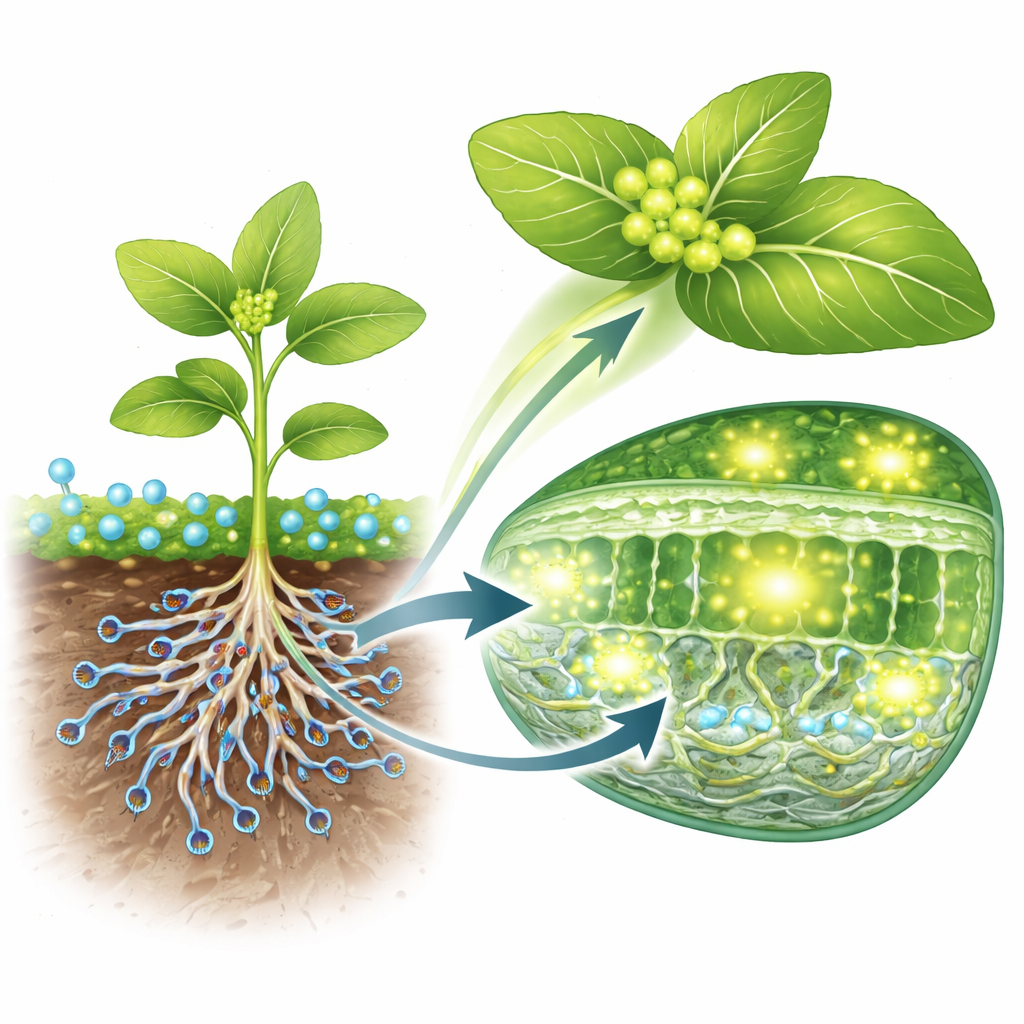
To understand what was happening inside the leaves, the scientists measured the activity of a set of genes involved in the production of these protective compounds. Many of these genes form part of a biochemical route known for making phenolic substances that can stiffen cell walls and slow invading microbes. In plants treated with the nanoparticles—especially at the moderate and higher doses—10 out of 12 tested genes became more active, in some cases three to four-and-a-half times more than in untreated diseased plants. This pattern matched the rise in polyphenol levels seen in chemical analyses, suggesting that the tiny chitosan–copper spheres were not just killing fungi directly, but also priming the marjoram to mount a stronger, faster immune response.
A greener shield for future crops
Put simply, this work shows that biodegradable chitosan–copper nanoparticles can both weaken the fungi that cause root rot and wilt in marjoram and “train” the plants’ own defenses to respond more powerfully. The most effective dose cut disease and boosted natural protective compounds without resorting to heavy applications of conventional fungicides. While more research is needed before such treatments are widely used in fields, this approach points toward a future where farmers protect valuable herbs and other crops using smart, eco-friendly materials that work with plant biology rather than against the environment.
Citation: Al-khattaf, F.S., Mahmoud, M.A., Ghebrial, E.W.R. et al. Eco-friendly managing of root rot and wilt diseases in marjoram plants by chitosan-copper nanoparticles: enhancing plant immunity and stimulation of resistance genes. Sci Rep 16, 9232 (2026). https://doi.org/10.1038/s41598-026-44092-5
Keywords: nanoparticle crop protection, marjoram root diseases, eco-friendly fungicide alternatives, plant immune priming, chitosan copper nanocomposite