Clear Sky Science · en
USG-guided unilateral retrolaminar block decreases pain and enhances patient comfort during extracorporeal shock wave lithotripsy: a prospective study
Why easing stone treatment pain matters
Kidney and ureteral stones are common and notoriously painful. A widely used treatment, extracorporeal shock wave lithotripsy (ESWL), breaks stones into tiny pieces using focused sound waves from outside the body. Although it avoids surgery, many patients experience sharp pain during the procedure, and the drugs used to dull that pain can slow recovery and cause side effects. This study explores whether a targeted numbing technique in the back, called a retrolaminar block, can make ESWL more comfortable while keeping patients safer and more alert.
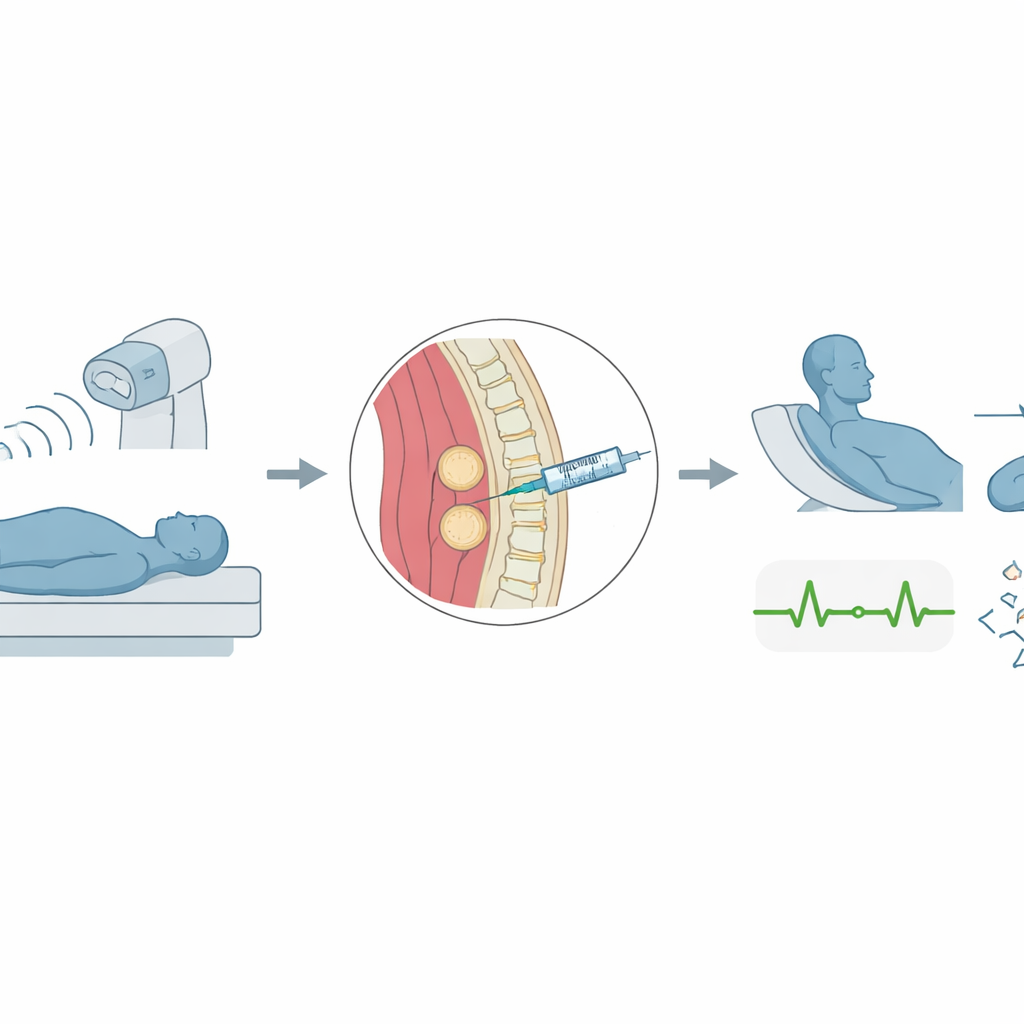
A new way to keep patients comfortable
The researchers worked with 60 adults scheduled for ESWL to treat urinary stones. All patients received the usual monitoring and care during the procedure, but they were separated into two groups. One group received a retrolaminar block on the side of the stone about 20 minutes before treatment. Guided by ultrasound, the anesthesiologist placed a small amount of local anesthetic between the back muscles and the bony arch of the spine in the mid-back region. The other group had ESWL without any nerve block and relied only on pain medicine if needed. By comparing these two groups, the team could see whether the block changed pain levels, drug use, and overall comfort.
How the study was carried out
Pain was measured repeatedly using a simple scoring line where patients rated how much they hurt before, during, and after ESWL. The team also tracked how much of the opioid painkiller tramadol each patient received during the procedure, as well as heart rate, blood pressure, time to go home, and how satisfied both patients and the treating doctor felt. Everyone was followed through the entire treatment session, and stone-clearing success was checked about two weeks later with standard imaging.
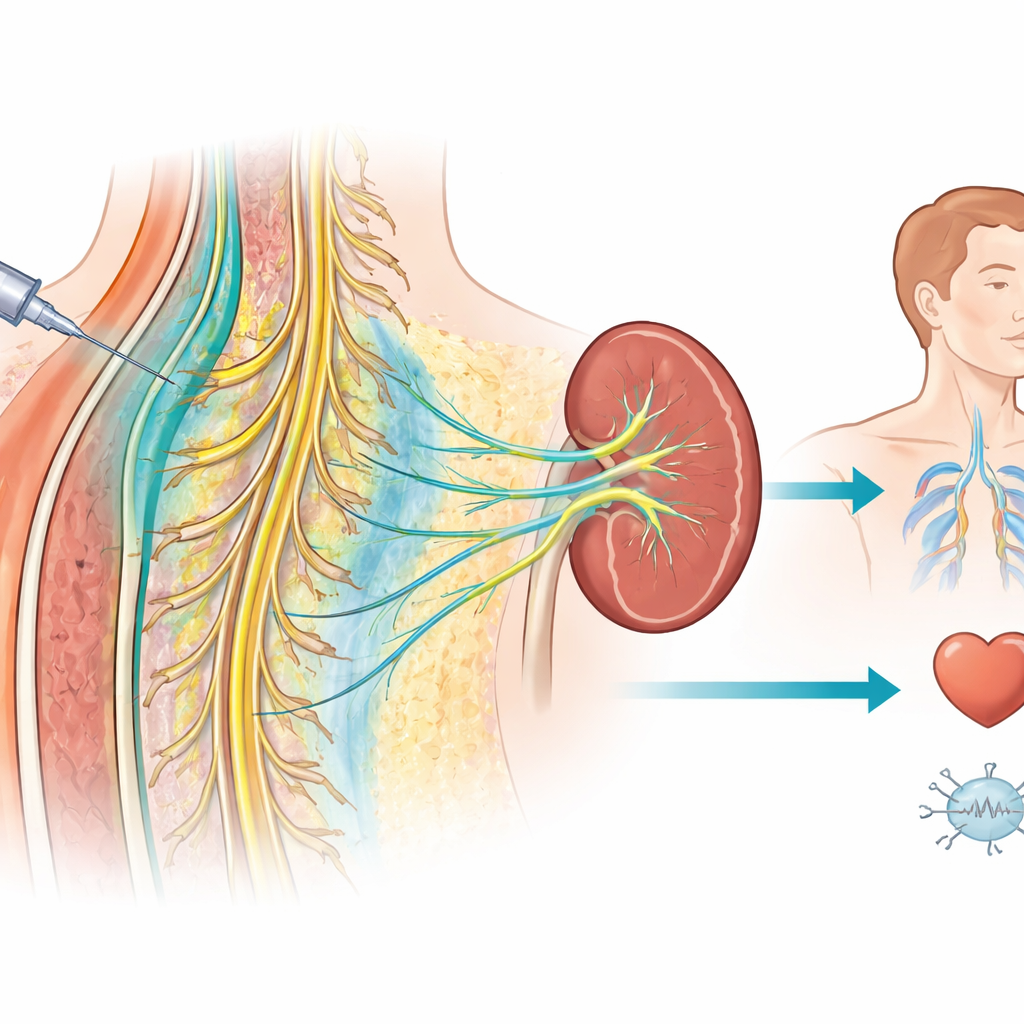
Less pain, fewer opioids, steadier bodies
The differences between the two groups were striking. Patients who received the retrolaminar block consistently reported lower pain scores during and after ESWL than those in the control group. None of the patients with the block needed any tramadol at all, whereas those without the block used an average of about 19 milligrams. Heart rates stayed more stable in the block group, suggesting that their bodies were less stressed by pain. Blood pressure trends were similar in both groups, but without worrisome swings in the blocked patients. Importantly, no complications related to the block were observed, and the time to discharge from the clinic was nearly the same in both groups.
Comfort and treatment success go hand in hand
Patients and doctors alike reported being more satisfied when the retrolaminar block was used. People were calmer and moved less during ESWL, which helps keep the shock waves precisely targeted on the stone. While the rate of being completely or nearly stone-free was somewhat higher in the block group, the difference was not large enough in this small study to be certain it was due to the block alone. Many other factors—such as stone size, makeup, and location, and the patient’s body build—also influence how well ESWL works, and these were similar between the two groups.
What this means for people with kidney stones
For patients facing ESWL, this research suggests that a carefully placed numbing injection in the back can greatly reduce pain, avoid the need for opioid drugs, and keep heart and blood pressure responses steadier, all without prolonging recovery. Although larger and more diverse studies are needed, the retrolaminar block appears to be a practical, safe way to make a common stone treatment more tolerable. In everyday terms, it offers a way to turn a very uncomfortable experience into a much more manageable one, helping both patients and clinicians focus on successfully clearing stones rather than battling pain.
Citation: Bayindir, S., Yildirim, K., Oner, S.F. et al. USG-guided unilateral retrolaminar block decreases pain and enhances patient comfort during extracorporeal shock wave lithotripsy: a prospective study. Sci Rep 16, 9215 (2026). https://doi.org/10.1038/s41598-026-44086-3
Keywords: kidney stones, pain control, nerve block, shock wave therapy, opioid-sparing