Clear Sky Science · en
Experimental and molecular docking evidence for the protective role of Monascus purpureus red pigments against hydroxyapatite nanoparticle-induced testicular injury in male rats
Why tiny particles and natural colors matter
Nanotechnology is rapidly moving from the lab into medical devices, bone implants, and even everyday products. Among the most widely used materials are hydroxyapatite nanoparticles, tiny crystals that closely resemble the mineral in our bones and teeth. While they seem safe on paper, scientists are increasingly worried about what long-term exposure might do to delicate organs such as the testes. This study explores whether vivid red pigments made by a traditional food fungus, Monascus purpureus, can shield the male reproductive system from damage caused by these nanoparticles.
When helpful bone particles turn harmful
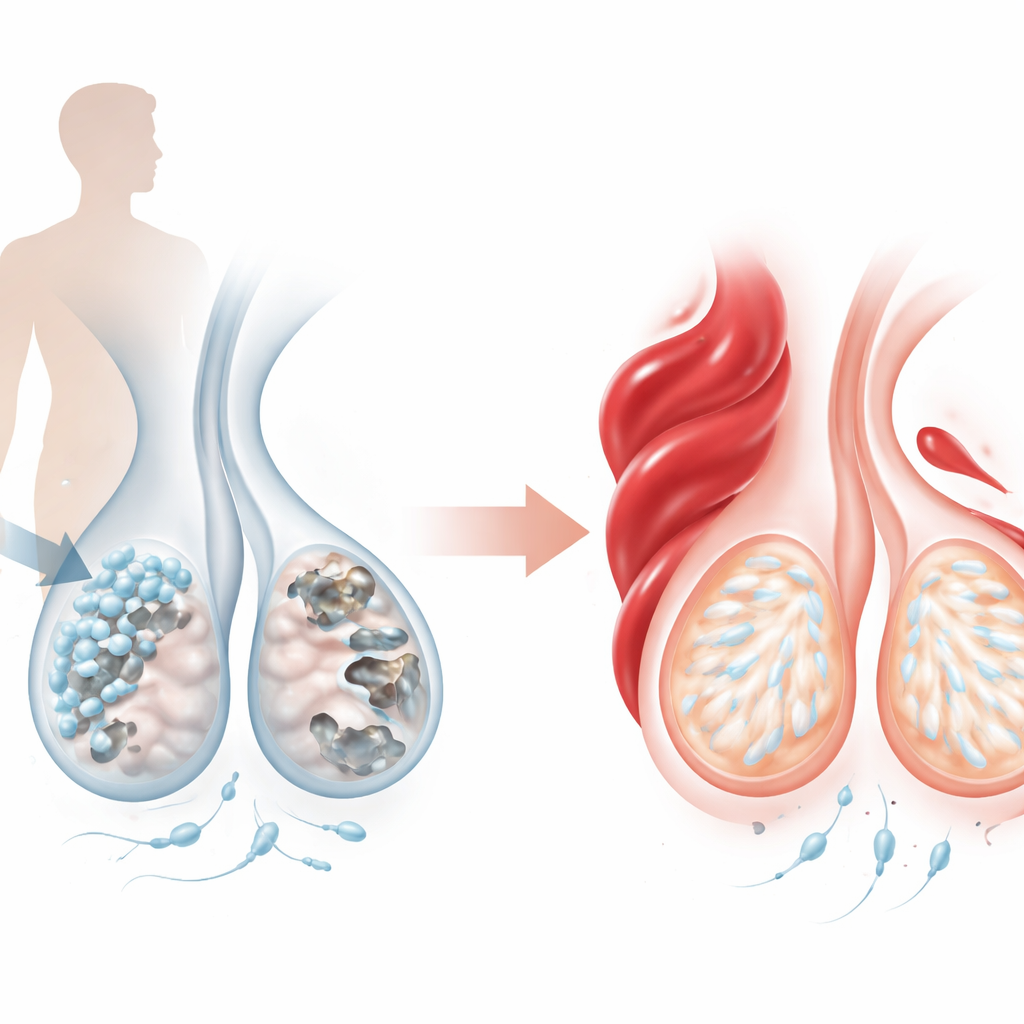
Hydroxyapatite nanoparticles are attractive to engineers because they are biocompatible and easy to shape. But their very small size allows them to travel through the body, where they can spark excessive production of harmful oxygen by-products inside cells. In male rats, prolonged oral exposure to these particles severely disrupted the testes. The animals showed poorer semen quality, with fewer moving sperm, more dead or misshapen sperm, and clear structural damage in the tissue that normally produces them. Hormone levels were also thrown off, with testosterone dropping and brain–pituitary signals that control the testes becoming unbalanced. Together, these changes signal a direct hit to fertility.
The promise of a centuries-old red fungus
Monascus purpureus is a fungus long used in East and Southeast Asian cuisine to ferment foods and give them a striking red hue. Its pigments include natural compounds that can neutralize reactive oxygen molecules and dampen inflammation. The researchers fed male rats different doses of these red pigments, either alone or together with hydroxyapatite nanoparticles, for 50 days. On their own, the pigments did not disturb fertility, testicular structure, or hormones. But when given alongside the nanoparticles, they blunted much of the damage, and the protection became stronger as the pigment dose increased. At the highest dose, sperm movement, survival, and shape largely rebounded, and testosterone and other reproductive hormones moved back toward normal levels.
How the red pigments calm cellular chaos
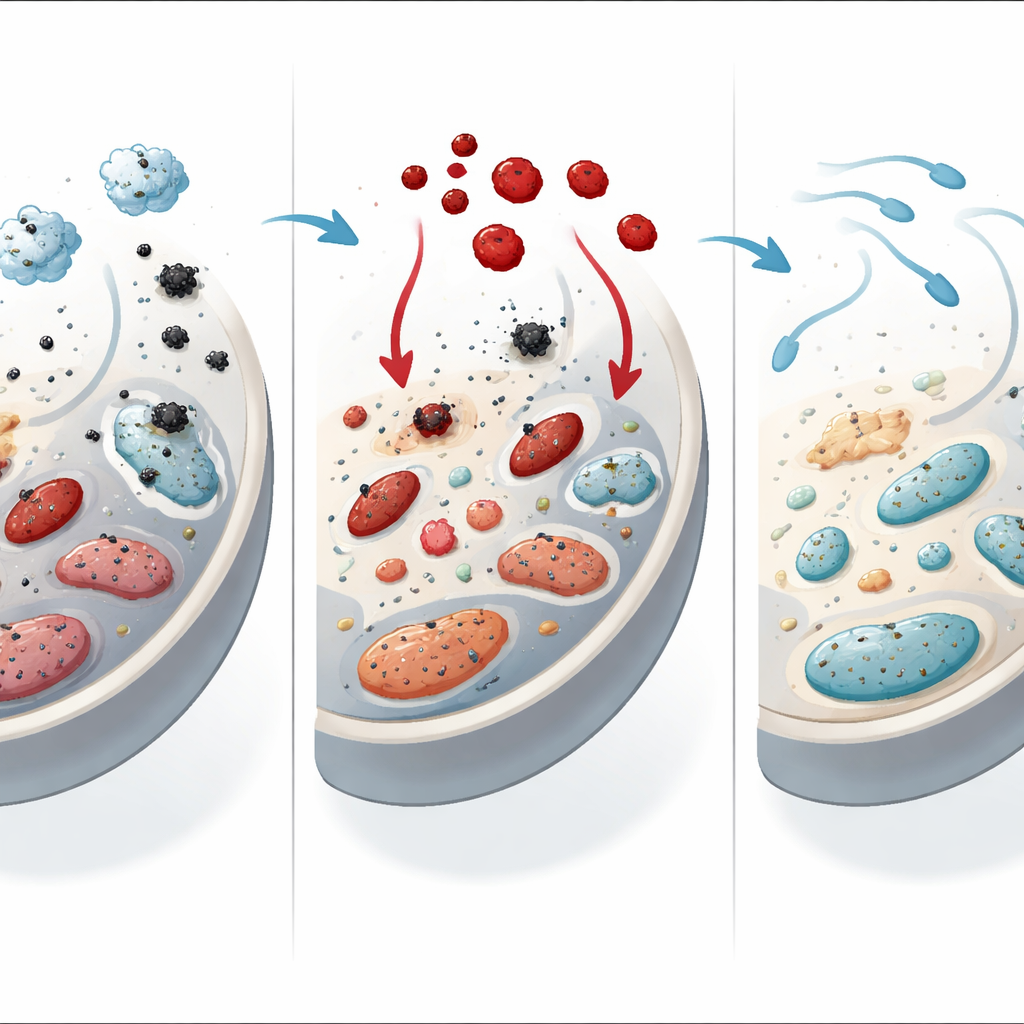
Inside the testes, cells constantly juggle damaging and protective processes. Nanoparticle exposure shifted this balance in a dangerous direction: markers of oxidative stress rose sharply, key inflammatory switches became highly active, and signals of programmed cell death increased. The machinery that cells use to recycle worn-out components—a housekeeping process known as autophagy—also became over-stimulated, which can tip from helpful cleanup into self-destruction. The red pigments reversed many of these changes. They reduced the buildup of lipid peroxidation products that signal membrane damage, restored healthy levels of the antioxidant molecule glutathione, and lowered inflammatory and cell-death markers. The activity of several genes that control cellular recycling also moved closer to the pattern seen in healthy animals, suggesting that the pigments help restore a more balanced clean-up process rather than simply switching it off.
Peeking at molecular handshakes
To explore how the pigments might influence cellular recycling more directly, the team used computer modeling to see how two major pigment molecules, monascorubramine and rubropunctamine, might fit into a key autophagy protein called LC3B. The simulations suggested that both compounds nestle snugly into LC3B’s active region, forming stable interactions stronger than those of a reference molecule. While this does not prove cause and effect, it hints that the pigments may physically interact with the cell’s recycling machinery, fine-tuning its activity rather than acting only as generic antioxidants.
What this means for protecting fertility
Taken together, the work shows that hydroxyapatite nanoparticles, despite their usefulness in medicine, can seriously disrupt male reproduction in rats when exposure is prolonged. The red pigments from Monascus purpureus acted like a multi-pronged shield, easing oxidative stress, cooling inflammation, dialing down excessive cell death and recycling, and ultimately preserving sperm health and testicular structure. Though more research is needed before translating these findings to people, the study suggests that natural dietary compounds could help offset some of the hidden reproductive risks that may accompany the growing use of nanomaterials in modern life.
Citation: Sadek, D.I., Yousef, M.I., El-Tabakh, M.A.M. et al. Experimental and molecular docking evidence for the protective role of Monascus purpureus red pigments against hydroxyapatite nanoparticle-induced testicular injury in male rats. Sci Rep 16, 10992 (2026). https://doi.org/10.1038/s41598-026-44061-y
Keywords: nanoparticle toxicity, male fertility, antioxidant natural products, testicular health, Monascus pigments